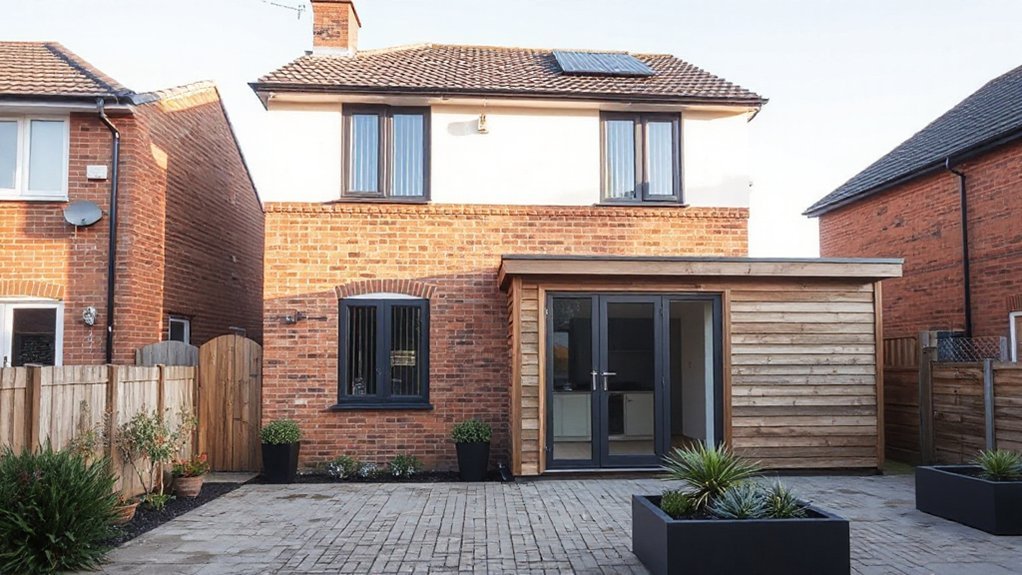
In a Victorian-era masonry wall, you’ll notice the 1930s semi’s balanced proportions and brick-and-panel detailing, which set a precise framework for updates. You’ll pursue reversible improvements that respect structure and fabric, from insulation strategies to discreet tech, while preserving original filigree and timber. You’ll align lighting, flow, and room rhythm with era cues, yet anticipate modern comfort. The challenge isn’t just what to change, but what to preserve as you move forward—and that balance will determine what comes next.
Why a 1930S Semi-Detached Deserves Thoughtful Modernization
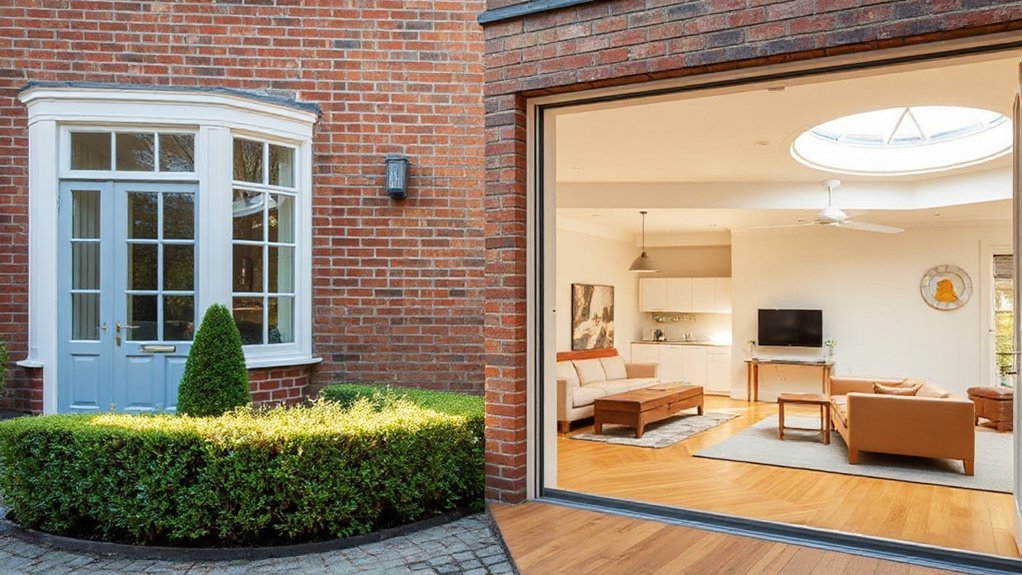
A 1930s semi-detached house embodies a distinct architectural moment defined by thoughtful massing, practical materials, and a balance between private space and street presence. It deserves modernization that respects these fundamentals.
You approach modernization with intention, preserving the maker’s intent while improving performance. Historical preservation guides decisions on fenestration, brickwork, and roof forms, ensuring any interventions read as cumulative accents rather than rupture.
Architectural authenticity requires material fidelity, detailing, and scale congruent with the period vocabulary, so upgrades remain legible as part of the original story. You coordinate structural, thermal, and acoustic upgrades to minimize aesthetic debt, sustaining a coherent design language.
The result is enhanced comfort, durability, and longevity without erasing civic memory or compromising the house’s cultural value.
Audit Your Layout: Lighting, Flow, and Room Rhythm
You assess the Lighting Hierarchy to guarantee key tasks and daylight are prioritized across the plan.
You map Flow Through Spaces to reveal how circulation supports or hinders movement between rooms.
You calibrate Rhythm Of Rooms to achieve a coherent sequence, balancing function, proportion, and historical detailing.
Lighting Hierarchy Audit
How should you begin a Lighting Hierarchy Audit to guarantee functional clarity across a 1930s semi-detached layout? You establish a tiered framework: ambient, task, and accent layers, mapped to each room’s rhythm and architectural cues.
In living spaces, prioritize soft ambient diffusion calibrated to a mid-range bulb temperature for authenticity without glare, then layer task lighting at seating zones to support reading and conversation.
Kitchens demand brighter ambient plus focused under-cabinet and workstation luminance, preserving vintage material tones while improving legibility.
Hallways and staircases require consistent, glare-minimizing downlights to reinforce safety.
Document switching logic, dimmable controls, and energy targets.
Verify that the lighting hierarchy aligns with original masonry, cornices, and timber finishes, ensuring contemporary performance without eroding historical character.
Flow Through Spaces
Flow through spaces hinges on choreographing movement with sightlines and acoustics, ensuring that the sequence from entry to living zones feels intentional rather than incidental. You evaluate connectivity between rooms, noting how door positions, thresholds, and corridor widths guide circulation without interruptions.
Prioritize sightlines that reveal architectural details—timber joists, mantelpieces, and stair geometry—while minimizing visual clutter and noise transfer. Map a pragmatic flow: arrival, progression, occupation, where daylight from adjacent openings is leveraged to modulate mood and activity.
Vintage charm emerges through proportion, material honesty, and restrained ornament, reinforcing spatial rhythm. Aim for Spatial harmony by aligning ceiling heights, door planes, and floor materials to reduce perceptual jogs.
Document adjustments, then test; a cohesive sequence enhances comfort, usability, and historical resonance.
Rhythm Of Rooms
Rhythm of rooms hinges on the deliberate timing of illumination, circulation, and room-to-room cadence. You assess how each space relates to its neighbors through light, doorways, and proportion.
In a 1930s layout, rhythm emerges from consistent ceiling heights, corridor widths, and door «dances» that guide movement without friction.
Audit sightlines from primary vistas to secondary nooks, noting where natural light travels and where artificial sources reinforce hierarchy.
Maintain historical accuracy by preserving trim, thresholds, and materials that anchor legibility, while ensuring new fittings align with this cadence.
Aim for aesthetic consistency across updates to doors, floors, and fixtures, so modern interventions respect chamber proportions and anchoring walls.
A precise rhythm supports usability, acoustics, and a coherent, legible house language.
Era-Friendly Energy Strategies That Actually Work
Era-appropriate energy strategies balance preservation with performance by leveraging retrofit-compatible systems that respect the 1930s fabric. You approach efficiency through targeted insulation, air tightness, and low-heat-loss detailing that don’t compromise silhouette or masonry.
Prioritize historic preservation outcomes: discreet membranes, breathable batts, and cavity fills that align with original materials. Choose efficient boilers, condensing where feasible, and smart controls that modulate heat without overhauling radiators or pipes.
Favor solar gains with high-performance glazing and shading that preserves exterior lines. Material sourcing matters: opt for compatible, low-emission products and proven retrofit adapters to minimize invasive interventions.
Document performance baselines, then monitor year over year to ensure energy reductions align with anticipated outcomes. This disciplined approach respects tradition while delivering measurable improvements.
Kitchen and Bathroom Refreshes With Period Detail
You’ll anchor your refresh in period-prized cabinetry that respects line, grain, and storage efficiency. Pair it with fixtures that read as if aged gracefully rather than updated.
Consider tile and fixture refreshes that honor 1930s restraint—favored sizes, warm whites, and subtle veining or textures that read as authentic patina. Your aim is a coherent dialogue between modern usability and historical detail, with every surface and fitting chosen for durability and legibility of era design.
Period-Prized Cabinetry Choices
Period-prized cabinetry blends era-specific detailing with modern function, delivering kitchen and bathroom storage that honors 1930s craft while meeting today’s daily demand. You select configurations that balance display routines with concealed compartments, preserving lineage while optimizing workflow.
Cabinet craftsmanship informs joinery, panel profiles, and drawer boxes, ensuring durability under frequent use. Choose period-inspired overlays, with bead detailing and recessed handles, paired to contemporary hinges and soft-close mechanisms for silent operation.
Finish options span warm oak, muted greens, and cream resins, all applied in controlled veneers to avoid warping. For baths, consider moisture-resistant laminates with period-inspired glazing; for kitchens, protectors against steam without sacrificing visual texture.
Custom cabinetry integrates built-in appliances, pull-out racks, and adjustable shelving, delivering cohesive spaces that respect history while embracing today’s flexibility.
Timeless Tile and Fixture Refresh
Timeless tile and fixture refreshes fuse period detail with modern performance, delivering surfaces and fittings that read as authentic yet weather-resistant for daily use. You’ll recalibrate kitchens and bathrooms by selecting period-informed motifs—subway or hex tiles, enamelware-inspired sinks, and brass or matte-black hardware—that endure.
Emphasize technical accuracy: slip resistance, grout durability, and water-tight seals, paired with low-maintenance finishes. Historical context guides the palette toward muted naturals, muted greens, and coal blacks, ensuring compatibility with existing timber joinery and plaster walls.
Design language stays precise: repeat motif scales, rhythm in tile fields, and proportionate fittings that echo 1930s ergonomics. These choices deliver vintage charm while exploiting modern performance.
Use decorative accents sparingly to punctuate, not overpower, keeping the space legible and timeless.
Open-Plan Living That Still Respects Original Features
Open-plan living can be achieved without erasing the house’s architectural memory by carefully aligning layout, materials, and detailing with the 1930s vocabulary. You calibrate zone progressions with purpose-built partitions that read as furniture rather than walls, selecting joinery that echoes original profiles.
Structural honesty matters: keep load paths intact while introducing lightweight screens and integrated storage to maintain rhythm and cadence. Materials stay honest too—timber, tile, and plaster remain the core, with calibrated modern glazing to minimize thermal disruption.
Lighting design emphasizes daylighting while preserving period cues; control gear sits discreetly in vertical reveals. For historical preservation, exterior restoration and interior detailing marry, ensuring external façades breathe with the interior’s openness.
The result is an articulated, breathable plan that honours provenance while supporting contemporary daily life.
Insulation Tweaks That Don’T Ruin Character
Insulation tweaks can improve thermal performance without erasing a 1930s home’s character when you target a few disciplined points: minimize interstitial heat loss around historic walls, roofs, and floors; preserve existing plaster and timber aesthetics; and introduce discreet, reversible upgrades that read as part of the original fabric.
You prioritize low-exposure interventions aligned with heritage detailing, selecting Insulation materials that offer high R-values with minimal thickness and vapor control. Retain ceiling void and architrave lines; retrofit where necessary behind coving or skirting, not over ornate finishes.
Pair the approach with Ventilation upgrades to manage moisture without compromising airtightness. Document assemblies to sustain reversibility, and choose finishes that age gracefully, ensuring performance stays aligned with the house’s architectural narrative.
Budget-Friendly Finishes and Fittings With Period Charm
For a 1930s semi, budget-friendly finishes and fittings can deliver authentic period charm without compromising modern performance, by prioritising reversible, low-impact choices that read as part of the original fabric. You’ll select reproduce-appearing tiles, timber battens, and brassware that age gracefully but are removable if needed, preserving later alterations.
Use period-accurate profiles, paint tones, and wallpapers with non-adhesive backing to minimize damage during removal. Focus on durable, low-VOC materials and simple joinery that can be swapped without restructuring walls.
Garden landscaping should echo the era with restrained planting, brick-edged paths, and gravel for low maintenance. Outdoor lighting must be discreet and warm, integrating with plaster cornices and timber soffits to enhance texture without dominating features.
Smart Tech, Maintenance Planning, and Long-Term Care
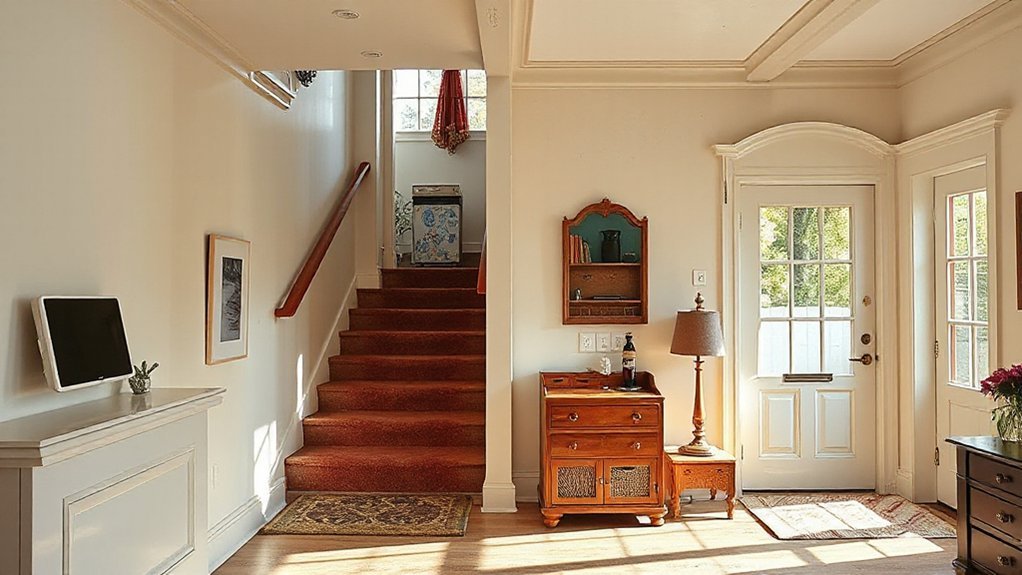
Smart tech and a proactive maintenance plan are essential to preserve a 1930s semi’s character while ensuring reliable performance. You implement a modular smart grid that coordinates heating, lighting, and security without compromising fabric or aesthetics.
Prioritize robust, retrofit-friendly systems with clear service manuals and diagnostic access. Schedule annual inspections for envelope integrity, plumbing pivots, and electrical distribution, aligning with historic detailing to avoid unsightly penetrations.
For garden landscaping, select low-impact irrigation and sensor-driven watering that respect the original site lines and proportion.
In outdoor lighting, opt for warm-temperature fixtures with shielded optics to minimize glare and preserve dusk precincts.
Maintain long-term care by documenting upgrades, tracing component provenance, and budgeting for hardware refresh cycles to sustain performance and period integrity.
Frequently Asked Questions
How Do I Choose Period-Correct Windows Without Compromising Energy?
You choose period-correct windows by balancing window materials with modern seals, maximizing energy efficiency. Prioritize sash-style frames, double glazing, and inert gas fills, ensuring precision joinery, authentic profiles, and airtight installation for historical integrity and sustained performance.
What Are Stealthy Storage Ideas That Respect Heritage Architecture?
Hidden compartments reveal themselves where you expect quiet utility, and under stair storage locates itself with precision. You weave heritage with functionality, preserving history while you conceal essentials, blending technical craft, historical context, and refined design language.
Can I Convert or Extend Without Triggering Listed-Building Rules?
You can extend or convert without triggering listed-building rules only if no alterations affect character-defining features, setting, or historic landscaping. Make certain structural reinforcement is sound, and consult heritage guidance to preserve architectural integrity and timber-framing honesty.
Which Lighting Schemes Best Suit Small, Apportioned Rooms?
You should use compact, layered lighting with smart lighting controls to visually expand small spaces; pair warm, dimmable LEDs with Vintage fixtures for historical context, ensuring precise placement. This approach sustains design language while enhancing ambience and functionality.
How Often Should I Service Historic Plaster or Cornice Work?
You should service historic plaster or cornice work every 5–10 years, inspecting for cracks and moisture. Prioritize plaster preservation and cornice restoration when signs of deterioration appear, maintaining structural integrity and historical fidelity while minimising invasive interventions.
Conclusion
You’ve got a clear blueprint: preserve the 1930s language while weaving in gracefully reversible upgrades. One striking stat to savor: homes with targeted insulation and efficient systems can cut energy use by up to 30% without altering character. So, you’ll enjoy steadier temperatures, smarter lighting, and smoother floor plans while keeping original timber, plaster, and façade intact. This balance—technical precision, historical context, and thoughtful design—lets your semi-detached endure as a living archive, not a dated imitation.
About the Author