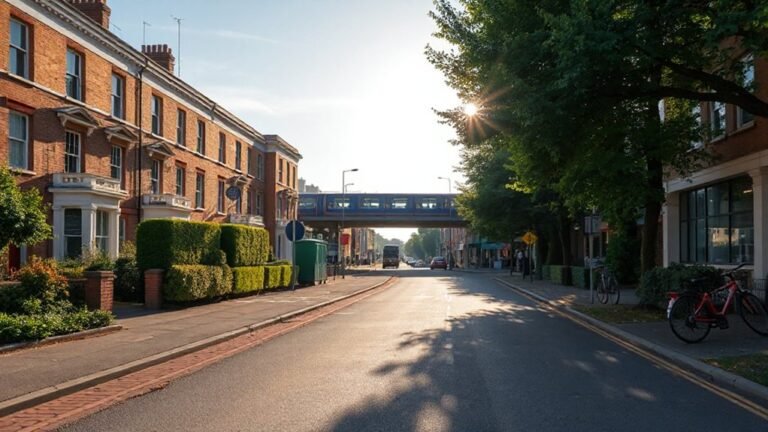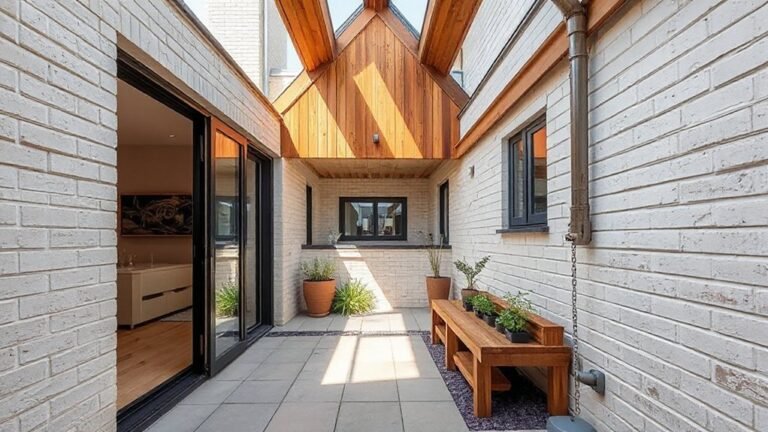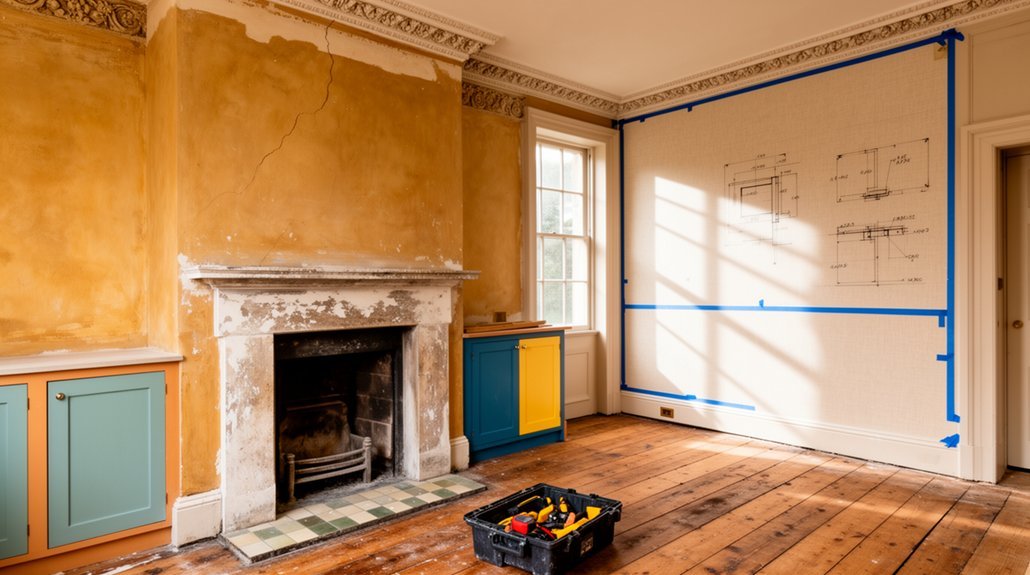
To revamp a Georgian flat in Edinburgh, start by identifying its historic character—note symmetrical façades, sash windows, cornices, plasterwork, and timber stairs. Create a history‑first budget, separating regulatory needs from enhancements, and plan for long‑term maintenance. Prioritize structural fixes before finishes, then preserve sash windows, plasterwork, and cornices with non‑invasive repairs. Design modern, flexible layouts using authentic palettes and breathable membranes, source Edinburgh‑aware materials, and plan a phased timeline aligned with conservation guidelines. You’ll discover how to balance preservation with modern comfort.
Identify Your Edinburgh Georgian Flat’s Historic Character
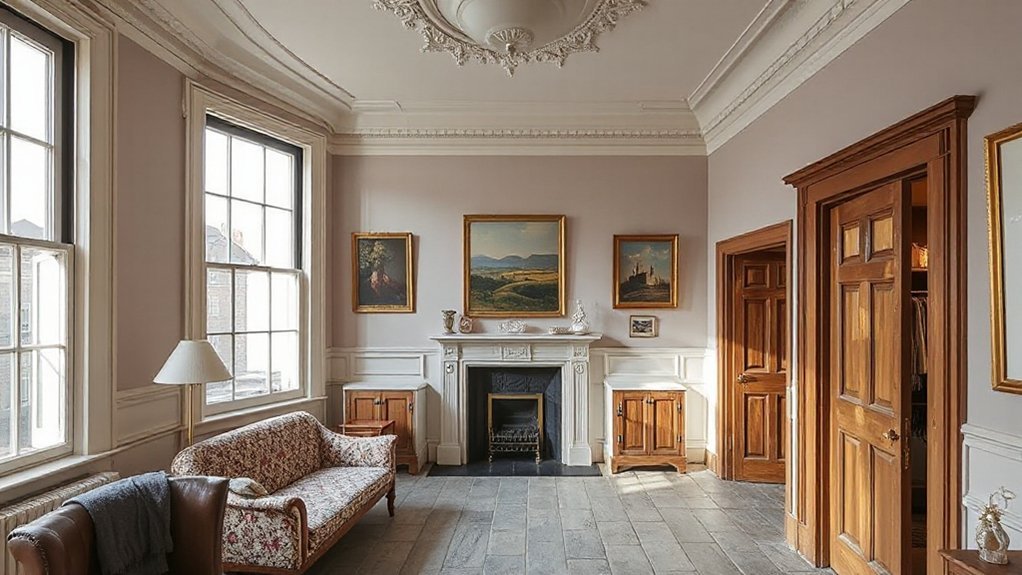
To identify your Edinburgh Georgian flat’s historic character, start by noting the architectural features that define its era: symmetrical facades, sash windows, decorative moldings, and a timber staircase.
You’ll assess how these elements interact with interior layouts, room proportions, and ceiling heights to reveal the style’s logic.
Focus on architectural detailing: the profile of cornices, fireplace surrounds, and paneling, plus the timber staircase’s balustrade rhythm.
Observe proportion and alignment across rooms, door casings, and transom windows that signal formal Georgian composition.
Record how materials age and patinas form, indicating historic significance.
Your notes should distinguish purposeful craft from later alterations, guiding decisions on restoration priorities, materials compatibility, and preservation ethics while maintaining the flat’s authentic character.
Create a History‑First Budget for Edinburgh Georgian Renovations
A history-first budget for an Edinburgh Georgian renovation starts with mapping the building’s historic priorities before any cost estimates—priorities you’ll translate into scope, materials, and sequencing. You’ll define what constitutes Historical preservation goals, then attach tangible numbers to each item.
Start by separating essential regulatory requirements from desirable enhancements, ensuring compliance drives the core budget allocation. Identify long‑term maintenance risks tied to historic fabric and assign contingency funds to fix unseen issues without derailing progress.
Align priorities with phased work, so financing matches the project’s logical flow. Document assumptions, unit costs, and revision triggers, then review regularly with stakeholders.
This approach keeps decisions grounded in tradition while preserving value, reducing surprises, and delivering a transparent, defensible budget allocation for your Georgian renovation.
Prioritize Structural Fixes (Walls, Floors, Structure) Before Finishes
Walls, floors, and the building’s structure must be addressed before any finishes go in, because utilitarian fixes now prevent expensive rework later. You’ll protect long-term value by frontloading structural decisions, not chasing cosmetic wins.
- Assess structural integrity of walls and beams to spot hidden cracks, uneven loads, and timber decay.
- Verify foundations and floor joists for movement, settlement, or rot, prioritizing a solid base.
- Plan underpinning or reinforcement where needed, coordinating with drainage and load paths.
- Schedule progress with trades to avoid discrete, costly retrofits once finishes are installed.
Structural integrity and foundation repair drive durability; neglect here multiplies risk and expense. Prioritize proven fixes, then tailor finishes to a stable, compliant core.
Preserve Sash Windows, Plasterwork, and Cornices in Edinburgh
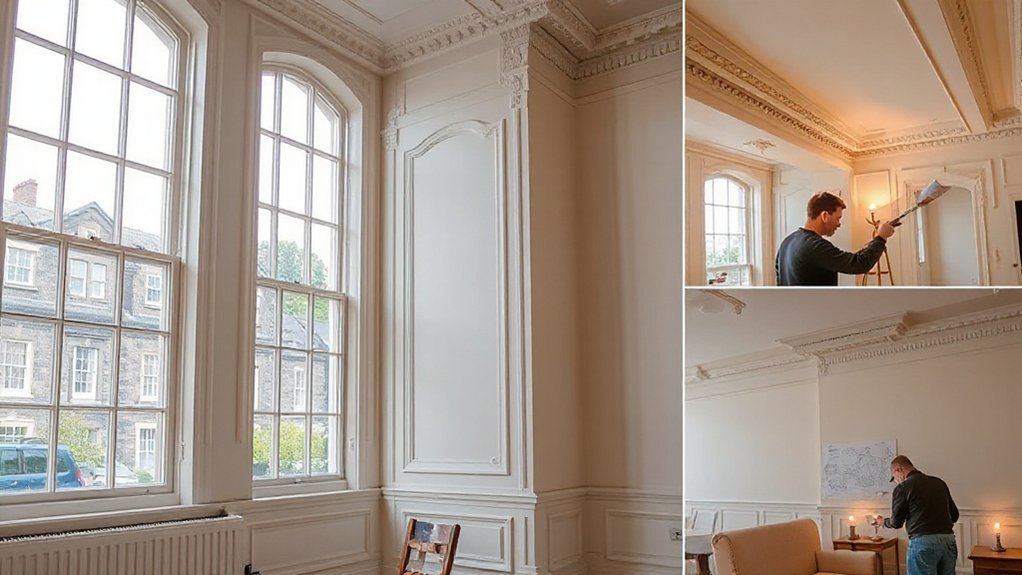
Preserving sash windows, plasterwork, and cornices in Edinburgh isn’t cosmetic—it protects historic fabric and overall value. You approach this with a measured plan: assess condition, identify original components, and flag irreversible damage.
Prioritize architectural details that define character, then apply preservation techniques that respect timber, plaster, and plasterwork textures. For sash windows, test drafts, repair frames, and re-glaze with appropriate glass and putty, avoiding over-restoration.
Plasterwork requires careful cleaning, crack assessment, and, where needed, lime-based mortar to maintain breathability. Cornices demand non-invasive stabilisation and gentle cleaning to reveal decorative detailing.
Document every intervention for provenance. Use skilled craftsmen familiar with period methods, and source compatible materials. Your focus is longevity, authenticity, and the integrity of Edinburgh’s historic interior.
Design Modern, Flexible Layouts for a Georgian Edinburgh Flat
Designing modern, flexible layouts in a Georgian Edinburgh flat means revealing adaptable space without compromising historic character. You’ll balance flow and separation, using movable screens, pocket doors, and zoned lighting to redefine rooms as needs change.
- Create multi-use areas by combining small rooms with collapsible partitions and modular furniture that folds away.
- Optimize circulation with clear sightlines from the entry to living zones, preserving key architectural features.
- Layer interior lighting to sculpt mood while highlighting artwork and plasterwork for artistic expression.
- Plan storage within built-ins that respect proportion and avoid clutter, keeping the heritage aesthetic intact.
Choose Period‑Appropriate Finishes With Modern Comfort
Choosing period-appropriate finishes while maintaining modern comfort means balancing authenticity with practicality: you’ll select materials and textures that nod to Georgian craftsmanship, then integrate contemporary performance where it matters most.
Start with a restrained palette that echoes plaster, stone, and timber, pairing with low-emission paints and breathable lime-based finishes to preserve interiors.
Prioritize durable, tactile surfaces—sawn timber floors, honed stone, and ceramic tiles that resist wear without shouting vintage.
Introduce Contemporary contrasts through metals, glass, and matte dark hardware to sharpen profiles while respecting proportion and scale.
Use Artistic embellishments sparingly: inglenook cues, decorative plasterwork, and brass detailing can elevate without overpowering rooms.
Conclude with smart comfort upgrades—efficient heating, acoustics, and lighting controls—kept invisible behind period-appropriate façades.
Restore Sash Windows and Plasterwork Thoughtfully in Context
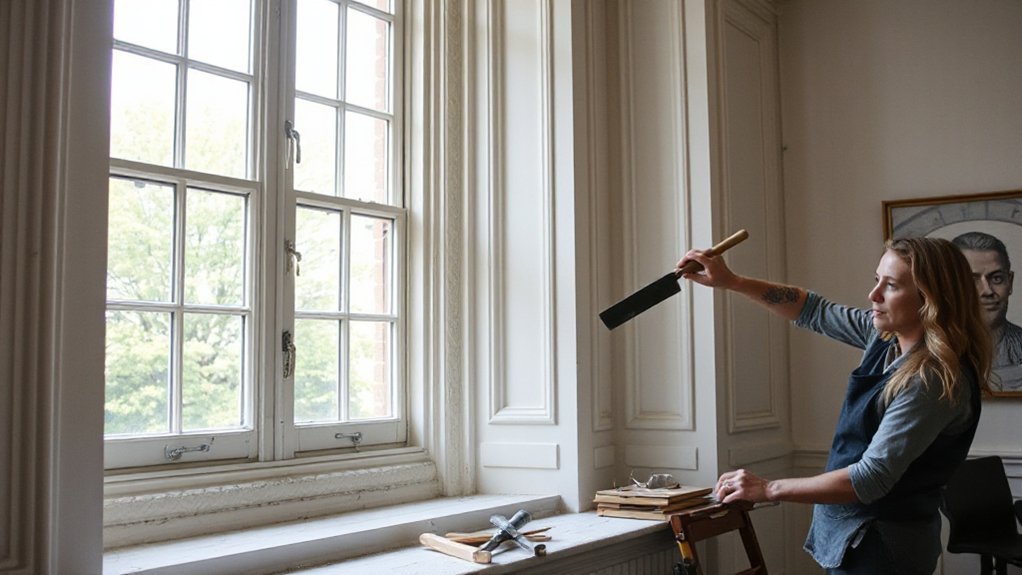
Sash windows and plasterwork define the Georgian character, so approach restoration with disciplined restraint that preserves detailing while improving performance. You’ll balance authentic materials with modern constraints, prioritizing structural integrity, energy efficiency, and minimal intervention.
Focus on reversible methods that respect historical accuracy, enabling future updates without damage.
- Assess and map sash profiles, mouldings, and plasterwork to guide targeted repairs.
- Use compatible lime-based mortars and limewash to maintain breathability and historical color.
- Stabilise sashes with careful damp-proofing and weather seals that don’t distort profiles.
- Document every step for continuity, ensuring restoration techniques remain faithful to the era.
This approach sustains character, enhances comfort, and keeps your project aligned with historical accuracy and practical durability.
Source Edinburgh‑Aware Materials and Trades
You’ll want to start by prioritising Materials Sourcing Ethics as you select suppliers who align with local standards and transparent provenance.
Align trades with Edinburgh Trade Standards to guarantee workmanship, safety, and consistency across every phase of the Albany-Style renovation.
This discussion should be practical from day one, focusing on verifiable sourcing, contractor credentials, and clear quality criteria.
Materials Sourcing Ethics
What drives ethical sourcing in a Georgian flat renovation in Edinburgh? You’ll align materials with sustainable sourcing and ethical supply, minimizing harm while preserving character and compliance. You evaluate suppliers for traceable origins, fair labor, and low environmental impact, balancing this with budget and timeline.
- Verify provenance and certifications, ensuring materials come from responsibly managed sources.
- Prefer local Edinburgh-area trades to reduce transport emissions and support the regional economy.
- Prioritize durable, repairable products to extend life cycles and curb waste.
- Request transparent supply chains, open pricing, and evidence of social benefits tied to purchases.
Edinburgh Trade Standards
Align your plan with Edinburgh-Aware Materials and Trades guidance, guaranteeing documentation accompanies every order. Modern technology should guide assessments, from energy performance to safe electrical integration, while staying within approved product classifications.
For interior lighting, verify luminaire ratings, fire resistance, and compatibility with historic interiors. Demand traceability for timber, plaster, and finishes, confirming source provenance and health-and-safety records.
Pre-acceptance audits reduce compliance risk, and on-site checks validate workmanship against technical drawings. Maintain a concise records package for future inspections and affirm any deviations are promptly resolved through formal change control.
Albany-Style Renovation Tips
To renovate in Albany style, start with a clear plan that respects Edinburgh‑Aware Materials and Trades guidance while preserving period charm. You’ll balance restoration with modern function, prioritising durable, reversible changes and respectful detailing.
- Assess layout: keep original room proportions, place new joinery to complement period features, and ensure easy access to utilities.
- Select finishes: use authentic palettes and materials that nod to Albany aesthetics, while upgrading with low‑VOC paints and breathable, energy‑efficient membranes.
- Improve efficiency: install discreet insulation, draught proofing, and energy‑efficient lighting without altering historic silhouettes.
- garden landscaping: design outdoor spaces to extend living areas, using permeable surfaces and native planting for year‑round interest and sustainability.
Plan a Phased Renovation Timeline Aligned With Historic Constraints
A phased renovation timeline should be built around the building’s historic constraints, ensuring work proceeds without compromising preservation requirements. You start by mapping milestones to permitted interventions, aligning each phase with consent windows and seasonal limits.
Assess structural risks early, isolating critical systems to avoid conflicts with historic fabric. Plan demolition, repair, and finish work so trades advance logically, minimizing rework and site disruption.
Prioritize tasks that enable later stages, like securing stabilisation before cosmetic upgrades. Build in buffer for approvals, inspections, and potential design clarifications, and document decisions for future compliance reviews.
Historic preservation informs sequencing, while Modern integration remains achievable through compatible materials and discreet technology. Communicate schedules transparently to stakeholders, reviewers, and residents, maintaining flexibility without sacrificing adherence to conservation guidelines.
Frequently Asked Questions
How Long Does a Georgian Edinburgh Renovation Typically Take?
Typically, a Georgian Edinburgh renovation takes several weeks to a few months, depending on scope; you’ll balance Historic aesthetics with Modern comforts, coordinating trades, approvals, and delays to minimize disruption and maximize quality.
What Grants or Funding Exist for Historic Flats in Edinburgh?
You can access heritage conservation grants through Historic Environment Scotland and local authorities; grant eligibility thresholds vary. You’re advised to prepare detailed project plans, budgets, and evidence of listed status to maximize funding opportunities for historic flats in Edinburgh.
Can Modern Plumbing Fit Into Historic Georgian Layouts?
“Think of it like fitting a suit to an old frame: yes, modern fixtures can fit, with careful planning.” You can make plumbing upgrades work, but you’ll prioritize concealed routes, comply with historic guidelines, and avoid invasive structural changes.
How to Balance Energy Efficiency With Preservation Standards?
You balance energy efficiency with preservation standards by prioritizing energy conservation upgrades that are reversible where possible, and by aligning upgrades with preservation regulations, opting for discreet insulation, efficient systems, and documented compliance to minimize impact on historic fabric.
Are Approved Trades Needed for Listed Building Work?
Yes, you’ll need approved trades for listed building work, and you should verify their credentials. Use modern materials sparingly within guidelines, and secure renovation permits where required to guarantee compliance and minimize risks during your project.
Conclusion
You’ll recognize the character, you’ll respect its history, you’ll plan with purpose. You’ll map constraints, allocate budgets, and prioritize structure before flourish. You’ll preserve details that tell the story, you’ll weave modern comfort into careful restraint. You’ll source trusted trades, you’ll phase the work, you’ll align milestones with historic rhythms. You’ll balance sensitivity with practicality, you’ll adapt without compromise, you’ll finish with clarity, you’ll live in a home that honors its past while serving your future.
About the Author