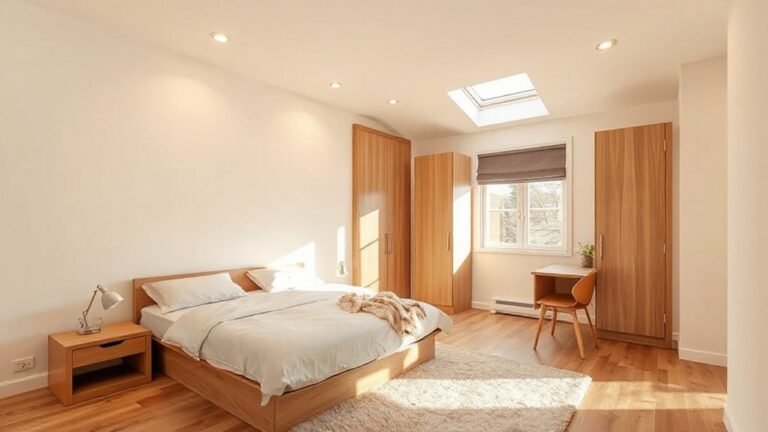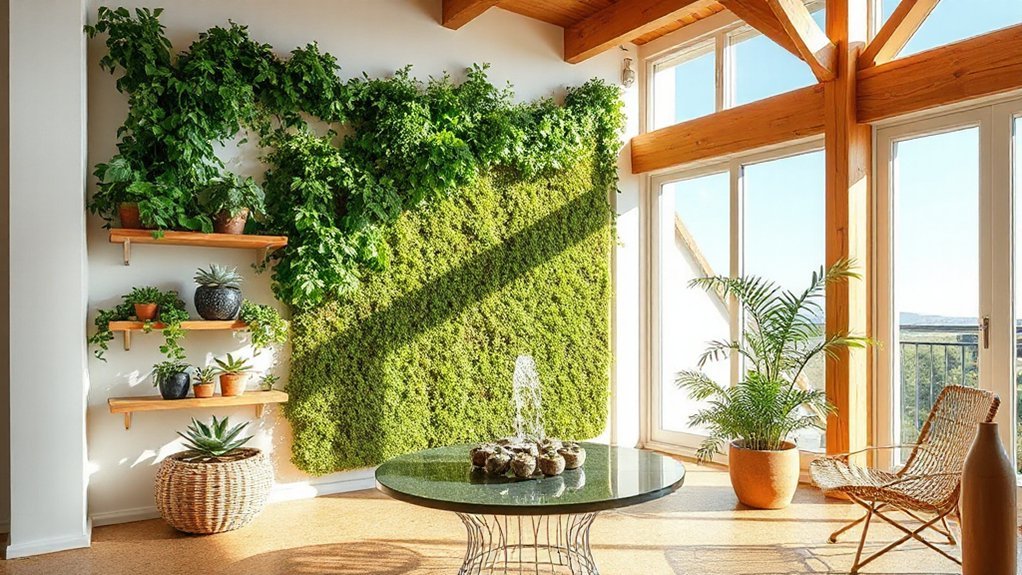
A small office once spread thin with plastic plants now feels calmer after you add a vertical garden along the hallway and place easy-care succulents at eye level. You’ll notice how natural light, wood textures, and a soft scent from a diffuser shift the tone of the space without demanding your attention. There’s more to it than pretty greenery, though—tactile materials, soundscapes, and seasonal color tweaks can quietly support focus and resilience, inviting you to test simple changes that transform daily routines.
What Biophilic Design Is and Why It Works
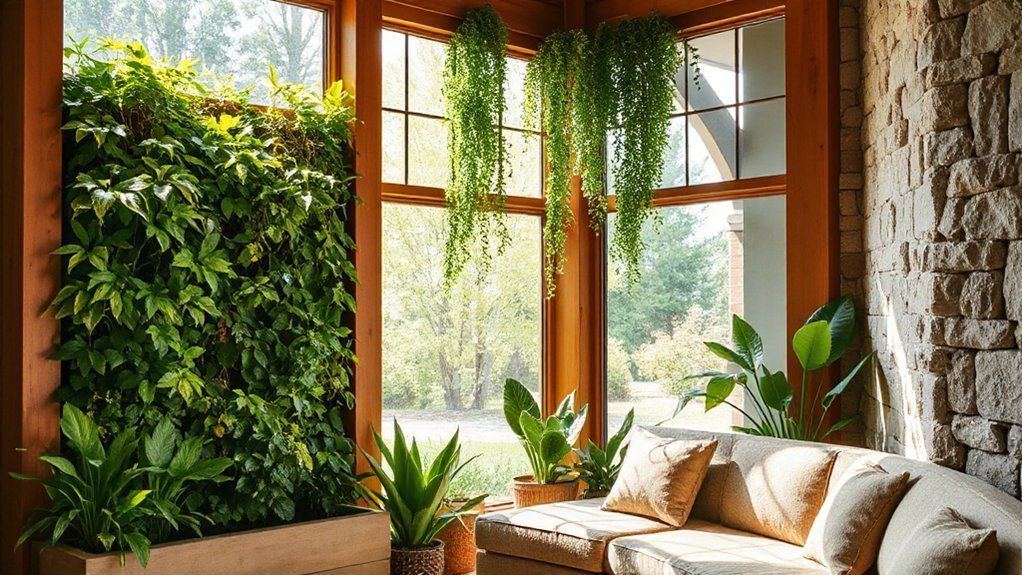
Biophilic design is simply about bringing nature into built spaces to boost wellbeing, focus, and performance. You’ll feel grounded as you notice patterns, textures, and rhythms that echo the outdoors. Biophilic design thrives on you noticing a biophilic connection: how light, airflow, and greenery align with your senses to reduce fatigue and heighten attention. You don’t need grand gestures; simple, intentional choices create natural integration—open sightlines to sky or trees, tactile materials, and seasonal cues that mirror the outdoors. By prioritizing these elements, you tune your environment to support daily tasks, creativity, and resilience. The approach is practical, not ornamental: design that mirrors nature’s organization, balance, and cadence, making spaces calmer, healthier, and more productive.
Core Principles for Any Space
A solid biophilic approach rests on a few universal ideas you can apply anywhere. By observing how light, texture, and rhythm interact, you create spaces that feel calm, connected, and usable. Center your plan on human needs first, then weave nature to support them. Remember that purpose guides form, not the other way around. Keep the layout simple and adaptable so you can adjust as seasons shift.
- Define space zoning to separate functions while preserving a flow that mirrors natural movement.
- Optimize an ergonomic layout so furniture and fixtures support posture and comfort.
- Prioritize daylight and view lines to reduce glare and boost mood.
- Use tactile materials and subtle patterns to ground your sense of place.
Bring Greenery Indoors With Biophilic Walls and Planters
Greenery indoors instantly softens harsh spaces, so start with a simple plan: choose wall and planter placements that feel natural to your everyday routes. You’ll blend greenery into daily flows by mapping where you pass most, then tucking plants into corners, shelves, and along doorways. Prioritize eye level and reachable heights for easy maintenance, balancing light and airflow. Focus on a practical mix: trailing greens along a wall for softness, compact specimens on stands, and a vertical garden installation where sun is strongest. For success, consider Indoor plant care basics—watering cadence, drainage, and rotation to prevent stalling growth. Keep maintenance minimal by grouping plants with similar needs. Update seasonally, swap species as light shifts, and celebrate living walls that quietly improve air and mood.
Choose Natural Materials for Tactile Connection
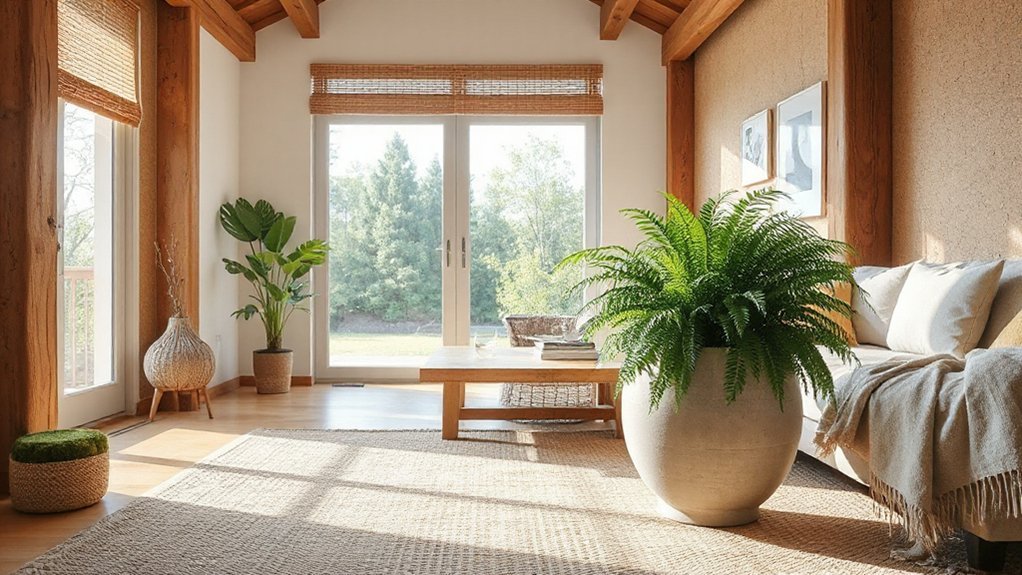
Natural materials invite touch as well as sight, so you’ll want to choose surfaces and textures you can feel under fingertips and toes. You’ll notice how different fibers and grains create a living, grounded sense of place, inviting daily interaction with your space.
- Choose Natural fibers for textiles, rugs, and soft furnishings to add warmth and a subtle scent of the environment.
- Mix tactile contrast by pairing smooth stone with rough timber, or linen with wool, to heighten awareness of touch.
- Favor untreated woods and cork for shelves and paneling, letting natural grain read through.
- Incorporate ceramic or terracotta accents that gain character with use and time.
Maximize Daylight and Outdoor Views
Let the room greet the day with plenty of glass and thoughtful shading. You’ll maximize daylight by aligning key windows with sun paths, and by choosing operable, energy-efficient glazing that reduces glare. Prioritize window placement that captures morning light while preserving privacy, and design sightlines to inviting outdoor views. Use glass extensions to blur indoor-outdoor boundaries without sacrificing insulation or structure. Keep openings proportional to room function, avoiding overexposure in hot climates with well-timed overhangs, louvers, or sunscreen. Reflective surfaces and light-colored walls deepen brightness without adding clutter. Plan for seasonal variation—north-facing panes offer steady illumination, while south-facing panes invite warmth. With careful placement and durable glass extensions, you’ll enjoy a calmer, more connected interior.
Create Sensory Richness With Sound, Scent, and Texture
You tune your space to the rhythms of nature by layering soundscapes, scent cues, and tactile textures. Listen for gentle ambient noise, like a wind chime or distant water, and match it with subtle scent notes and varied surface textures you can touch. Keep the cues distinct yet cohesive, so the room feels alive without overwhelming you.
Soundscapes In Spaces
Soundscapes in spaces can transform how a room feels, inviting you to notice, pause, and breathe as you move through it. You’ll shape atmosphere with gentle cues from nature, crafting a practical, calming space. Start by layering subtle, natural sounds that loop softly, avoiding abrupt shifts. Focus on balance between airiness and intimacy to support easeful attention.
- Choose nature inspired soundscapes that mimic wind, birds, or water to foster calm
- Pair sounds with muted spatial cues so voices remain clear yet soothing
- Add ambient textures—light rustle, distant murmur—to deepen immersion
- Test volumes to preserve a calming auditory environment without distraction
This approach stays grounded, observant, and actionable for everyday spaces.
Scented Ambience Cues
Scented ambience cues expand the calm you’ve established with sound by inviting the room to breathe through aroma, texture, and intention. You’ll notice how aromatic candles release subtle warmth, shaping a moment of quiet in the everyday. Choose scents that mirror outdoor textures—pine, citrus, rain-soaked earth—to reinforce a nature nexus without overpowering other senses. Essential oil diffusers offer control, letting you blend notes for steady, unintrusive background presence. Position them near seating or mindful zones, not directly under air flow to prevent abrupt shifts. Pair scents with simple textures—woven throws, wood accents, stone surfaces—to deepen the atmosphere without distraction. Keep routines intentional: light candles at dawn or evening, refresh blends weekly, and respect personal sensitivities to preserve calm and focus.
Tactile Texture Layers
Texture can anchor a room as sound and scent drift around it, adding tangible depth you can feel under fingertips and feet. You notice how materials interact, revealing Textural contrast and tactile layering that invite exploration.
1) Choose varied textures: rough stone, soft wool, smooth wood, and woven linen to create instant texture maps.
2) Layer surfaces at different heights: a rug over wood, a basket cubby, and ceramic bowls on a shelf for tactile rhythm.
3) Pair muted tones with natural fibers to emphasize touch without visual noise.
4) Introduce subtle sound and scent cues alongside texture to deepen the sensory vibe.
This approach stays practical, nature-focused, and observant, helping you craft inviting, tactile-rich spaces.
Budget-Friendly Water Features and Natural Elements
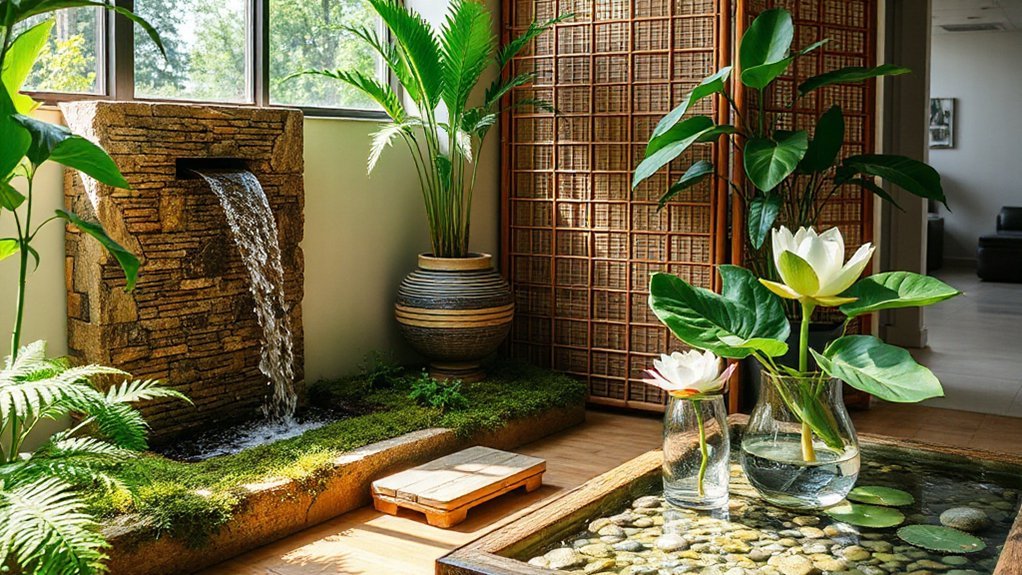
A budget-friendly way to bring nature closer is to start with simple, movable water features and natural elements that you can place anywhere you like. You’ll notice how gentle taps, bowls, or small cascades echo outdoors, without committing big space or cost. Place a shallow basin on a sturdy tray, add smooth stones, and let a tiny pump circulate water for soothing motion. Use natural accents like driftwood, pinecones, and air-purifying plants to soften corners and reflect light. Position near seating for audible calm and visual depth, but keep cables concealed and maintenance brief. Choose affordable fountains that fit your scale, and switch components seasonally to recharge the scene. Practical, quiet, and inviting, the setup remains flexible and easy to update.
Personalize Color Schemes and Textures
Color and texture set the tone of a space, and you can shape them with simple, natural choices you already own. You’ll notice how colors influence mood, and how textures invite touch, grounding you in the room’s rhythm.
- Pair calm colors with tactile fabrics to deepen the sense of connection, practicing color psychology in everyday items.
- Mix smooth surfaces with rough textures to create contrast that mirrors nature’s layers and adds depth.
- Reuse natural materials—wood, stone, jute—in varying finishes for cohesive texture pairing.
- Introduce small accents drawn from outdoors (plants, shells, linen) to keep the palette fresh and findings purposeful.
Frequently Asked Questions
How Quick Is the Visible Impact of Biophilic Design on Mood?
Visible mood benefits can appear within minutes to hours, especially after you breathe deeper Indoor air and notice Natural textures. You’ll feel calmer as plants and natural light boost your focus and reduce stress, guiding practical, nature-focused adjustments.
Can Biophilic Design Be Effective in Small Spaces?
Yes, biophilic design works in small spaces. You optimize space with vertical plant walls and compact furnishings, while embracing design flexibility to adapt for comfort, air, and mood—nature helps, even when square footage feels tiny.
Which Plants Are Best for Low-Light Interiors?
You should choose hardy indoor plant selection that thrives in low light; look for low light greenery like pothos, snake plants, and ZZ plants. You’ll notice steady growth, easy care, and a calmer, nature-focused interior.
How Can I Measure Biophilic Design Success at Home?
Like a quiet river, you measure biophilic design by momentum and mood. You track indoor air quality improvements and natural lighting solutions, noticing calmer spaces, clearer breaths, and closer connections to nature as you implement tweaks.
Are There Any Sustainability Concerns With Materials?
Yes—watch for eco friendly materials and renewable sourcing, then assess lifecycle impacts. You’ll prefer low embodied energy, non-toxic finishes, and locally sourced options, while choosing durable, repairable choices that minimize waste and support sustainable supply chains.
Conclusion
You see how small, intentional touches—green walls, natural textures, and soft daylight—transform a space into a calm, resilient sanctuary. When you bring plants along routes and eye-level spaces, you’re shaping microhabitats that reduce stress and boost focus. Fun fact: studies link biophilic design to up to a 15% increase in productivity. So, start simple—layer textures, savor scents, and let natural patterns guide color choices. Your space becomes a living, breathing extension of nature.
About the Author