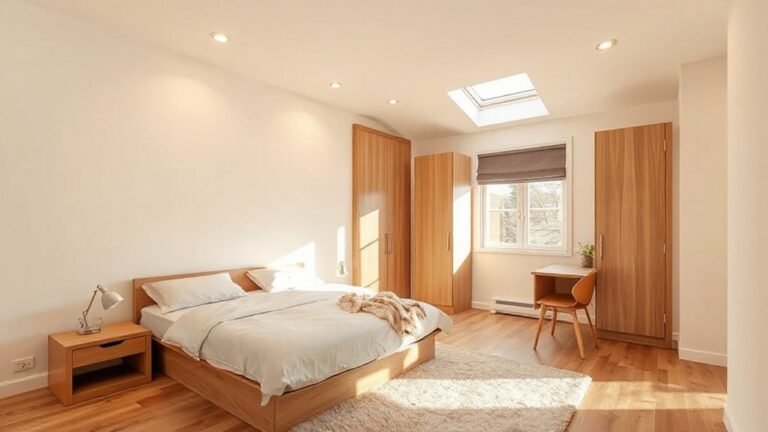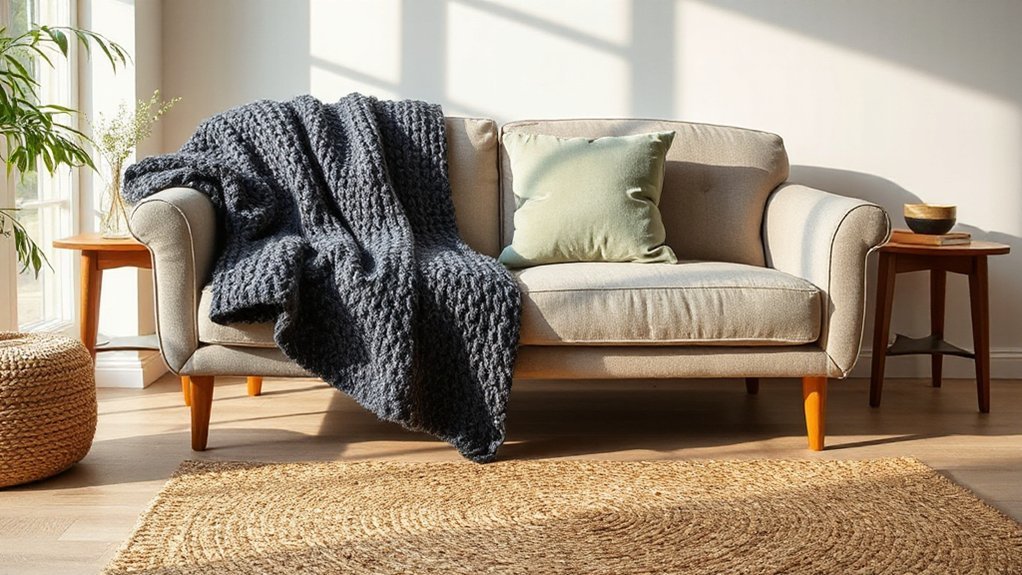
You might think new-builds are cold by design, but the right textiles can change that fast. You’ll choose breathable, insulating fabrics and layer textures for depth, so spaces feel inviting without sacrificing practicality. Think warm tones, tactile surfaces, and durable, easy-care materials that endure busy days. But there’s more to balance—color, flow, and maintenance all matter. Keep exploring how to blend comfort with modern design to create a truly livable warmth.
Warmth-First: Why Textiles Transform a Modern New-Build
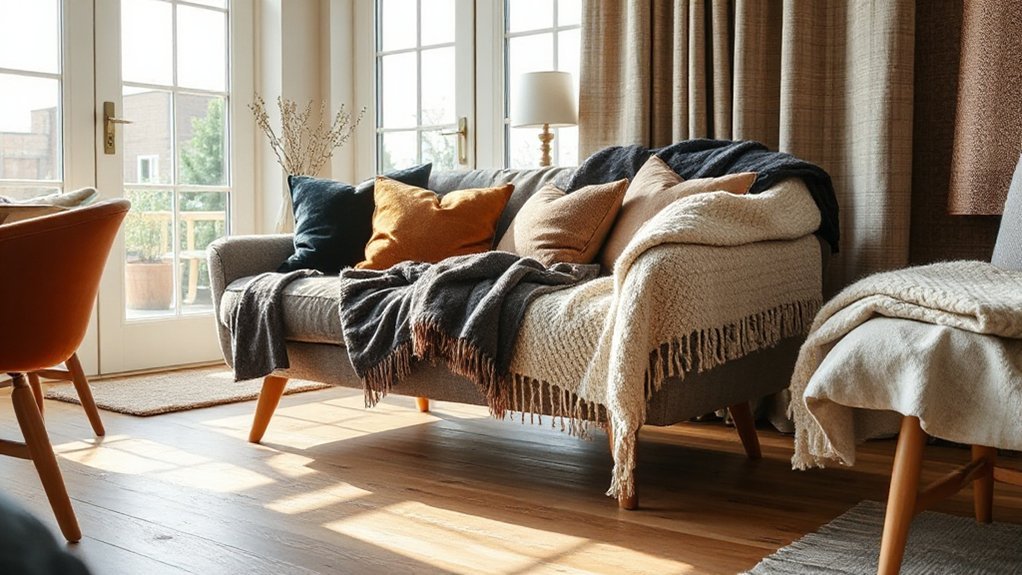
Textiles do more than add color or texture; they’re the quickest way to create warmth in a modern new-build. You’ll notice how weight, weave, and density shape comfort from the moment you enter. Choose fabrics with breathable warmth for living zones and tactile surfaces for touch-friendly details. Historical influences guide color stories and patterns without locking you into a single era, letting each room calmly reference time while remaining contemporary. You’ll also prioritize sustainable sourcing, selecting materials and suppliers that minimize environmental impact while maintaining performance. This approach keeps energy needs modest, supports durability, and reduces waste through durable, timeless pieces. In practice, combine warm neutrals with textured surfaces, so textures read as insulation without visible bulk.
Insulating Fabrics That Still Feel Cozy
Warmth remains the goal, but this time we’ll focus on fabrics that trap heat without adding bulk. You’ll prioritize insulating textiles that feel light yet effective, embracing form that stays clean and versatile. Look for materials engineered to minimize drafts: insulated knits, compact layers, and brushed finishes that retain warmth without bulk. You’ll notice how small design choices—dense weaves, hidden loft, and strategic pile—militate against cold without crowding your spaces. Choose sustainable fabric innovations that balance performance with comfort, so you get trails of warmth you can live with. Eco friendly textile choices matter, too: recycled fills, responsibly sourced fibers, and mindful production reduce footprint while maintaining coziness. In practice, test warmth retention, wash durability, and tactile appeal to verify practicality and style align.
Layer Textures to Build Warmth and Depth
Textures layer depth and warmth without bulk—so you can feel cozy without crowding the room. You’ll layer textures intentionally, pairing textiles that respond differently to light and touch. Start with a base of soft, plain weaves, then add a knitted or woven accent for tactile richness. Vary textures across cushions, throws, and curtains to create visual interest without clutter. Consider fiber choices: cotton for breathability, wool for warmth, linen for crispness, and a synthetic blend to hold shape. Balance weights so heavier pieces anchor seating while lighter textiles float on walls or windows. Use textile layering to guide sightlines and emphasize architectural features. Aim for cohesive tones, then punctuate with a subtle pattern. The result feels inviting, polished, and comfortably layered.
Durable Luxury: Soft, High-Performance Materials
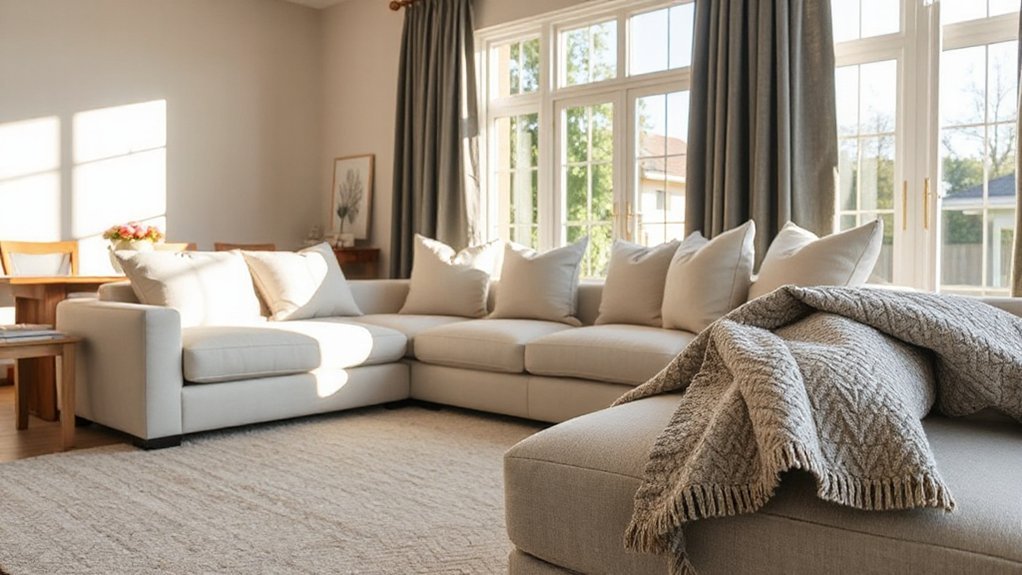
You focus on durable comfort fabrics that feel luxurious without sacrificing performance. When function meets luxury, you get textiles that resist wear while staying soft to the touch. This balance—long-lasting promise with premium feel—defines high‑performance materials for your new-build.
Durable Comfort Fabrics
Durable comfort fabrics blend softness with high performance, delivering enduring warmth and resilience for busy homes. You choose textiles that resist abrasion, maintain color, and feel inviting to touch after daily use. Focus on fabrics with robust weaves, tight threads, and treated finishes that stain less and clean easier. Eco friendly fibers meet practical needs, supporting reduced environmental impact without sacrificing comfort or durability. Look for blends that balance bounce and drape, so furnishings stay inviting while standing up to kids, pets, and frequent laundry. Vintage inspired patterns add character without signaling fatigue, ensuring longevity in style. Prioritize easy-care options, like machine-washable covers and fade-resistant dyes, to keep rooms feeling fresh and cohesive over time.
Performance Meets Luxury
Performance and luxury converge in fabrics that pair soft, inviting textures with high-performance traits. You’ll experience materials engineered for everyday life—stain resistance, fade protection, and easy care—without sacrificing comfort. This is where Innovative weaving and smart constructions meet refined aesthetics, delivering durable luxury you can feel. Look for blends that balance soft hand with resilience, so your spaces stay inviting after kids, pets, or busy routines. Sustainable fibers underpin the story, offering reduced environmental impact without compromising softness or performance. Expect tight weaves that resist pilling and moisture, and finishes that preserve color depth longer. The goal is clear: luxury you touch, performance you trust, with practical maintenance that keeps surfaces beautiful for years.
Long-Lasting Textile Promise
Even when life gets busy, these textiles stay polished: soft, luxurious textures meet high-performance fibers engineered for everyday wear. You’ll notice durability without sacrificing comfort, because durable luxury blends resilience with tactile appeal. Sustainable sourcing informs every step, from fiber choice to finish, ensuring your spaces feel responsible as they perform. Innovative weaves create stronger fabrics that resist pilling, fading, and wear, yet remain breathable and pleasant to touch. This balance means fewer replacements and more consistent aesthetics over time, perfect for new-builds that aim for longevity. You get practical, beautiful textiles that adapt to daily rhythms while maintaining polish, warmth, and refinement.
- Long-lasting performance with elegant textures
- Low maintenance, high resilience
- Sustainable sourcing at every stage
- Innovative weaves for strength and breathability
- Timeless, adaptable aesthetics
Color That Feels Warm, Not Sterile
Warm color combinations paired with soft textures create an inviting atmosphere you can feel as you enter. Choose hues like warm taupe, muted terracotta, and creamy ochre, then soften them with tactile fabrics such as brushed cotton or velvet. This practical mix adds depth and warmth without looking sterile, guiding your space toward cozy, lived-in appeal.
Warm Color Combinations
To create rooms that feel inviting rather than sterile, pair warm hues with textures that soften edges and add depth. You’ll craft cohesion through color psychology, balancing earthy browns, muted terracotta, and creamy neutrals with small pops of ochre or terracotta. Marine blues deepened with charcoal can feel cozy when you layer textiles, furniture, and rugs. Avoid sterile neutrals by leaning into vintage inspired palettes that echo lived-in spaces and soften lines with pattern and stitch. Use warm contrasts to guide attention and create zones without clutter. Start with a dominant warm base, then introduce 2–3 complementary accents for interest without overwhelm.
- Base warm neutrals and clay tones
- Rich accents in amber, brick, or moss
- Charcoal or navy for depth
- Textured fabrics to soften edges
- Vintage inspired palettes for cohesion
Soft Textures And Hues
Soft textures and hues knit a room together without shouting warmth. You’ll notice how textured fabrics add depth, inviting touch without overpowering light. Choose surfaces that absorb glare: brushed linen, velvet, and tweed create a tactile base you can layer over with simple furniture lines. Pair warm color palettes with restrained contrast to keep spaces from feeling crowded; think soft ochres, terracottas, and muted olive, balanced by taupe or warm gray neutrals. In practice, avoid cold, high-sheen finishes that contradict the coziness you’re building. Introduce pattern sparingly, letting texture do the talking. Accessories should reinforce comfort: cushions, throws, and rugs in cohesive tones. This approach yields a room that reads as welcoming, intimate, and thoughtfully designed for daily living.
Practical Styling for Comfort and Smooth Flow
Creating a practical, inviting layout starts with clear zones that guide movement and keep clutter at bay; start by measuring rooms to identify natural traffic paths and anchor furniture with a balanced focal point. You’ll shape flow through sofa orientation, rug size, and lighting that highlights key seating areas. Decorative accents punctuate personality without clutter, while ergonomic design keeps comfort front and center for everyday living.
- Define zones with rugs and furniture Groupings
- Choose low-clutter storage to maintain smooth traffic
- Position seating to face focal points and windows
- Use layered lighting for function and mood
- Integrate decorative accents that enhance flow without obstruction
Easy-Care Maintenance for Busy Homes
Busy homes demand fabrics and furnishings you can live with day in and day out. Easy-care doesn’t mean sacrificing style; it means choosing resilient textures and simple routines. Look for fabrics labeled stain-, odor-, and wrinkle-resistant, and favor blends that hold color after dozens of washes. Prioritize machine-washable options and quick-dry finishes so upkeep stays painless. Implement a minimal care schedule: wipe spills promptly, rotate textiles seasonally, and vacuum soft items to reduce wear. When selecting upholstery, pick easy-clean covers or slipcovers you can launder. Eco friendly options and budget friendly choices both exist: seek recycled fibers, low-impact dyes, and durable materials that last. Your space stays chic with less effort, fewer hassles, and steadier comfort.
Frequently Asked Questions
How Do Textiles Affect Perceived Room Temperature?
Textiles affect perceived warmth: you’ll feel cozier with heavier fabrics and lighter colors; breathable fibers prevent humidity buildup. Choose fiber sustainability, maintain textiles properly, and guarantee textile maintenance to keep comfort consistent while enhancing a room’s temperature perception.
Which Fabrics Retain Warmth Without Bulk?
You’ll find fabrics insulation in thinner weaves can keep warmth without bulk, while durable options resist wear. You’ll choose fabric durability and midweight textures, balancing aesthetics and practicality to stay cozy without adding unnecessary volume.
What Textures Enhance Acoustic Comfort?
Text textures that enhance acoustic comfort absorb sound effectively and feel inviting; opt for quilted panels and thick woven fabrics. They improve sound absorption and material durability, balancing practicality with aesthetics while you relax and stay focused.
Can Color Influence Heat Retention Visually?
Case study: a sunlit living room uses deep, matte charcoal curtains to visually suggest warmth; color psychology informs perceived heat, while thermal insulation remains functional. You’ll notice cooler interiors visually feel warmer, influencing comfort and energy use.
How Do Textiles Impact Energy Efficiency Long-Term?
Textiles impact energy efficiency long-term by cutting drafts, insulating spaces, and guiding heat flow when you choose sustainable materials; maintain them properly, and you’ll preserve performance. Consider maintenance considerations, durability, and aesthetics to sustain comfort and lower bills.
Conclusion
You’ll feel the difference the moment you step inside: textiles wrapping your new-build in warmth, texture, and easy care. It’s a practical cocoon that stays chic, from brushed cotton to velvet, layered with depth and color. Think of your rooms as a well-insulated hug—soft, durable, and ready for life. With breathable fabrics, high-performance materials, and simple maintenance, comfort and flow align effortlessly, turning a modern shell into a welcoming, sustainable home.
About the Author