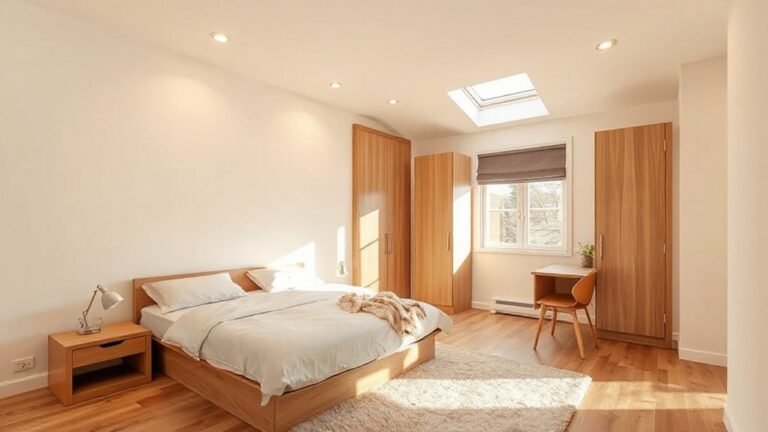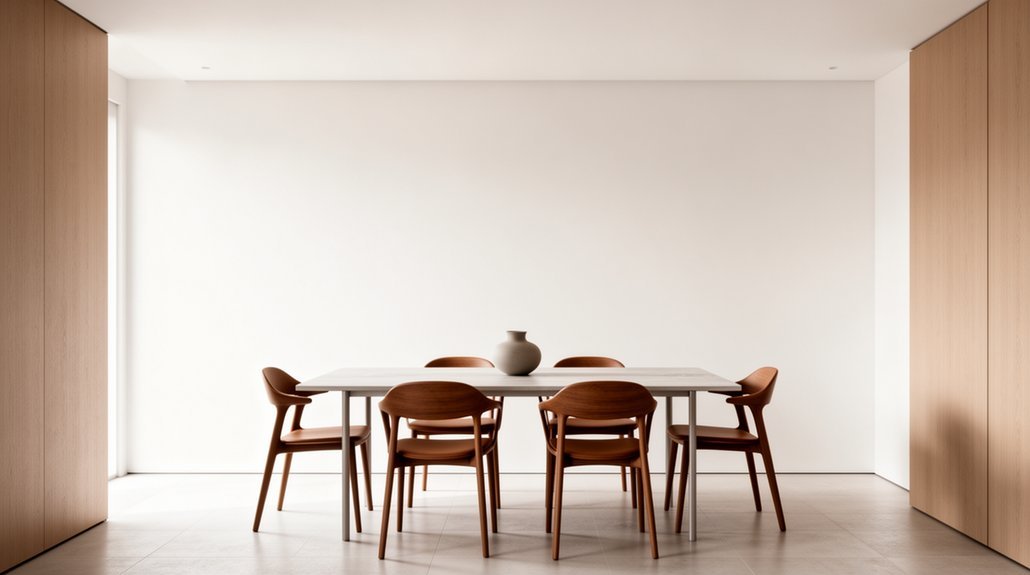
A minimalist dining room with clean lines and warm accents pairs restrained form with inviting textures. You’ll choose furniture with straight edges and soft upholstery in bouclé, felt, or velvet, using recycled steel and certified wood for sustainability. Warm wood tops, subtle metal accents, and matte finishes create depth, while lighting is clean, dimmable, and glare-free. Hidden storage keeps surfaces uncluttered, and careful placement preserves flow. If you keep exploring, you’ll uncover how to perfect this look.
Define a Minimalist Dining Room With Warm Accents
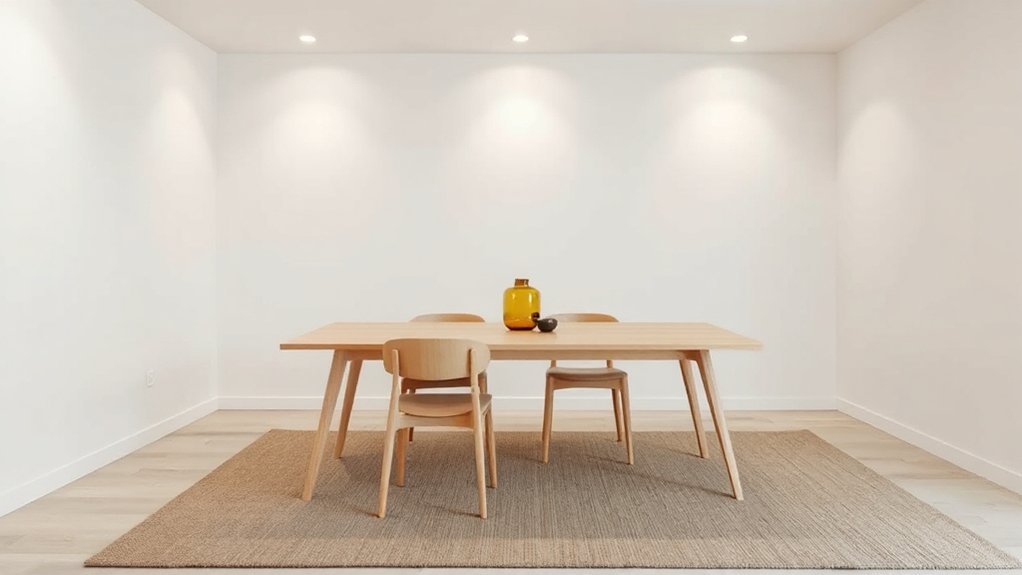
A minimalist dining room with warm accents blends clean, uncluttered lines with inviting textures and tones. You define the space by restraint: keep it simple, but choose surface finishes and materials that convey warmth.
Use sustainable materials to honor the aesthetic without sacrificing durability or function. Opt for a neutral palette grounded by rich complements—wood, leather, or fabric in subdued hues.
Vintage decor can anchor the room with character, yet it must remain purposeful, not decorative clutter. Limit accessories to a few thoughtfully chosen pieces that echo the core tones and textures.
Lighting should highlight texture and form, avoiding glare.
Guarantee the layout supports easy movement, clear sightlines, and intimate dining, so warmth remains a constant and deliberate feature.
Choose Furniture With Clean Lines and Soft Textures
To keep a minimalist dining room warm without sacrificing clarity, choose furniture with clean lines and soft textures. Prioritize silhouettes with straight edges and gentle curvature, avoiding bulky arms or ornate details.
Opt for upholstered pieces in muted, tactile fabrics—hinted textures like bouclé, felt, or velvet offer warmth without visual clutter. Choose cushions and seatings with subtle contrast in a cohesive palette to preserve calm.
Favor sustainable materials, such as recycled steel, certified wood, or high-quality composites, that endure daily use.
Pair furniture with statement lighting to anchor the space; guarantee fixtures have clean profiles and warm-toned bulbs to cast inviting glow.
Keep surfaces uncluttered, and let the texture variation do the visual work, not excess ornamentation. Continuity across pieces reinforces the room’s understated elegance.
Incorporate Natural Wood and Subtle Metals for Warmth
Natural wood adds warmth and tactility to a minimalist dining room, pairing beautifully with subtle metals. You shape the space by selecting warm oak or walnut tabletops and legs in clean, unembellished silhouettes.
Pair these with restrained metal accents—brushed brass, graphite, or stainless. The contrast stays calm when finishes are rustic yet refined, echoing natural grain without dominance. Favor matte sheens over high gloss to preserve serenity.
Use wood as a canvas: let textures speak with tight grain, subtle knots, and consistent tone. Industrial accents—shelving brackets, lighting silhouettes, or hardware—should feel like complementary whispers, not focal statements.
Keep progressions seamless via matching tones and predictable grain direction. This approach reinforces tactility, warmth, and cohesion without compromising minimalist clarity.
Lighting Strategies: Glow Without Clutter
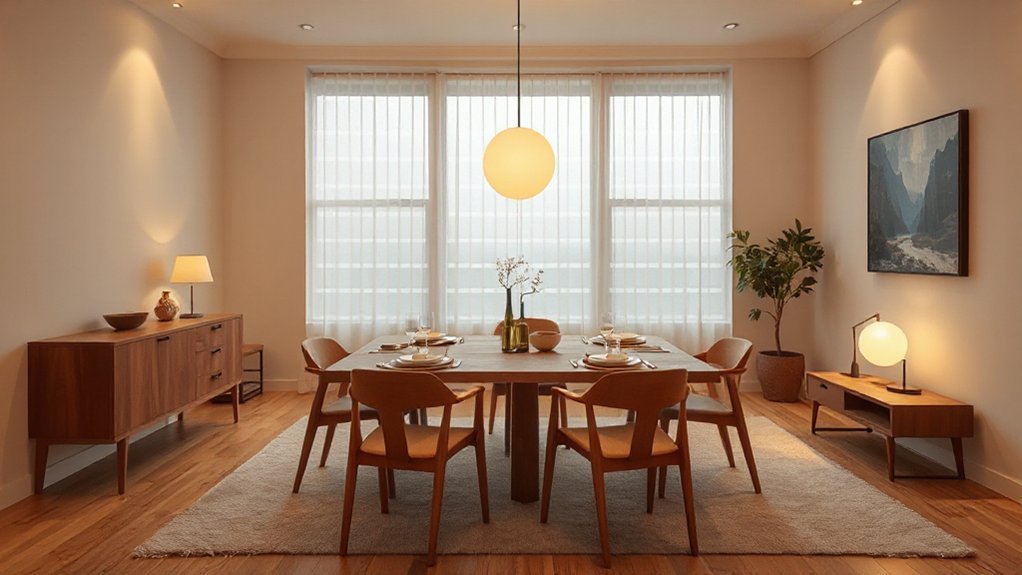
Lighting in a minimalist dining room should glow softly without clutter. You prioritize function over flourish, selecting tools that deliver light where it matters most.
Use smart lighting to create scenes that meet meal moods—ambience for intimate dinners, brighter task light for cleanup—without adding bulk. Choose minimalist fixtures with clean lines, concealed hardware, and muted finishes that blend into walls or ceilings.
Recessed or edge-lit options minimize silhouette while maximizing glare-free, even illumination. Dimmer controls empower you to shift from high-contrast reading to gentle evening warmth in a single switch.
Pair lighting with natural daylight, coordinating color temperatures to maintain consistent tone. Avoid ornate chandeliers or exposed cords; keep all cables tucked, outlets streamlined, and fixtures sized to room proportions.
Hidden Storage Ideas to Keep Dining Areas Clutter-Free
Hidden storage can transform a dining area, keeping surfaces clear while preserving form. You’ll hidden-reveal practical solutions that blend with minimalist lines.
Prioritize hidden compartments integrated into sideboards, bases, and dining benches, so everyday essentials stay out of sight yet reachable. Choose flush, push-to-open mechanisms to maintain uninterrupted surfaces and avoid handles that interrupt the silhouette.
Storage benches offer dual function: seating plus drawers or hinged tops for tableware, linens, and servingware. Opt for interiors with dividers or shallow bins to streamline retrieval.
Use undershelf cubbies in cabinetry to maximize vertical space without crowding. Conceal electronics behind cabinet doors and within ottomans or footstools to reduce visual clutter.
Plan layouts that preserve walkways and access while preserving the room’s clean, warm aesthetic.
Color, Textiles, and Art to Finish the Look
Start with color palettes that speak softly and cohesively, choosing tones that elevate rather-dining-room surfaces without overpowering them.
Add textures for warmth—think natural fibers and matte finishes—so your space feels inviting yet pared down.
Place art with intention, balancing scale and sightlines to guide the eye without clutter, and let each piece reinforce the minimalist mood.
Color Palettes That Speak
1) Use one high-contrast element sparingly to anchor the room.
2) Introduce a soft, warm accent through textiles and artwork.
3) Favor bold shapes or lines in a single piece to create visual impact.
This approach preserves clean lines while delivering personality, ensuring every color choice reinforces the minimalist narrative.
Textures For Warmth
Textures add warmth without clutter. In a minimalist dining room, your goal is tactile contrast that stays quiet yet inviting. Choose textured wall coverings to soften architectural lines without overwhelming them; think subtle ribbing, linen-serge textures, or gypsum plasters with a refined matte finish.
Pair these with textiles that feel substantial under foot and to the eye—dense weaves, wool blends, and leather accents that age gracefully. Your table settings should signal intention with tact and restraint: tactile table settings use natural fibers, exposed seams, and a restrained palette to elevate the room without shouting.
Keep surfaces clean; let texture do the talking. Balance warmth with ample negative space, and your dining area will feel cohesive, calm, and refined.
Art Placement Principles
Art placement in a minimalist dining room hinges on color, textiles, and framed pieces that reinforce calm without competing with the clean lines. You shape the overall mood by choosing Abstract art that echoes the room’s palette and keeps focal points quiet, not loud.
Pair textiles and mats with restrained frames and clear spacing. Balance is achieved when Statement lighting illuminates art without glare, creating depth rather than dressiness.
- Align color across art, upholstery, and accessories for cohesive calm
- Use high-contrast yet muted tones to elevate texture without shouting
- Select framing and placement that reinforce rhythm and negative space
This approach delivers a polished finish, where Abstract art and Statement lighting finish the look with subtle authority.
Frequently Asked Questions
How Do You Balance Warmth With a Neutral Palette?
To balance warmth with a neutral palette, you mix vintage textiles and vibrant accessories thoughtfully; add soft textures, layered lighting, and wood tones to create depth while keeping the space calm and cohesive.
What Small-Space Layouts Suit Minimal Dining Rooms?
You should prioritize compact layouts with a small dining table, slim chairs, and vertical storage. Use decorative lighting and statement art to anchor the space, creating function and focal points while maintaining clean lines and efficient traffic flow.
Which Wood Tones Pair Best With Metal Accents?
You should pair warm woods like oak or ash with cool metal finishes such as brushed nickel or matte black for balance. This wood pairing complements modern lines, keeps contrast subtle, and preserves a bright, cohesive dining room feel.
How Can Textures Influence Perceived Space Size?
Texture contrast can visually expand or compress a space, depending on contrasts between surfaces. You influence size perception by pairing varied surface finishes with smooth ones, using tactile differences to create depth and perceived airiness.
Are There Low-Cost Materials That Read Premium?
Yes—there are. You can achieve affordable luxury with budget friendly elegance using materials like laminate with wood grain, ceramic tiles, and faux leather. They read premium, wear well, and stay cost-efficient for striking, concise, high-end spaces.
Conclusion
In this minimalist dining room, you’ve fused clean lines with warm accents to create calm, inviting spaces. You’ll notice how natural wood, soft textures, and subtle metals elevate simplicity without shouting. Choose pieces with quiet geometry, glow from understated lighting, and concealed storage to keep surfaces serene. With thoughtful color, textiles, and art, you’ve crafted an environment that feels timeless—like a whisper that’s somehow louder than a drumbeat. Your room isn’t just stylish; it’s practically a miracle.
About the Author