
The Colchester property prices map is shifting as transport upgrades, regeneration, and new amenities sharpen demand in key wards and near rail hubs. You’ll want to track price momentum, rental yields, and turnover alongside project milestones to spot early growth signals. With markets tightening and refurb demand rising in historic zones, a disciplined framework can reveal where capital is converging next—yet the real opportunities hinge on timing, access, and how these initiatives translate into price premiums.
How to Identify Colchester Growth Areas: Criteria and Process

Identifying Colchester growth areas starts with clear criteria and a repeatable process. You’ll define demand signals, supply constraints, and affordability thresholds to establish objective benchmarks.
Focus on population growth, job creation, and infrastructure plans that unlock value in a 5–10 year horizon. Track housing turnover, price momentum, and rental yields to detect true market momentum, not short-term noise.
Weight indicators by reliability and lead time, then synthesize into a scoring framework you can consistently apply across neighborhoods. Prioritize areas near waterfront developments and luxury apartments as potential premium catalysts, while validating with transport accessibility, school quality, and flood risk assessments.
Iterate quarterly, adjust weights with new data, and document decisions for transparency, ensuring you’re forward-looking yet grounded in measurable metrics.
Colchester Growth Hotspots Today: Markets by Ward and Street
Colchester’s growth hotspots are now most visible when you map by ward and street, not just overall town trends. You’ll see tight clusters where housing turnover, new-build completions, and rental demand align, revealing markets that outperform the wider market.
Historical trends show pockets of acceleration near transport nodes and schools, with steadier gains in adjacent urban cores. Our market analysis indicates that ward-level data better predicts momentum than city-wide averages, helping you target investments with sharper risk-adjusted returns.
What Drives Price Momentum in Colchester: Key Indicators
Price momentum in Colchester hinges on a tight set of indicators: price growth trends, turnover velocity, and new-build activity.
You’ll see momentum driven when historical pricing shows consistent upticks across sectors, with shorter bidding cycles and rising average sale prices per quarter.
Turnover velocity matters: quicker exchanges signal appetite, while longer cycles hint at cooling demand.
New-build activity adds a forward push, expanding supply pockets that align with buyer preference and price resilience.
Demographic shifts shape the mix of buyers, influencing demand depth and price trajectory as local incomes, age profiles, and household formation evolve.
Monitor momentum signals quarterly to detect turning points early.
In doing so, you’ll identify sustainable growth paths and avoid overstretched pricing.
Consider demographic shifts and historical pricing together for a grounded trajectory.
How Transport Links Boost Value in Colchester
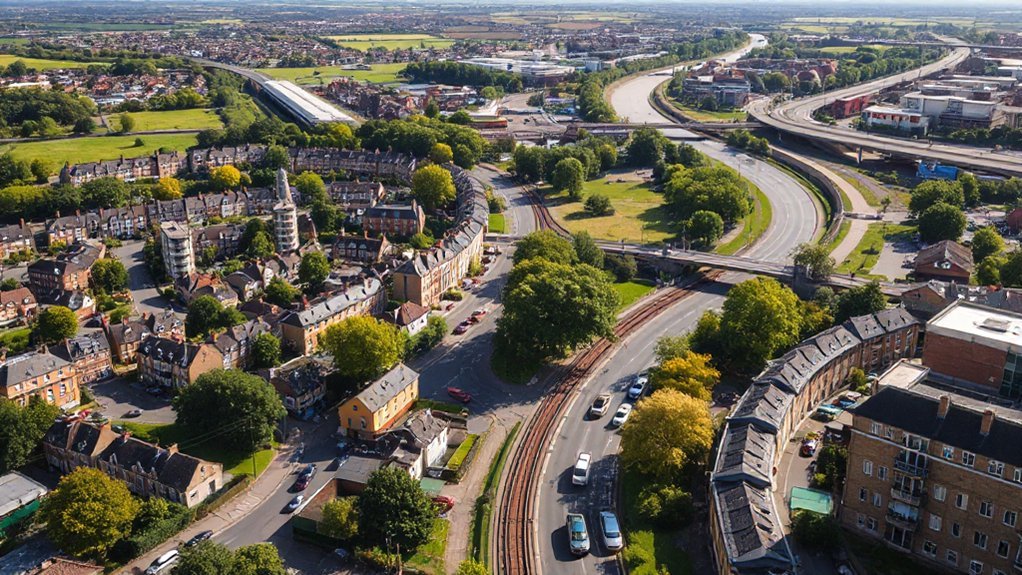
Transport links directly influence value, as better accessibility tends to raise demand and drive price growth. You’ll see stronger price momentum where connectivity expands, with data showing commuters and investors favoring well-connected areas.
As networks improve, property demand concentrates around transport hubs, reinforcing value across Colchester.
Transport Links And Value
Efficient transport links directly lift Colchester’s property outlook: neighborhoods with rail and road access see quicker sale times and stronger price momentum, as commuters and businesses prioritize connectivity.
You’ll notice that stations on the Colchester–London corridor correlate with tighter days-on-market and higher asking prices, a pattern echoed by FTSE-style market signals and local agent reports.
Historical trends show sustained demand near rail hubs, with incremental premium gaps narrowing as new lines expand.
Market analysis indicates road networks around strategic arterials reduce congestion, boosting occupier confidence and resale ceilings.
Looking ahead, planned upgrades and station improvements are likely to widen value corridors, while careful zoning and transit-oriented development will amplify long-run returns for cohorts prioritizing accessibility and reliability.
Accessibility Drives Prices
Accessibility isn’t just a feature; it’s a value driver: homes with quick rail and road links tend to sell faster and at higher prices, as connectivity becomes a top priority for buyers and investors.
In Colchester, data shows proximity to rail hubs and major arterials correlates with stronger price growth and shorter Time on Market.
Areas with developing transport projects attract both end users and speculators, pushing demand for upgraded infrastructure, walkable corridors, and parking efficiency.
Luxury apartments near transit stations often command premium rents and sale prices, reflecting market speculation about future accessibility gains.
Looking ahead, precise transport timelines, modal integration, and commuter reliability will matter most for price trajectories and investor confidence.
Expect continued differentiation between well-connected submarkets and those relying on distant nodes.
Connectivity Boosts Property Demand
Connectivity isn’t just about moving people; it’s a demand driver that shapes Colchester’s property market. You’ll see faster growth around stations and key corridors, where commuter access reduces perceived risk and expands buyer pools.
Data indicates property values cadence follows transport prowess, with price momentum aligning to service frequency, reliability, and new park-and-ride projects. Historical pricing suggests that even modest improvements in connectivity can trigger outsized gains when paired with planned amenities and housing supply upgrades.
For buyers, the takeaway is timing: early investment near upgraded links often outpaces broader market hikes. Local property taxes may rise gradually as infrastructure outcomes translate into higher assessed values, supporting higher resale ceilings.
Track service expansions, then calibrate your offer to anticipated value realization.
Regeneration in Colchester: Projects, Timelines, and Price Effects
Regeneration timelines are unfolding in clear phases, and you’ll see price effects respond as each project hits milestones.
We’ll track what changes in redevelopment areas mean for nearby values, based on current plans and provisional budgets.
Look ahead to where area redevelopments open opportunities, and how those timing windows could shape momentum in Colchester property prices.
Regeneration Timelines and Phases
Timelines for Colchester’s regeneration projects map a clear trajectory from planning to delivery, with phased milestones that align development activity, investment, and price impact. You’ll see staggered starts, temporary disruptions, and steady completions that create predictable demand curves.
Data indicate cycles where luxury apartments and enhanced public domains accompany district upgrades, reinforcing value in historic districts while modernizing entry points. By design, these phases enable risk-adjusted investment and clearer price trajectories as each milestone releases funding and early occupancy.
- Planning to consent milestones drive initial investor confidence
- Construction windows align with public infrastructure upgrades
- Early occupancy boosts nearby rents and demand signals
- Completion phases release longer-term value in surrounding assets
Price Impact of Projects
Projected project cohorts and phased delivery in Colchester are set to shape price trajectories as planned milestones reveal capital, infrastructure upgrades, and early occupancy. You’ll see price pressure rise where luxury apartments cluster near new transport links and waterfront developments, signaling premium demand.
Data indicates asset-level appreciation tracks delivery speed, with faster milestones pushing short-term yields higher and mortgage risk modestly elevated. Population inflows concentrate around regeneration hubs, lifting rents and converting speculative activity into stabilised value.
Areas adjacent to refreshed public spaces, schools, and commercial anchors exhibit multi-year uplift, while phased occupancies mitigate overhang risk. You’ll benefit from transparent cadence, as quarterly updates align investor confidence with measurable milestones.
Area Redevelopment Opportunities
As Colchester’s regeneration unfolds, you’ll see renewed districts driving price dynamics through targeted investments in transport, public space, and housing mix.
Area redevelopment opportunities hinge on timely project delivery, measurable uplift in connectivity, and enhanced amenity layers that attract buyers and tenants.
Expect shifts in demand toward places with preserved Historical architecture, integrated green corridors, and vibrant local culture, including Local cuisine districts that boost evening footfall.
Data shows phased timelines correlate with price momentum, while mixed-use blocks sustain activity beyond construction peaks.
- Transit improvements align with peak rental cycles
- Public environment upgrades raise livability scores
- Heritage-led schemes protect value of Historical architecture
- Culinary and cultural nodes drive demand and price resilience
School Quality, Parks, and Family-Priendliness: Impact on Premiums
School quality, parks, and family-friendliness shape premiums by signaling long-term value: higher-rated schools boost demand and resale prices. Well-maintained green spaces attract families, and safe, walkable neighborhoods reduce commuting trade-offs.
You’ll see premiums rise where schools perform consistently above peers, with catchment stability driving repeat buyers. Parks with active maintenance correlate to longer residence durations and higher willingness to pay for proximity.
Data indicates shorter school commutes and safer routes boost buyer confidence, translating into tighter spreads between nearby and distant properties.
Over the next 3–5 years, expect premiums to normalize around a core family-friendly threshold, even as historic architecture and local cuisine attract discretionary buyers.
Strong district performance supports resilience, while targeted improvements in green infrastructure amplify upside in Colchester neighborhoods.
Emerging vs Core Neighbourhoods: A Clear Comparison

You’ll see emerging and core neighbourhoods diverge on growth, with gaps widening as development tightens supply.
The contrast in market segments reflects distinct trajectories in pricing, turnover, and investment interest.
This sets up a data-driven lens to compare how emerging areas mature versus established cores.
Emerging vs Core Gaps
Emerging neighborhoods show stronger price growth and higher upside potential than core areas, driven by new developments, evolving amenities, and investor interest. You’ll see tighter timelines to completion and earlier rent upside, especially where Luxury apartments and modern retail integrate with Green spaces. This mix creates measurable demand differentials, supported by data on vacancy compression and yield resilience.
Core areas stay stable but may lag on velocity, while gaps in transport access or school capacity can widen opportunity in nearby emerging pockets. By tracking delivery schedules, pricing per square foot, and amenity additions, you can forecast where value compounds first.
1) Delivery cadence matters for price acceleration
2) Amenity-led demand shifts drive cap rates
3) Transportation access gates upside potential
4) Green spaces correlate with higher rents and retention
Neighborhood Growth Contrast
Neighborhood growth shows a clear split between emerging and core areas. You’ll see higher velocity in emerging neighborhoods, driven by affordable entry points, improved transit, and targeted development.
Core areas retain steady demand but exhibit slower price acceleration, reflecting limited supply and long-standing desirability. Data indicate a widening gap in year-over-year appreciation, with emerging pockets outperforming by double-digit margins in recent quarters.
You should watch how infrastructure upgrades, new housing stock, and mixed-use projects boost walkability and daytime footfall.
Historical drivers matter: districts with historic architecture and preserved streetscapes attract renovation investments and price resilience, while new-build zones concentrate supply and favorable pricing dynamics.
Local cuisine and cultural amenities reinforce price momentum, helping neighborhoods shift from niche to mainstream desirability.
Market Segment Differentiation
While emerging and core neighborhoods diverge in pace, the distinction is evident in price trajectory, supply dynamics, and investment signals. You’ll see rising yields in Emerging areas, while Core districts hold steadier, higher-quality demand—especially for Luxury apartments and historic districts assets—reflecting tighter supply and selective development.
This differentiation guides buyers and developers toward targeted strategies, forecasting where price momentum may outpace broader markets.
1) Price dispersion narrows or widens by segment, signaling risk-adjusted opportunities.
2) Vacancy rates shift—lower in Historic districts, higher in newer pockets.
3) Rent growth correlates with amenity access and heritage value.
4) Investment cadence favors adaptive reuse and brand-name operators in Core areas.
Top Up-and-Coming Neighborhoods to Watch This Year
If you’re scouting Colchester investment prospects, these up-and-coming neighborhoods are worth watching this year because recent price momentum, new developments, and improving amenities signal solid potential for durable gains.
You’ll see pockets where starter homes mix with ongoing regeneration, keeping affordability aligned with growth. Data shows modest to mid-single-digit price upticks quarter over quarter, driven by targeted infrastructure upgrades and enhanced commute options.
Look for neighborhoods benefiting from mixed-use projects and early-stage luxury developments that attract professionals while preserving affordable housing options for longer-term stability.
Proximity to schools, green space, and new retail improves desirability and resale trajectories.
In aggregate, momentum points to diversified risk with upside if planning permissions stay favorable and new capital remains patient.
Persistent Demand: Established Colchester Hotspots
Persistent demand centers on Colchester’s established hotspots, where long-running appeal translates into steady price resilience and rental stays. You’ll notice these areas harness deep local history and varied architectural styles, anchoring value even as markets shift. The pattern is data-driven: enduring desirability supports lower vacancy, tighter spreads, and predictable capital growth.
- Steady rent retention reflects proven demand in core districts.
- Local history and architectural styles attract diverse buyers and tenants.
- Infrastructure and schools reinforce resilience, sustaining long-term value.
- Market signals point to continued stabilisation beyond short-term cycles.
You should monitor how these hotspots respond to policy changes, transport upgrades, and redevelopment plans, since upgrades in established neighborhoods can amplify returns while preserving character.
This forward-looking traction helps forecast future price stability and selective growth within Colchester’s prized cores.
Rental Yields in Growth Corridors: Where Returns Sit

Growth corridors around Colchester offer a distinct yield profile compared with established cores, as new developments and commuter-accessible sites tilt demand toward rising perimeters. You’ll see higher gross yields in newer suburban pockets, supported by value-driven rents and shorter vacancy cycles.
On average, yields hover around mid to upper 5% ranges in growth corridors, with premium pockets near luxury apartments commanding tighter spreads yet stronger rent growth catalysts.
Historical districts contribute stability, but lighter supply in those cores can temper appreciation versus growth routes. Demand from commuters sustains consistent cash flow, while newer builds attract tenants seeking modern amenities.
Looking ahead, macroeconomic cooling could compress cap rates slightly, yet rental performance remains resilient, especially where transportation links meet mixed-use schemes and distinctive housing options like luxury apartments.
First-Time Buyer Opportunities in Emerging Zones
Emerging zones around Colchester present compelling first-time buyer opportunities driven by price discipline, improving transport links, and modern, affordable housing options. You’ll find bricks-and-maths clarity in rising pockets where affordability meets future value, not hype. Data shows steady price growth, prudent debt levels, and growing rental demand that boosts ownership viability.
Look for developments near transit corridors and amenities clusters that support long-term equity. Luxury apartments are entering price bands you can access, paired with lower maintenance costs and future-proof layouts. Historic landmarks nearby add cultural value without inflating risk, making these zones attractive for first-time buyers seeking both character and practicality.
1) Affordable entry points near transit hubs
2) New-builds with modern layouts and low upkeep
3) Strong outward investment from renters turned owners
4) Planned amenities boosting resale appeal
Value by Area: Price Per Square Foot You Can Trust
Across Colchester, price per square foot varies by neighborhood, but solid patterns emerge: walkability to transit, local amenities, and redevelopment momentum reliably lift value. You’ll see price signals align with historical trends, showing steadier gains in mixed-use corridors and pocketed growth in central areas.
By area, you can trust square-foot metrics to reflect real prospects rather than hype, because data lags are minimized and vendor bias is limited.
Demographic shifts matter: younger buyers chase affordability near transit, while downsizers favor mature neighborhoods with amenities and accessibility.
Forward-looking, expect continued divergence as redevelopment accelerates in underutilized zones and stabilization occurs in traditional cores.
Use price per square foot as a consistent, comparative gauge, not a sole predictor, and monitor shifting demand among key resident cohorts.
Infrastructure Upgrades vs Market Timing: What Moves Prices

Infrastructure upgrades can shift price trajectories by boosting local appeal and project feasibility.
Meanwhile, timing moves in the market reflect momentum signals that buyers and sellers act on now.
You’ll want to weigh how visible investments correlate with short- and long-term demand patterns, not just the existence of projects.
Infrastructure Impact Timing
Infrastructure upgrades can lift prices, but the timing matters: markets often price anticipation before work starts, then settle once projects move from announcements to execution.
You’ll see how historical trends shape expectations and how market forecasts can diverge from initial hype. When budgeting for Colchester, recognize that price gains may precede physical work and decelerate after milestones.
Assess project scope, funding certainty, and local congestion relief as key drivers. Early benefit is often priced in, with incremental gains tied to completion progress. Use ongoing data to adjust forecasts and avoid overpaying during speculative surges.
- Track official milestones and funding announcements
- Compare local vs national project impact timelines
- Align entry points with pre-construction momentum
- Reassess forecasts after major approvals
Market Momentum Signals
Market momentum around infrastructure upgrades hinges on timing signals that traders and homeowners watch closely. You assess whether projects open new demand, or merely shift short-term activity, by comparing bid-side reactions to announcement milestones with observed price responses.
Historical trends show that lead-time optimism often precedes measurable gains, then consolidates as projects shift from planning to execution. You should track project cadence, funding approvals, and regulatory clearance, aligning them with price arcs in nearby neighborhoods.
Market forecasts suggest momentum strengthens when upgrades connect key employment hubs, reduce commute times, or reveal underused assets. Yet you must remain vigilant for reversion risks if execution slips or budgets overrun.
Use a disciplined framework: monitor signal clarity, confirm with multiple indicators, and adjust exposure as forecasts evolve.
Low-Competition Streets With High Potential
In Colchester, several low-competition streets show outsized upside, driven by steady demand, limited new supply, and proximity to amenities. You’ll notice clear signals in demand dispersion, price resilience, and development hush in these pockets, with Luxury apartments and historic landmarks anchoring value.
Looking ahead, data points suggest modest rent growth and stronger resale angles as infrastructure upgrades open access without flooding the market.
- Favor streets adjacent to revitalized mixed-use hubs
- Prioritize blocks near preserved heritage sites
- Target corridors with improving transit links
- Seek pockets showing low recent listing frequency relative to area demand
Buy-to-Let Strategy in Growth Corridors: Practical Tactics
Target growth corridors give you scalable demand for rental properties, so align your buy-to-let plan with measured population and employment trajectories.
You should monitor rent-to-price signals, occupancy trends, and local development milestones to time acquisitions and exits more precisely.
Use clear risk controls, including portfolio diversification, debt service buffers, and exit scenarios to stay resilient as market dynamics evolve.
Target Growth Corridors
Growth corridors offer a disciplined path for buy-to-let success, focusing on areas with proven price resilience, rising tenant demand, and favorable planning trajectories. You should target corridors that combine solid rent growth with accessible entry prices and strong infrastructure plans.
Data points show sustained occupancy and stable yields in these routes, even amid market fluctuations. Look for pockets near luxury apartments and historic districts where amenity access and transport links drive rental depth.
Position your portfolio to capture mid- to long-term demand from professionals and relocating families.
- Prioritize areas with documented rent growth and clear planning approvals
- Align purchases with near-term infrastructure projects and transit upgrades
- Favor properties near luxury apartment clusters and historic districts
- Run conservative cash-flow models with sensitivity to interest-rate changes
Leverage Buy-To-Let Demand
Strategically channel Buy-to-Let demand by mapping tenant flows to the growth corridors you’ve identified. Then deploy data-driven pricing and hold-out cash buffers to protect margins through rate shifts.
You’ll align portfolio mix with projected occupancy, targeting steady yields even as interest rates adjust. Monitor demographic shifts, commuter patterns, and employer expansion to forecast occupancy duration and rent escalations.
Leverage centralized analytics to calibrate lease terms, rebates, and renewal incentives that sustain stability during volatility. Track Property taxation impacts and optimize cash flow with tax-efficient structures while complying with Legal regulations that govern ownership, tenancy, and rent adjustments.
Maintain transparent reporting for lenders and investors, ensuring liquidity buffers remain resilient and decision timelines stay tightly aligned with measurable market signals. Continuous review will preserve upside while controlling downside risk.
Risk Management Tactics
To manage risk effectively in a Buy-to-Let strategy across growth corridors, you’ll deploy a disciplined, data-driven framework that links occupancy trends, rent trajectories, and rate volatility to decision-making.
You monitor market signals from Luxury apartments and Waterfront developments to stress-test scenarios, preserving liquidity and limiting leverage in cyclical downturns.
Your approach emphasizes measurable controls, transparent KPIs, and proactive adjustments as data shifts.
- Align rent pricing with forecast occupancy to stabilize cash flow.
- Use sensitivity analyses on interest rates to cap financing risk.
- Diversify across asset types within growth corridors for resilience.
- Prioritize properties with scalable value, like premium finishes and amenity-rich layouts.
Market Signals to Watch: Listings, Days on Market, Turnover
Listings, days on market, and turnover are the levers you’ll watch to gauge Colchester’s housing pace: rising listings can signal eased demand, shrinking days on market points to robust buyer interest, and higher turnover reflects a more fluid market.
You’ll see that momentum matters: data shows where inventory tightens or eases, guiding pricing expectations and timing. In luxury apartments, shorter days on market often precede price gains as demand concentrates among premium segments.
For Historic landmarks-adjacent pockets, turnover can indicate shifting desirability tied to lifestyle upgrades and preservation prestige.
Monitor weekly price per square foot trends alongside volume shifts to confirm momentum. With these signals, you’ll anticipate cycles, adjust strategies promptly, and distinguish durable demand from transient spikes in Colchester’s evolving market.
Regeneration Schemes That Move the Needle: What to Track
Regeneration schemes that move the needle hinge on tangible impact—improved affordability, job access, and long-term value—so track both funding momentum and on-the-ground delivery.
You’ll want a data-driven view: align capital flows with measurable outcomes, and compare historical trends against current milestones. Market analysis shows where delivery lag or accelerates, guiding timing and expectations for price growth.
Monitor project pipelines, completion rates, and local hiring, then map shifts to neighborhood affordability and turnover.
Focus on governance, transparency, and risk controls to assess durability rather than hype.
1) Funding timing and sources
2) Delivery milestones vs. original plan
3) Local employment and skills uptake
4) Long-term value signals and maintenance funding
Amenities Access and Price Premiums: What Matters Most
Amenities access often drives price premiums because buyers value ease of living: proximity to parks, schools, transit, and essential services translates into measurable resale and rental uplift. You’ll see data showing tighter spreads where daily conveniences cluster, and where transit access shortens commuting costs.
In Colchester, price differentials correlate with proximity to luxury amenities and well-preserved historic landmarks, signaling premium willingness even in slower growth zones.
Forecasts imply that micro-neighborhoods near cultural venues and premium shopping outperform broader district averages, while access to green space sustains higher cap rates.
Investors should weigh access latitude—walkability, bike lanes, park buffers—against density plans. Focus on areas delivering consistent amenity access, not just novelty, to sustain long-term value.
Prioritize locations with preserved landmarks and evolving luxury amenity ecosystems.
Building Your Colchester Growth Plan: Step-by-Step for Investors
To build a robust Colchester growth plan, start with a data-driven diagnosis: map current price trajectories, turnover, and rental yields by micro-neighborhood, then identify clusters with strong amenity access and improving transit links.
You’ll target pockets where Historic architecture signals durability and Local art boosts niche appeal, then forecast concentration of demand.
4 key steps to solidify your plan:
1) quantify risk-adjusted returns across micro-areas;
2) model traffic, walkability, and transit improvements;
3) align asset mix with amenity-driven demand;
4) set entry/exit thresholds using yield, price growth, and vacancy data.
Focus on near-term catalysts and long-term value. This approach keeps you ahead, leveraging historic architecture charm and local art scenes to sustain growth.
Frequently Asked Questions
How Do You Measure Growth Area Potential in Colchester Accurately?
You measure growth area potential in Colchester by tracking market trends and identifying investment opportunities, analyzing price momentum, rental yields, supply constraints, and infrastructure plans, then projecting forward with scenario analysis to inform data-driven, forward-looking decisions.
Which Ward Offers Best Long-Term Price Stability in Colchester?
You’ll ride steady, choosing a ward with resilient demand for long-term price stability. Track market fluctuations, price histories, and supply gaps, then align with smart Investment strategies to keep your Colchester exposure resilient and future-proof.
What Is the Impact of School Quality on Colchester Property Premiums?
School rankings drive higher property premiums in Colchester, so you’ll see bigger price gaps where schools perform best. You’ll benefit from data-driven trends, as rising rankings predict sharper value growth, guiding your purchases toward high-scoring areas.
How Do Transport Upgrades Historically Affect Colchester Prices?
Like a thin fuse, transport upgrades spark changes you’ll feel. Transport infrastructure tends to lift property value, with price gains often outpacing broader trends as accessibility improves, long-term demand rises, and you ride the growth curve.
Where to Find Reliable Data on Colchester Rental Yields?
You can access reliable rental yield data from reputable sources like official housing reports and market analytics firms. Use the rental market metrics and cross-check with multiple data sources to guarantee accuracy and forward-looking insights for Colchester.
Conclusion
You want growth? Picture Colchester as a stock chart with rails for spikes and parks as green candles. Transit upgrades push prices upward; regeneration adds trustworthy blue-sky momentum; historic charm acts like a dividend cushion; affordable pockets near hubs behave like high-yield bonds. Track listings, days on market, turnover as your quarterly earnings. Build your plan with data, not dreams, and invest where signals converge—amenities, access, and timing—that’s your forward-looking, evidence-based roadmap.
About the Author