
You’ll want to map the Cardiff property hotspots by real-world appeal, not buzz. Look for places with solid transit links, essential services, and evolving neighborhoods that aren’t obvious poster sites. Quiet corridors often outperform flashier districts, thanks to steady demand and affordable entry points, but the gains hinge on credible projects and safety. The question isn’t just what’s planned, but how infrastructure and community fit—before hype shifts the landscape. Ready to test those assumptions?
Why Cardiff Property Hotspots Near New Developments Matter for Buyers and Renters

New developments reshape the local map, so hotspots near them matter for buyers and renters because proximity almost always translates to value. You’ll notice pockets form where access, amenities, and momentum align, not where hype starts.
In Cardiff, you should treat proximity as a signal, not a guarantee, of ongoing demand. Neighborhood culture matters because it signals long-term appeal beyond shiny brochures.
Local events create spillovers—pop-ups, markets, performances—that raise foot traffic and perceived safety, pushing prices and rents higher. But these gains aren’t universal; you must differentiate genuine, sustainable growth from speculative boosts.
Map resilience by testing access to transit, schools, and services, then measure how often new developments catalyze durable neighborhood activity rather than transient buzz. Skeptical analysis protects you from overpaying for trend-driven hotspots.
How to Read the Cardiff Development Landscape: A Quick Framework
You’ll start by outlining the Cardiff landscape with a lean, quick framework you can trust, not a hot take. Focus on clear signals of development hotspots, using the framework to separate noise from material shifts in demand and supply.
Read the key signals—Reading Cardiff Landscape, Quick Framework Overview, Development Hotspot Signals—as guardrails, then test assumptions against data, trends, and local factors.
Reading Cardiff Landscape
Reading Cardiff’s development landscape requires a practical lens: not every project matters, and not every plan will materialize. You’ll see a mix of bold ambitions and cautious revisions, so you read for evidence, not hype.
Start with the layout: urban greenery isn’t a byproduct—it’s a signal of intent, yet it’s often cosmetic rather than systemic. Look for site access, funding timelines, and who benefits, because promises drift without budget discipline.
Cultural landmarks act as anchors, but they can be rhetorical cover for density or price plays. A quick check on zoning, transport integration, and community consultation reveals real feasibility.
Don’t assume every announced project reaches finish; prioritize those with aligned timelines and credible sponsors. Read critically, separating aspirational rhetoric from executable policy.
Quick Framework Overview
To read the Cardiff development landscape quickly, start with a simple triage: map practicality, timing, and sponsors. You’ll assess where value aligns with constraints, not where you wish it did. This quick framework is a guide, not gospel, and you should test it against real-world signals like history and social context.
- Evaluate practicality: infrastructure, zoning, and access to Historical architecture to gauge longevity, not novelty.
- Check timing: permitting cadence, project stages, and cultural windows, including Cultural festivals that signal community engagement.
- Identify sponsors: developer credibility, public backing, and stakeholder alignment to avoid overhyped promises.
Use this triad to filter opportunities, then corroborate with on-site observations and documentary evidence. Skepticism remains your safeguard against hype.
Development Hotspot Signals
Which signals best flag a development hotspot in Cardiff, and how should you read them with a skeptical eye? You’ll spot urban revitalization through concentrated investments, mixed-use schemes, and new transit links shaping footfall and demand.
Watch for zoning changes and financing milestones that broaden developer appetite, but question how quickly plans materialize and who benefits. Market timing matters: cycles, interest-rate shifts, and construction lags can inflate early hype or delay returns.
Scrutinize planning approvals alongside delivery guarantees, ensuring projects aren’t just speculative white elephants. Look for corroborated data—land purchase activity, pre-sales, job creation estimates, and contractor commitments—before labeling a cluster a hotspot.
Maintain doubt about short-term gains; verify long-term demand, not just visible cranes. Consider sustainability, density, and affordability to avoid overhyped pockets.
Emerging Cardiff Pockets to Watch (Hidden Gems)
Hidden Cardiff Corridors and Quiet Growth Frontiers hint at pockets you shouldn’t ignore, even if they don’t shout loudest yet. You’ll need to weigh speculative appeal against real supply constraints, as early momentum can mislead without solid fundamentals.
This is where disciplined analysis beats hype, so you’re watching for measurable rent growth, vacancy trends, and infrastructure signals before committing.
Hidden Cardiff Corridors
Cardiff’s quieter corners quietly outperform the obvious areas, and you should consider them before everyone else does: small pockets near transit, under-the-radar streets, and evolving estates that blend affordability with upside. Hidden corridors reveal routes others miss, and you should map them for future value. You’ll spot minor alignments that quietly connect neighborhoods, creating efficiency and optionality without the fanfare.
- Hidden corridors link pockets of growth, not headlines, meaning you act on proximity to transit and services.
- Secret pathways thread through older cores, offering affordable starts with optional upgrades as schemes mature.
- Quiet byways attract investors who tolerate uncertainty, prioritizing pace and price cliffs over glossy announcements.
Quiet Growth Frontiers
These zones aren’t splashy, but they offer quiet appeal: steady demand, manageable risk, and clearer entry points near ongoing developments. You weigh price trajectories against macro headwinds, confirming supply constraints and local job growth before committing.
Look for neighborhoods with tangible assets, such as preserved Historical architecture that signals character and resilient value. Evaluate Green spaces as a proxy for livability and spillover appeal; access to parks often correlates with longer-term performance.
Question hype, test assumptions, and demand transparent data. If the math doesn’t support a margin of safety, you walk away.
Cardiff Transport Links That Unlock Value Near Developments
Efficient transport links are a measurable value driver for Cardiff developments, and you should expect nearby bus corridors, rail stations, and bike-friendly routes to lift both take-up and resale potential. Urban connectivity matters, but you should scrutinize how transit accessibility actually scales value rather than just proximity.
- You’ll see concentrations of demand around well-connected hubs, yet not every pause in service translates to sustained occupancy.
- Transit accessibility is strongest where frequency, reliability, and pedestrian access align with development timelines, not merely existing lines.
- Roads and cycling routes add value only if they integrate with urban mobility plans and reduce trip times for residents, workers, and visitors.
In short, transport links matter, but only when they elevate practical daily convenience.
Amenities and Lifestyle Drivers Boosting Value in New Districts

You’ll see how Local Amenities Access shapes value as districts evolve, not just what’s on the map.
Lifestyle Driver Trends reveal whether demand stays sticky or it ticks up only for a moment, so identify which signals truly sustain growth.
New District Value Boosts hinge on measurable benefits, not buzz—so we assess concrete access, not promises.
Local Amenities Access
Local amenities are the backbone of value in Cardiff’s new districts, yet access isn’t a guarantee of livability on its own. You’ll assess availability against real needs, not hype, and test proximity with a critical eye. Convenience may pencil out on a map, but daily behavior reveals gaps.
Historic architecture and Green spaces matter, yet they don’t automatically equate to functional living, especially if traffic, hours, or service quality falter.
- Proximity versus practicality: shortest walk isn’t always the best route to essential services.
- Service reliability: shop hours, public transit frequency, and maintenance quality shape real value.
- Context and retention: how well amenities integrate with culture, safety, and future growth matters more than initial convenience.
Lifestyle Driver Trends
In practice, Urban green spaces matter, but only if they’re accessible, well maintained, and distributed beyond the central spine.
Cultural hotspots can elevate a neighborhood, yet they must translate into reliable footfall and diverse programming to matter for housing and rents.
You should trust data on usage over aspirational branding, prioritizing predictable demand signals over vanity projects.
Amenities that integrate with daily life—shops, schools, safe walkways, reliable transport access—are more predictive of value growth than flashy singular attractions.
Skepticism remains warranted: not every new district becomes a lasting destination.
New District Value Boosts
To boost value in new districts, amenities must prove their worth through consistent usage and integration with daily routines. You’ll want to see whether facilities translate into real life, not just promise on plans, and whether they connect to work, leisure, and transit rather than exist in isolation.
The question is whether urban regeneration is happening alongside market revitalization, or if benefits stay theoretical. You should probe how these districts translate those ideas into measurable gains for residents and investors alike.
- Access patterns show durable demand, not one-off visits.
- Mixed-use timing aligns with commuting, schooling, and shopping needs.
- Local partners drive ongoing value, sustaining longer-term growth.
Price Signals to Monitor by Cardiff District Near Projects
Price signals near Cardiff districts—especially those adjacent to current or planned projects—must be scrutinized for durability and causality. You’ll assess how price moves align with project timelines, not hype. Look for persistent gains beyond short-term buzz, and question if inflations stem from genuine demand or speculative noise.
In districts with Luxury apartments, you should separate luxury-led price lifts from broader market strength, testing if premium units sustain value when supply tightens.
For Commercial spaces, track rental momentum against occupancy shifts and new office/retail footprints, discerning if increases reflect actual demand or temporary scarcity.
You must compare districts, time horizons, and project phases, avoiding cherry-picked data. Question causality, demand elasticity, and policy impacts, then synthesize findings into cautious, actionable signals for investors and residents alike.
Investment Potential by District Around Upcoming Cardiff Projects
- Urban renewal initiatives concentrate demand in select pockets, but execution risk varies by district.
- Market segmentation reveals divergent trajectories; what sparks growth in one area may stall in another.
- Timing matters: project phasing, infrastructure, and policy shifts can redefine value horizons quickly.
Practical Daily Life: Schools, Healthcare, and Safety in Target Neighborhoods
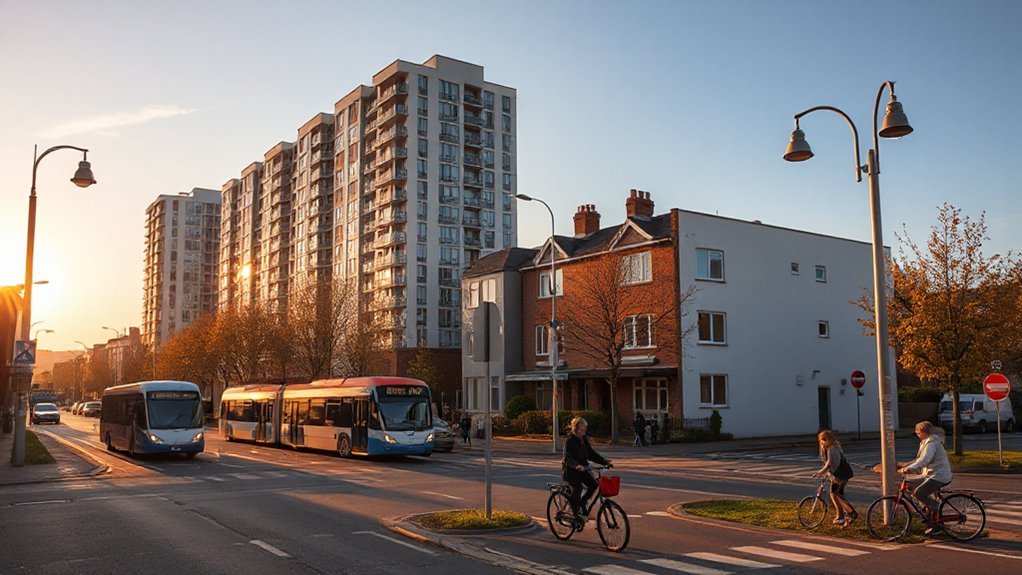
Despite rising investment focus, practical daily life in targeted Cardiff neighborhoods hinges on tangible services: schools, healthcare access, and safety. You’ll weigh how nearby schools perform, noting exam results, wait times, and capacity, not glossy promotional materials.
Healthcare access matters just as much: GP availability, hospital proximity, and out-of-pocket costs shape daily routines, yet you’ll find patchy coverage in pockets slated for development.
Safety indicators—crime trends, street lighting, and community policing—drive confidence more than speculative value.
Local cuisine and nearby community events offer cultural ballast but rarely compensate for gaps in essential services.
Your assessment should separate hype from function, recognizing that strong services sustain neighborhoods longer than new-build incentives, even as you watch for how these factors interact with planned growth in Cardiff’s corridors.
Family-Friendly Pockets With Space to Grow in Cardiff Corridors
In Cardiff’s corridors, families seek pockets that balance space with practical access, not just glossy redevelopments. You’ll notice where real growth lives isn’t in brand-new towers alone, but in micro-clusters that fit daily life.
Urban greenery and calm streets matter, yet they must coexist with schools, transit, and safe routes. You’ll evaluate value by what actually expands your household’s possibilities, not aspirational hype.
Cultural landmarks anchor communities, but you’ll want them integrated, not isolated from leafy pockets. Look for predictable maintenance, scalable layouts, and affordable commutes.
Below are three critical selectors:
1) Proximity to greened public spaces with shade and play options
2) Walkable routes to seasoned cultural landmarks
3) Consistent, long-term investment signals rather than speculative spikes
The Design and Architectural Vibe Shaping Demand in New Cardiff Areas
New Cardiff areas are being shaped less by flashy towers than by a coherent design language that prioritizes livability, adaptability, and local identity. You’ll notice demand aligns with thoughtful proportions, durable materials, and street-level vitality over hype.
The vibe favors legible, mixed-use blocks that invite walkability and reduce car-dependency, not ostentation. Architectural innovation is pursued, but within context, avoiding novelty’s sake. You should expect designs that tolerate change, with modular components and retrofit-ready shells that respect existing neighborhoods.
Urban sustainability isn’t a buzzword here; it’s a measurable criterion—water efficiency, energy performance, and heat resilience. Skepticism remains warranted: markets reward branding as much as balance, so developers may overpromise on aesthetics.
Still, the trend favors cohesive, resilient environments over reckless skylines.
Financing Options and Incentives Around Cardiff Developments

Financing for Cardiff developments hinges on a mix of public incentives, private debt, and seller concessions, with risk increasingly priced into terms rather than through hype. You’ll notice terms tighten when projects shift from hype to bankability, and incentives may decline as subsidies tighten.
- You weigh Luxury apartments against higher financing costs, judging whether subsidy offsets justify the capex.
- Commercial investments face stricter covenants, with lenders prioritizing pre-leased income and visible exit strategies.
- Seller concessions fade as market depth grows, pushing you to negotiate alternative incentives like phased payments or grant eligibility timelines.
The pattern is cautious, not celebratory: capital flows favor projects with measurable returns and transparent risk.
In Cardiff, expect diligence, not deals, and a careful mapping of incentives versus debt service.
How to Spot Early, Long-Term Value Before Hype Peaks
Spotting early, long-term value means separating momentum from fundamentals before hype takes over. You assess the matrix of signals rather than chase headlines. Look for quiet, repeatable indicators that endure beyond brief excitement.
Track Historical trends to see how prices move in response to steady demand, not social media buzz. Compare conversions, rents, and yield resilience across cycles, not just peak temps.
Map Market cycles to your target areas, noting how supply constraints and infrastructure plans influence value over years, not quarters.
Question every speculative spike: who benefits, who bears risk, and what changes in affordability or liquidity matter long term.
Favor assets with sustainable cash flow, transparent land use, and predictable governance that weather cycles and soften volatility.
Frequently Asked Questions
How Do School Catchment Changes Impact Property Value Near New Developments?
School enrollment shifts from catchment boundaries can raise nearby property values, but effects hinge on where lines move and demand stays. You’ll see volatility as buyers anticipate changes, then potential stabilization once approvals clarify, with mixed timing and risk.
What Are the Long-Term Debt Implications for Buyers Near Projects?
Consider this: your long-term debt hinges on market shifts and lender terms, not hype. Mortgage Flexibility matters; Debt Management matters more. You’ll critically assess options, avoid over-leverage, and question guarantees before committing to near-project purchases.
How Will Future Zoning Affect Neighborhood Character and Prices?
You’ll see future zoning reshape neighborhood character and prices, but beware: urban renewal often boosts bets unevenly, and zoning regulations can lock in gains or suppress long-term flexibility, so anticipate mixed outcomes and future volatility.
Do Utility Upgrades Influence Resale Value in These Areas?
Utility upgrades do influence resale value. You’ll see resale premiums when infrastructure improves, though skepticism remains about how lasting they are. You notice better utility infrastructure driving value, yet improvements may outpace demand and distort pricing.
Are There Hidden Maintenance Costs With Newly Built Homes Communities?
Hidden maintenance costs can appear; yes, there are potential issues. You’ll face ongoing Maintenance fees and occasional construction delays, which can strain budgets and timelines if you don’t scrutinize HOA rules, reserve funds, and anticipated project milestones carefully.
Conclusion
You need to see past the glossy brochures and ask what actually drives value near Cardiff’s new developments. Track real transit access, daily-life anchors, and credible planning rather than hype. If a “hidden” pocket lacks ongoing investment, it’s gamble capital, not a sustainable bet. A solid conclusion: long-term gains hinge on steady demand for essentials, safety, and authentic community upgrades, not just flashy infra promises. Question every claim, verify timelines, and watch for accountability in delivery.
About the Author