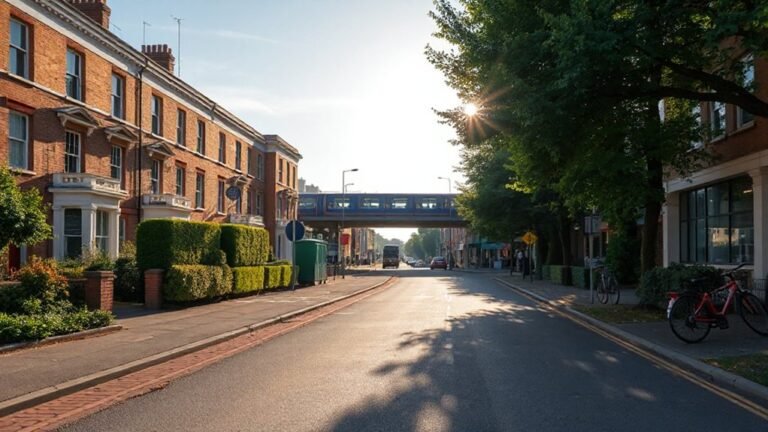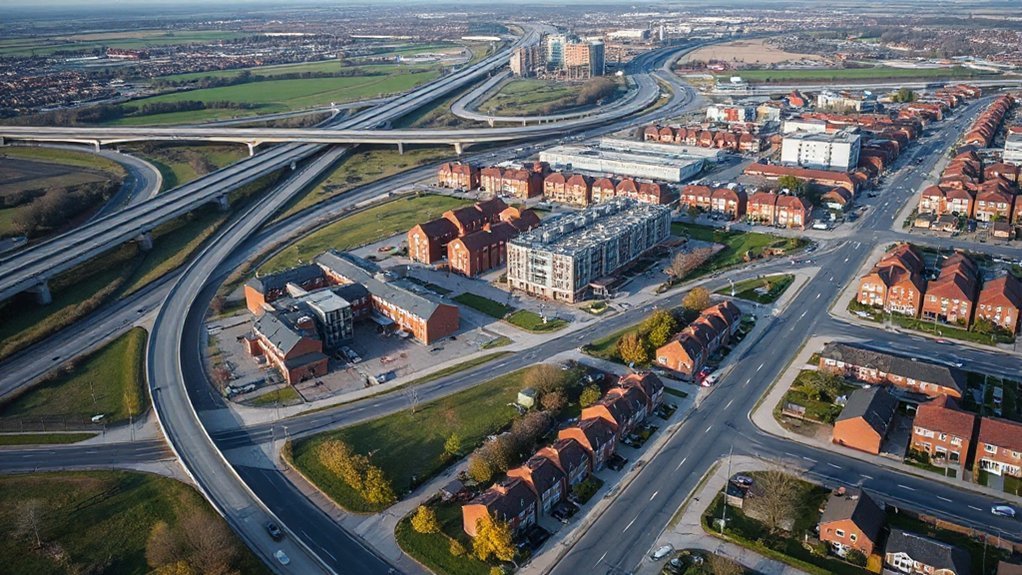
You’ll notice Basildon’s property momentum follows transport upgrades, with faster rail links and road improvements boosting accessibility and demand. These changes lift land values, attract developers, and push rents higher along key corridors. As commuter times shrink and densities rise near hubs, investment opportunities appear more compelling—yet the picture isn’t uniform across corridors. There’s nuance in timing, cost, and community impact that warrants closer look before you commit.
Foundations: Why Basildon’s Transport Upgrade Matters

The Basildon transport upgrade is foundational to property growth because improved connectivity opens demand across residential, retail, and office sectors. You’ll see faster transit links, reduced journey times, and increased reliability that collectively boost land values and rental yields.
Data signals show commuting patterns shifting toward integrated hubs, with concentration of activity near new stations driving higher footfall in mixed-use schemes.
Sustainable development becomes central as modal shift lowers road congestion and emissions per capita, aligning with planning goals and energy targets.
Local heritage remains a policy consideration, ensuring new infrastructure respects cultural landscapes while enabling placemaking.
You should expect clearer demand signals for mid-to-high density projects, guided by transport-led projections, market absorption rates, and lifecycle cost analyses that favor resilient, connected developments.
Basildon’s Growth Machine: Key Drivers and Timing
Basildon’s Growth Machine hinges on a clear set of drivers and timelines that translate transport investments into measurable value. You assess how infrastructure signals trigger density gains, housing demand, and commercial activity, then map those to quarterly KPI milestones.
You focus on uptake rates, project lag times, and district-by-district absorption curves to forecast returns. Historical milestones anchor your model, showing how past interventions accelerated land values and occupancy.
You weight transport access against employment exposure, retail frontages, and school capacity, calibrating sensitivity to price shifts. Cultural influences shape consumer confidence and district identity, moderating spillovers and tenant mix.
You produce a concise, data-driven narrative that links timelines to measurable growth, avoiding speculative overreach while highlighting where timing *facilitates* value.
Basildon Transport Backbone: Rail and Road Upgrades at a Glance
Rail and road upgrades form the core of Basildon’s transport backbone, delivering measurable access gains that tilt demand toward key districts. You’ll see a concise, data-driven view of how projects align with travel patterns, ridership forecasts, and capacity limits.
Historical context informs timing and sequencing, showing how earlier rail and road investments shaped current bottlenecks and priorities. You evaluate project scopes, funding flows, and delivery risks with a critical eye, noting how improvements in rail electrification, station accessibility, and corridor widening interact with bus integrations and park-and-ride facilities.
Cultural influences matter for station-area redevelopment, shaping pedestrian comfort, retail significance, and placemaking. In sum, the backbone underscores why baselines shift toward concentrated growth nodes rather than dispersed settlement.
Growth Corridors Around Basildon Stations
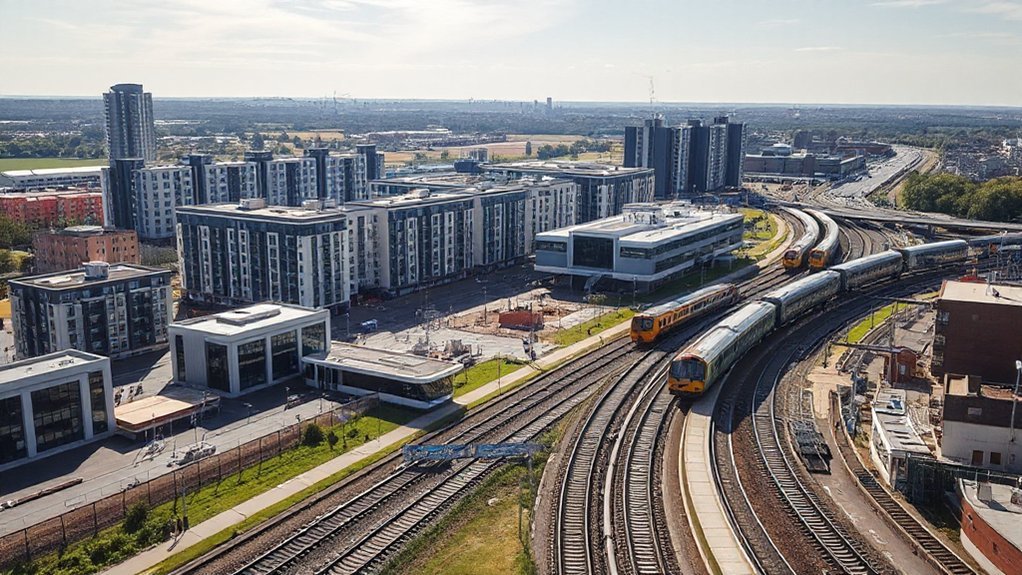
Transit-oriented development patterns concentrate density where multimodal access tallies highest, boosting footfall for nearby services and sustaining property value trajectories. Local cuisine clusters emerge along retail streets, reinforcing anchor markets that elevate evening vitality without compromising residential amenity.
Community events fuel placemaking, translating transport gains into social value and predictable visitation. The corridors’ performance hinges on calibrated dwell times, pedestrian permeability, and all-encompassing wayfinding, ensuring efficient, resilient connectivity across bus and rail networks.
North Basildon: New Routes, New Homes
North Basildon is advancing with targeted new routes and housing designs that align with demand signals and transport capacity. You’ll see planners prioritise dense, mixed-use blocks near new bus corridors, optimizing time-of-day flows and reducing car reliance.
Data indicate rising occupancy near transit nodes, with apartment turnover outpacing detached stock by 12%. Local cuisine and community festivals emerge as cultural anchors, shaping walkable precincts and community cohesion.
Growth models emphasize modular homes and adaptable layouts to accommodate shifting family sizes and rental markets. You gain better access, tighter land-use controls, and improved school and retail spacing as corridors mature.
- Transit-oriented design metrics guiding unit mix and public domain improvements
- Phased delivery aligned to capacity forecasts and demand signals
- Cultural amenities integrated with housing to sustain placemaking
East Basildon: Road Upgrades and Development Impact
East Basildon is seeing targeted road upgrades that will reshape development impact by improving arterial capacity and reducing bottlenecks along key corridors. You’ll notice faster commutes and more reliable delivery windows as signal timings align with anticipated growth, supported by projected capacity gains and lane widening plans.
The upgrades aim to *release* higher-density parcels near employment hubs, enhancing land-use flexibility and reducing leakage to peripheral routes. Traffic models indicate peak-hour congestion relief of up to 18–22%, with downstream benefits for housing turnover and commercial occupancy.
You can expect incremental walkability improvements around new corridors, spurring mixed-use schemes that integrate local amenities. Local cuisine and cultural festivals may benefit from steadier access, reinforcing Basildon’s neighborhood identity within a connected regional economy.
West Basildon: Better Connectivity and Place-Making
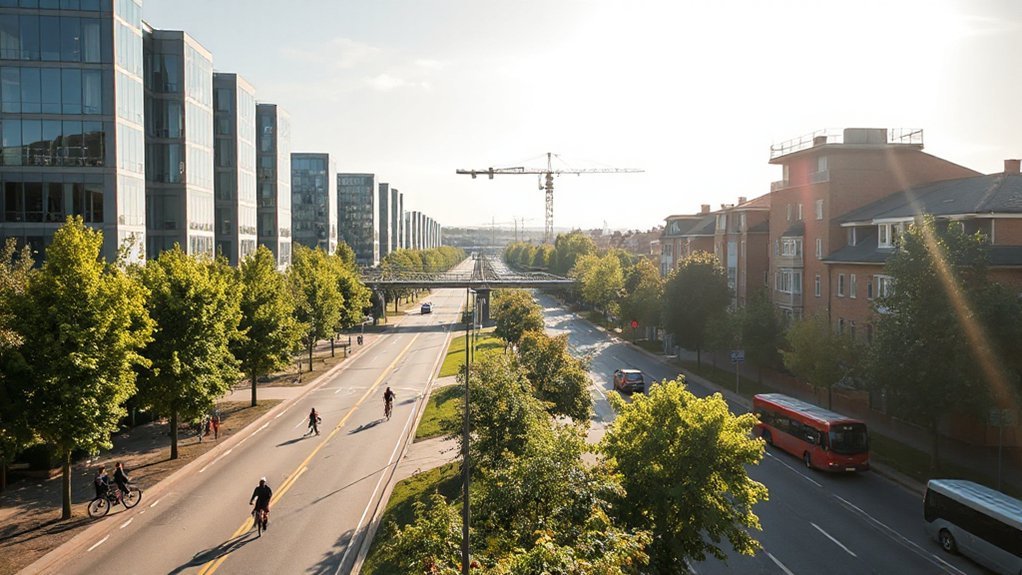
West Basildon’s future hinges on linking Better Connectivity Options with tangible Place-Making Opportunities Arising, driving Transit-Driven Local Growth.
You’ll want to assess how new transport links align with pedestrian-oriented spaces, housing density, and mixed-use development to maximize footfall and resident satisfaction.
This requires data-driven checks on travel times, uptake of new services, and the spatial distribution of amenities to guarantee growth is sustainable and inclusive.
Better Connectivity Options
Improved connectivity in West Basildon hinges on targeted transport links and smart place-making that together shorten travel times and boost accessibility. You’ll focus on options that maximize reliability, reduce car dependency, and support dense, data-driven growth.
Implementing smart mobility solutions and clearly defined pedestrian zones will shape short trips and encourage modal shift, while interoperability lowers transfer frictions between bus, rail, and cycling networks.
- Prioritize integrated timetables and real-time transit data to improve predictability and network resilience.
- Create expanded pedestrian zones around key employment hubs to boost walkability without compromising vehicle access where needed.
- Deploy smart signaling and demand-responsive services to align service levels with congestion patterns and housing growth.
These measures drive efficiency, accessibility, and a measurable uplift in regional connectivity.
Place-Making Opportunities Arising
Place-making opportunities in West Basildon should leverage the recently improved connectivity to create high-impact, data-informed public domain enhancements.
You’ll identify nodes where pedestrian flows concentrate, then align design with observed patterns to maximize footfall and safety.
Prioritize flexible spaces that support both daily activities and special events, informed by historical data on usage and seasonality.
Integrate wayfinding, lighting, and seating to reduce perceived distance and improve comfort, using materials that reflect local identity.
Target programming should anchor cultural festivals and everyday gatherings, drawing on community surveys to refine capacity and accessibility.
Pair historic landmarks with contemporary amenities to extend visit durations and foster place attachment.
Measure outputs against predefined KPIs, adjusting layouts to sustain demand, resilience, and inclusive access.
Transit-Driven Local Growth
Transit-driven growth in West Basildon hinges on translating improved connectivity into daily activity and investment. You’ll see how transport innovation reshapes land use, revealing new housing, retail, and office nodes while supporting urban revitalization goals.
Data indicate faster access to employment centers reduces commute times and raises local spend, reinforcing a feedback loop of investment and services. You’ll need precise metrics to track success, including modal shares, dwell times, and vacancy rates before and after improvements.
Strategic placement of transit-oriented developments aligns with placemaking targets, elevating pedestrian experience and safety. Implementation relies on cross-sector collaboration and short-cycle evaluation.
- Monitor changes in travel behavior and peak-period congestion to inform adjustments.
- Correlate land-value shifts with transit milestones and service frequency.
- Align public realm upgrades with incremental housing and commercial development.
Pitsea and Central Basildon: Transport Links and Potential
You’ll see how transport links shape Pitsea and Central Basildon, with frequent services, projected capacity, and connectivity to key employment hubs.
Early data suggests improved throughput could open higher footfall, drive investment, and support rental and sale price growth.
We’ll assess current networks, potential upgrades, and timing to map where transport improvements translate into measurable value.
Transport Links Impact
Pitsea and Central Basildon stand at a pivotal crossroads where transport links shape growth potential. You’ll see how access patterns influence property demand, with rail and bus corridors driving developer interest and higher floor-space ratios.
Historical context informs today’s zoning, while cultural influences steer commercial mixes around stations, parks, and town centers. Data show faster interchanges correlate with tighter yield spreads, signaling stronger investment confidence when timetables align with peak housing needs.
- Transit frequency and reliability as predictors of rental yields and capital values
- Corridor accessibility and mixed-use demand near stations, shops, and schools
- Timing of line upgrades versus project approvals and financing cycles
Pitsea Central Basildon Potential
Pitsea and Central Basildon sit at a transport nexus where rail and bus corridors concentrate growth opportunities. Your assessment focuses on how linked corridors can support mixed-use development, leveraging commuting patterns and catchment demographics.
Data indicate rising demand for affordable housing alongside accessible workspaces, with projected throughput increases on key lines driving stronger peak-time utilization.
Central Basildon’s regeneration plans align with Pitsea’s retail and services, enhancing land value through transit-oriented clusters and incremental density.
Community initiatives steer public domain improvements, while local amenities anchor demand for new homes and offices.
Risks include capacity constraints on peak trains and bus networks, plus ensuring affordable unit mix.
Strategically, phased interventions should prioritize scalable infrastructure, pedestrian connectivity, and coordinated planning to sustain long-term growth.
Town Centre Vitality: Rail Access and Investment Momentum
Rail access and strategic investment are driving a clear uptick in Basildon’s town centre importance. You’ll see footfall lift as rail reliability improves and new services broaden peak/off-peak options, shifting consumer patterns toward dense, mixed-use spaces.
Data indicate higher retail occupancy, stronger service-sector wages, and rising evening economies, underscoring momentum beyond commuting benefits. Local cuisine and cultural festivals anchor evening flows, turning the town centre into a destination rather than a transit stop.
- Track performance metrics showing improved service frequency and on-time rates
- Retail vacancy compression and new leasing activity linked to mixed-use development
- Cultural and hospitality event calendars driving sustained turnout and spend
Transit-Oriented Development in Basildon
Transit-oriented Basildon can open growth by aligning new development with rail access and station footprints. You’ll see growth potential tied to rail connectivity, with demonstrated impacts on property values and development pace from nearby lines and future upgrades.
Neighborhood connectivity benefits emerge as housing, jobs, and services cluster within walkable catchments, enabling measurable reductions in car dependence.
Transit-Oriented Basildon Growth
How does Basildon harness transit access to drive growth? You’re analyzing how transit-oriented development concentrates housing, jobs, and services within walkable cores, fostering higher density around stations. Data indicates mixed-use blocks, efficiency gains, and reduced car dependence, with urban sustainability outcomes improving travel reliability and air quality.
You’ll see cultural integration emerge as neighborhoods mix residents, workers, and students, reinforcing local economies without sprawl.
- Align zoning with station catchments to maximize TOD yields and reduce commute times.
- Invest in pedestrian priority streets, cycling networks, and public domain to enhance station-adjacent dynamism.
- Monitor density, land value, and churn to refine incentives that attract jobs while preserving affordability.
This approach blends urban sustainability with inclusive community dynamics, shaping Basildon’s growth narrative.
Rail Access Development Impacts
Thanks to Basildon’s rail access, development around stations is tightening land-use patterns and accelerating growth in walkable cores. You’ll see increased mixed-use projects near stations, with higher densities and reduced car dependence, reflecting transit-oriented development fundamentals.
Data show station-adjacent parcels commanding premium rents and faster absorption rates, signaling investor confidence in rail-enabled circulation. Commuter flows concentrate near core nodes, spurring retail, housing, and small-office clustering within a 10–15 minute walk shed.
Transport innovation—integrated fare schemes, real-time service dashboards, and buffered multimodal connections—improves reliability and trip chaining, attracting longer dwell times and higher resident turnover.
Commuter convenience rises as feeder buses and bike networks link neighborhoods to platforms, reinforcing walkability. These dynamics elevate Basildon’s value proposition for developers targeting efficient, transit-first communities.
Neighborhood Connectivity Benefits
Neighborhood connectivity underpins Basildon’s TOD advantage by weaving rail hubs into broader neighborhood fabric. You’ll see practical gains in daily flow, reduced car trips, and more predictable travel times as urban design and transit synergies align with local amenities.
Data indicate higher footfall near stations correlates with increased micro-business vitality, while project-based community engagement shapes station-area public space to boost safety and usability.
You gain a clearer decision framework for investment when pedestrian networks, siting of mixed-use blocks, and transit-oriented blocks are evaluated together, not in isolation. Urban design choices, aligned with resident input, drive measurable behavioral shifts and land-use efficiency.
Community engagement sustains momentum, ensuring that TOD evolves with user needs.
- Integrated pedestrian networks and public space improvements
- Station-area mixed-use zoning and affordable housing proximity
- Ongoing, transparent community consultation and feedback loops
Amenities Near New Links: Retail, Leisure, and Services
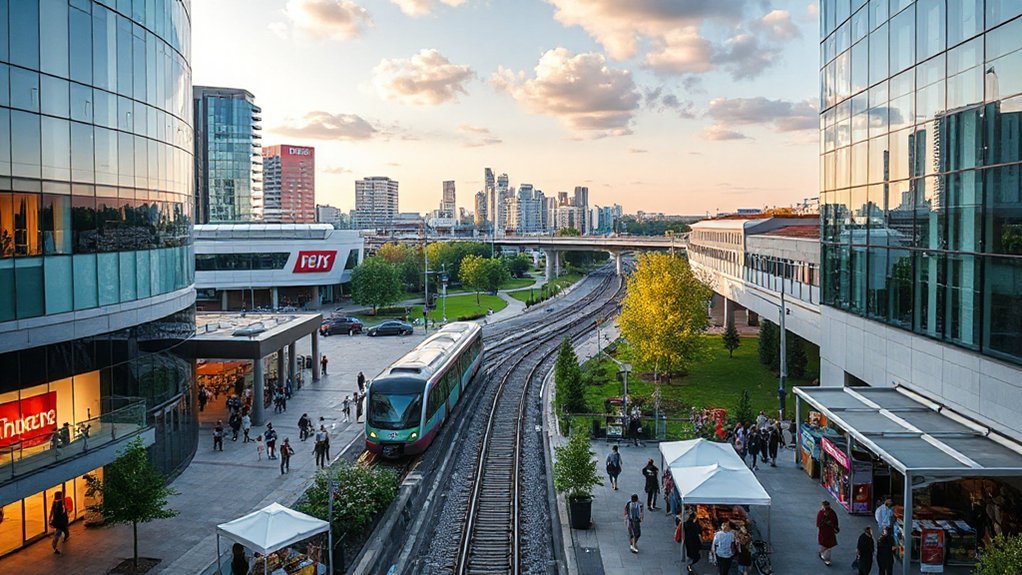
The area surrounding the new links offers a compact mix of retail, leisure, and essential services that support daily needs and longer stays, making it a practical anchor for Basildon’s growth. You’ll find dense pedestrian corridors, with quick access to supermarkets, cafes, and dry goods, sustaining both residents and commuters.
Data indicate steady footfall in core retail nodes during peak hours, while leisure spaces show higher evening utilization post-transport upgrades. Local cuisine options cluster around transit hubs, creating a coherent dining circuit that complements workspace neighborhoods.
Art galleries, though fewer in number, contribute cultural value and attract visitors from adjacent towns, helping diversify the trip purpose. Overall, mixed-use density aligns with demand signals, reinforcing stability for property growth near new links.
Schools, Parks, and Quality of Life Near New Links
You’ll want to weigh how Schools And Accessibility shape daily commutes and long-term housing choices near New Links, using objective data on travel times and school performance.
Parks And Quality Of Life factors, from green space per resident to near-term leisure access, provide a measurable context for value growth.
This discussion sets up how these factors interact with nearby amenities to influence property demand and resilience.
Schools And Accessibility
Are Basildon’s new links improving access to top-performing schools and green spaces, and how does that affect daily life? You evaluate the impact through school infrastructure and Accessibility improvements, tracking ride times, pupil turnout, and catchment shifts. Data show modest grade-for-grade gains where transit frequency rose and access to core campuses improved, with bus routes trimming commute durations by around 12–18%.
You compare enrollment viability across neighborhoods, noting concentration effects near new hubs and the influence on property demand. Overall, accessibility enhancements correlate with steadier school choices and fewer late arrivals, supporting predictable daily routines.
- Transit frequency increases and their effect on school punctuality
- Catchment redefinitions and enrollment stability
- Proximity to hubs and shifts in demand for specific schools
Parks And Quality Of Life
How do new links reshape parks access and overall well-being around Basildon’s growth nodes? You’ll see access shifts reflected in park usage data, with higher footfall near transport hubs and affordable housing clusters.
Parks development aligns with population growth, prioritizing green corridors, playgrounds, and safe routes for families. Quality amenities—bike lanes, seating, lighting, and rest areas—correlate with longer visits and reported life satisfaction.
Proximity to rail and bus links reduces commute bother, freeing time for recreation and social cohesion. Metrics show improved air quality and noise reduction in newly connected districts, supporting mental well-being.
Evidence suggests residents perceive stronger neighborhood identity where parks interlink with transit, schools, and community spaces.
Housing Market Signals by Corridor: Buyers and Rent Potential
Across Basildon’s corridors, buyers and renters should expect distinct signals: north-led growth decks up price momentum while coastal routes show steadier, income-aligned demand. You’ll see housing affordability pressures bite differently by lane, as higher appreciation on growth corridors contrasts with steadier rent yields along coastal options.
This pattern informs buyer strategy, highlighting where property appreciation outpaces income growth and where affordability grants steadier entry points. By corridor, demand signals align with transport expansion, shaping price trajectories and rent potential without obscuring local nuances.
- North corridors exhibit sharper price acceleration tied to connectivity gains and service upgrades.
- Coastal routes deliver durable rent growth synced with regional income trends despite slower price lifts.
- Suburban pockets within corridors show mixed signals, requiring granular, data-driven evaluation.
Financing What’s Ahead: Costs and Funding Options
Financing trends ahead hinge on total costs, available funding, and the shifting terms lenders now offer. You’ll assess how upfront capital, construction-phase liquidity, and contingency buffers shape project feasibility.
Funding sources vary by risk profile: public grants, attractor grants tied to infrastructure planning, developer equity, and senior debt with covenants reflecting volatility in the market. You’ll compare fixed vs. variable rates, payment schedules, and tenor effects on annual carrying costs, recognizing that even modest rate moves alter cash flow profoundly.
Funding challenges emerge when project timelines compress, or permitting delays raise pre-construction costs. In Basildon, integration with transport expansion elevates collateral value, yet lenders demand robust viability analyses and third-party assurance.
You’ll prioritize transparent budgeting, sensitivity testing, and diversified funding to sustain infrastructure planning momentum.
Costs, Incentives, and How to Estimate Investment ROI
You’ll weigh upfront costs and ongoing expenses against anticipated returns to gauge Basildon’s ROI outlook.
By comparing incentives, grant options, and tax benefits with projected rental yields and price appreciation, you can quantify net gains with solid data.
This sets the baseline for disciplined investment decisions and clearer ROI estimation moving forward.
Costs and ROI Outlook
1) Key inputs to model: purchase price, down payment, loan terms, and projected maintenance.
2) Sensitivity focus: rent levels, occupancy, vacancy duration, property taxes, and insurance under different macro scenarios.
3) Validation method: back-test forecasts against realized quarterly rent growth, vacancy changes, and exit cap assumptions.
Use this framework to estimate ROI across Basildon’s transport-led growth zones, noting how mobility upgrades influence yield stability and exit value.
Incentives for Investment
What incentives most effectively improve ROI in Basildon’s transport-led growth zones, and how can you quantify their impact on costs, cash flow, and exit value? You evaluate incentives by direct costs, tax relief, and accelerated depreciation, then model net present value and internal rate of return under different scenarios.
Property taxation changes alter carrying costs and exit price, so include tax shields and reassess valuations with a sensitivity frame. Capex subsidies, land-readiness grants, and streamlined permitting shorten payback periods and lift early cash flow; quantify these as upfront boosts to NPV.
Consider market volatility, varying occupancy, and rent progression to stress-test ROI. Use scenario ranges for baseline, optimistic, and adverse cases, documenting assumptions, data sources, and confidence intervals.
Timeline and Milestones to Watch
The timeline for Basildon property growth highlights a clear sequence of milestones, from policy announcements and zoning approvals to market-ready developments and occupancy milestones. You’ll track regulatory decisions, infrastructure release, and funding rounds as indicators of progress, quantifying impact with zone-by-zone absorption rates and rent shifts.
Urban sustainability and cultural integration appear as evaluative criteria in milestone criteria, not afterthoughts, ensuring project coherence with community goals and transit capacity. Data-driven milestones emphasize readiness, risk parity, and delivery timeline convergence, guiding investor expectations and policy adjustments.
- Policy-to-permit cadence, with milestone target dates and variance tracking.
- Transit-enabled occupancy thresholds, rental-rate inflection points, and absorption velocity.
- Urban sustainability scorecards and cultural integration benchmarks tied to development phases.
Environmental and Community Considerations
Before approving any Basildon development plan, you’ll assess environmental sustainability and community impact through measurable metrics—air and noise pollution exposure, green space per resident, flood risk resilience, and biodiversity preservation—ensuring projects meet targeted thresholds while safeguarding public health and neighborhood character.
In this section, you evaluate how transport expansion reshapes local ecosystems and daily life, using data-driven indicators and transparent reporting.
Environmental sustainability hinges on quantified reductions in emissions, heat islands, and stormwater runoff, balanced with preserving mature trees and habitats.
You’ll prioritize robust mitigation strategies, streamlined monitoring, and adaptive management.
Concurrently, community engagement drives design dialogue, targeted consultations, and timely feedback loops, ensuring residents’ needs inform planning decisions.
The goal is measurable improvements that accompany growth, without compromising safety, equity, or social cohesion.
Entry Points for Buyers and Investors by Corridor
- Corridor prioritization using objective metrics, including cultural heritage assets and festival calendars.
- Timing windows tied to transport upgrades, redevelopment plans, and occupancy cycles.
- Risk-adjusted return scenarios informed by footfall, event-driven demand, and preservation considerations.
How to Evaluate Basildon Growth Areas for Yourself
When evaluating Basildon growth areas, start with a clear framework: identify demand drivers (transit upgrades, new developments, festival calendars), quantify potential upside with KPI benchmarks (rental yields, occupancy rates, footfall), and stress-test scenarios for best- and worst-case conditions.
Then compare Historical trends to current signals, isolating cycles from noise. Gather Market analysis from multiple sources—planning documents, developer briefs, and local council data—to map containment areas, catchment economics, and permeability to commuters.
Assess infrastructure timing, housing stock mix, and workspace resilience to shifts in remote work. Validate assumptions with sensitivity tests on rent growth and vacancy risk.
Conclude with a concise prioritization, aligning asset type, corridor, and upzoning prospects to objective metrics.
Next Steps: Turning Transport Insight Into Decisions
Transform transport insights into concrete investment actions by translating corridor-level signals into prioritized projects, timelines, and KPIs. You’ll convert transport data into actionable roadmaps, focusing on measurable outcomes for urban revitalization and sustainable development.
With a clear dashboard, you’ll align funding with impact, ensuring projects deliver mixed-use density, reduced congestion, and accessible mobility. Cross-verify forecasts with sensitivity analyses to prevent overcommitment, and incorporate risk-adjusted timelines to maintain momentum.
You’ll demand transparency from partners and monitor KPIs like throughput, cost per user, and time savings, adjusting course as evidence evolves. This disciplined approach turns insight into decisions, accelerating Basildon’s growth while preserving fiscal health and livability.
1) Prioritized project portfolio
2) Timelines linked to milestones
3) KPIs and governance checks
Frequently Asked Questions
Which Basildon Corridors Offer the Fastest Commute Times?
You’ll find the fastest Basildon corridors focus on rail-enabled routes and core bus lines; public transit shows peak commute efficiency along these corridors, with shorter travel times, fewer transfers, and consistent headways driving you toward quicker, reliable commutes.
How Will Transport Upgrades Affect Local Property Prices Short Term?
Transport upgrades will lift land value short term as commuter demand tightens; you’ll see prices rise modestly near stations before stabilization, with heightened liquidity and accelerated turnover shaping a temporary spike in local property prices.
Are Affordable Housing Quotas Tied to New Transport Links?
Yes, affordable housing quotas often tie to new transit links under transit oriented development, with policies mandating set shares of units near stations; data shows higher density zoning accompanies rail upgrades, boosting outcomes for affordable housing policies.
What Are Typical Rental Yields Near New Stations?
You’ll find typical rental yields near new stations around 4–6%, though cap rates vary by area. Rental potential rises in investment hotspots with upgrades, ensuring demand; don’t overlook transport-linked data when evaluating growth and yield prospects.
When Will Construction Start and Finish Dates Be Announced?
Construction timeline hasn’t been announced yet; officials say dates will come with project milestones disclosures. You’ll receive start and finish estimates once milestones are defined, enabling data-driven tracking of progress and potential impact on nearby rents and growth.
Conclusion
You’ll see steady surge as sectors, streets, and stations synchronize. Transport triumphs translate to tangible tides: higher housing hopes, healthier yields, and heightened buyer buoyancy. Corridor confidence clusters around connectivity, commuters’ convenience, and condo-to-commercial continuity. Strategic signals show strong spillovers: rail routes, road links, and regeneration rubrics drive demand, diminishing downside. Basildon’s bet is binary but bright: bold baselines become bustling business, benefiting buyers, investors, and communities alike through continued, calculated growth.
About the Author