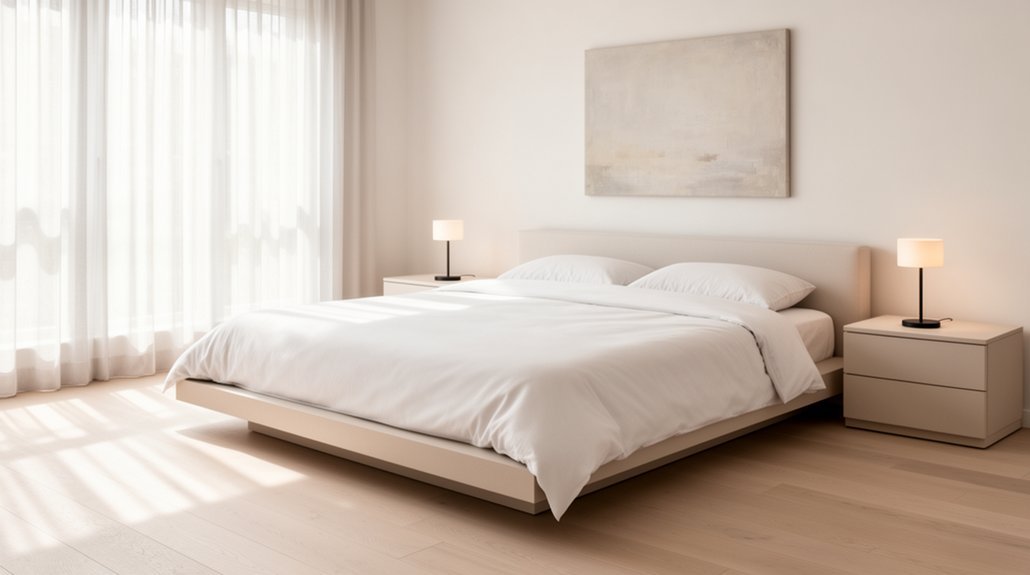
A minimalist bedroom design centers on essential form and purposeful storage, so you keep surfaces clear and the space calm. Use clean lines, wall-mounted storage, and multi-functional furniture in light woods and matte textures to maintain an airy feel. Favor a calm color palette with cool neutrals and one accent, and layer textures for warmth without clutter. Prioritize quality over quantity, implement simple routines, and optimize zones for sleep, dressing, and storage. If you keep going, you’ll uncover how to apply these ideas step by step.
What Makes a Bedroom Truly Minimalist
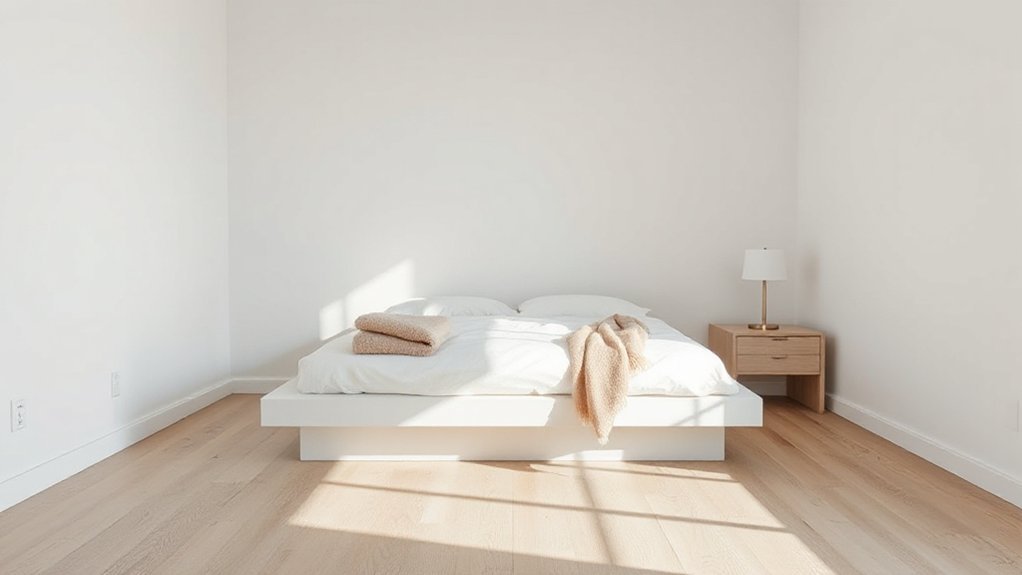
Minimalist design centers on essential form and purposeful function. You prioritize restraint: selective pieces, clean lines, and deliberate placement that serves your daily life.
In a truly minimalist bedroom, every item earns its space, and surfaces stay clear to encourage calm. You’ll align the room with bedroom feng shui principles, ensuring balance, airflow, and a sense of openness that prevents stagnation.
Choose a restrained palette, with texture over color variety, to maintain visual coherence. Embrace quiet storage solutions that keep clutter out of sight, reinforcing focus on rest.
Stay informed on minimalist decor trends, but apply only those that reinforce simplicity and utility. Your goal isn’t austerity; it’s a serene, functional refuge that supports restorative sleep and intentional living.
What Peaceful Really Means in a Bedroom
A peaceful bedroom starts with a calm atmosphere you can feel as soon as you enter. You prioritize sensory calm by soft textures, gentle lighting, and a restrained color palette that quiets the mind.
You create a quiet space by removing distractions and keeping only essential elements that support rest and focus.
Calm Atmosphere Creation
Creating a calm bedroom starts with intention: prioritize soft, neutral tones, uncluttered surfaces, and gentle lighting that soothes the mind after a long day. You cultivate atmosphere by choosing restrained textures, simple furniture silhouettes, and a clear bed axis that reinforces focus.
In practice, align your space with purpose: remove distractions, store extras out of sight, and deploy lighting that adapts to activity and time.
You integrate meditation techniques to center routine evenings, guiding breath, posture, and stillness before sleep.
Address acoustics with deliberate layout and soft materials to minimize disruption. Implement noise reduction strategies through window treatments, rug placement, and strategic shelving to absorb sound.
The result is an intentional, serene room that supports rest, reflection, and restorative outcomes.
Sensory Calm, Quiet Space
To truly answer what peaceful means in a bedroom, focus on sensory quiet: textures, tones, and rhythms that soften perception and invite repose.
You curate serenity through tactile simplicity: low-sheen fabrics, wool, cotton, and linen that feel calming and reduce visual clutter.
Choose a restrained color scheme—stone, dove, and ash—with gentle contrast to prevent friction against the eye.
Silence interruptions with purposeful acoustics: soft rugs, padded furniture, and curtains that dampen noise.
Incorporate nature sounds as a backdrop rather than a feature, so they sustain stillness without demanding attention.
Consider aromatherapy benefits as subtle, not dominant: diffused scents that align with the room’s cadence.
The goal is an unobtrusive, breathable space where rest arrives without effort.
Start Here: Define Your Minimalist Goal and Quick Wins
Start by clarifying your minimalist goal: decide what “less” means for you—fewer possessions, simpler routines, or a calmer, more functional space—and set a single, measurable objective.
In this step, you identify the one outcome that will signal progress, then outline quick wins that move you toward it within days, not months. Your focus should be actionable: eliminate duplicates, reserve dedicated zones, and streamline routines around sleep and storage.
Consider how bedroom feng shui supports efficiency—clear pathways, balanced surfaces, and a serene entry. Note current influences from minimalist decor trends, but avoid overloading the room; choose two or three high-impact changes rather than a wholesale overhaul.
Reassess weekly, refine targets, and maintain disciplined momentum toward a calmer, clutter-free space.
How to Define a Calming Color Palette
Calm color starts with intent: pick hues that align with your goal of serenity and functionality, then build a palette around three main tones plus one accent. You should define calming goals first, then translate them into color choices that support rest, balance, and focus.
Color psychology guides how lightness, saturation, and temperature affect mood; use cooler neutrals for grounding and minimal contrast to reduce visual noise. For paint selection, choose low-VOC formulas and hidden tint bases to prevent yellowing over time.
Limit your palette to a cohesive trio of core colors and a single, purposeful accent that resonates with your room’s natural light. Test large swatches in your space, observe changes at different times of day, and refine until the palette feels effortless and restorative.
Choose Minimalist Furniture With a Light Footprint
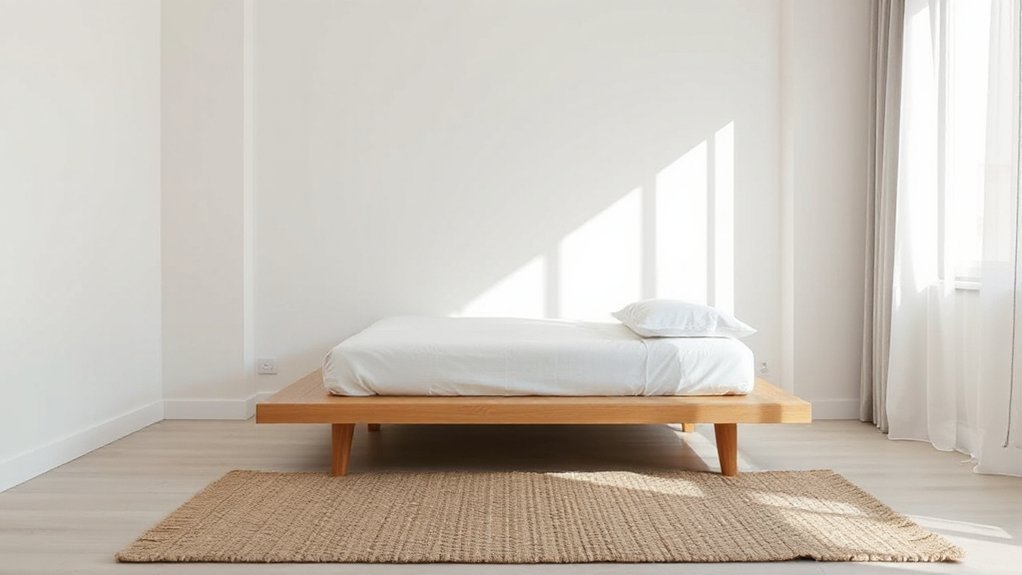
Choose furniture with a light footprint to keep your room feeling open and airy. Focus on light-footprint essentials, streamlined options, and space-saving material picks that still offer durability and function.
This approach sets the stage for a calmer, more adaptable minimalist bedroom.
Light Footprint Essentials
To minimize visual clutter and maximize function, opt for minimalist furniture with a light footprint that doesn’t overwhelm the room. You’ll choose pieces with slim silhouettes, compact profiles, and multi‑use design to maintain openness.
Favor clean lines, low height, and hidden storage to reduce visual weight while preserving function. Select furniture anchored by walls or floating foundations to create a sense of airiness.
When incorporating vintage decor, keep it restrained: one or two highlighted items that carry character without crowding the space.
Balance bold patterns with solid fields, using them sparingly as accents rather than focal points.
Prioritize materials with natural warmth, like light wood or matte finishes, to reflect light.
This approach sustains calm, avoids clutter, and supports peaceful rest.
Streamlined Furniture Choices
Streamlined furniture is the backbone of a light-footprint bedroom. You select pieces with clean lines, simple profiles, and minimal ornamentation that serve multiple functions without crowding the space.
Prioritize low-height silhouettes to maintain sightlines and openness, opting for slim legs, wall-mounted options, and storage that tuck away neatly.
Choose materials with a light touch—pale woods, matte finishes, and fabrics that breathe—avoiding heavy, glossy contrasts that weigh the room.
Consider modular configurations that adapt to daily needs while keeping surfaces clear.
Decorative accents should be restrained and purposeful, avoiding clutter; allow a single statement piece or a small grouping to communicate style.
Pair furnishings with ambient lighting to cultivate atmosphere without dominating form or space.
Space-Saving Material Picks
Space-saving materials, by design, keep your footprint light without sacrificing durability or tactility. You’ll prioritize lean silhouettes in solid woods, plywoods, and high-density fiberboard with veneered finishes, all chosen for durability and easy maintenance.
Favor modular scales, reversible pieces, and solid, minimal joinery that reduces hardware without compromising strength. Opt for multifunctional surfaces—folding desks, bed frames with integrated storage, and wall-mounted night stands—to free floor space while preserving tactile quality.
Prefer neutral tones and matte textures that read calm and refined, avoiding heavy ornamentation. Decorative accents should be carefully curated, serving as deliberate focal points rather than clutter.
Establish personal rituals around lighting and texture, ensuring every item reinforces a serene, organized environment with a light footprint.
Hidden and Handy: Storage Hacks That Clear the View
Hidden clutter can overwhelm a minimalist bedroom, but smart storage turns chaos into calm. You’ll reclaim surfaces by choosing built‑in solutions and versatile trunks that blend with the palette. Keep decorative accents purposeful, not proliferous, so each piece earns its place.
Leverage hidden compartments to house cables, documents, and seasonal items, preserving open sightlines and a breathable feel. Ambient sounds rise when you eliminate visual noise, letting a simple playlist set the mood.
Implement these strategies:
- Optimize under‑bed drawers and ceiling‑mounted shelves for frequent use items.
- Use wall‑hung cabinets with push‑latch doors to maintain clean lines.
- Integrate multi‑functional furniture—ottomans with hidden storage and bed frames with drawers.
The result is calm, cohesive surfaces that support minimalist living.
Make the Bed the Calm Focal Point
Begin with a flat, taut sheet, clean duvet, and a restrained color palette that echoes the walls and flooring.
Align pillow arrangement for balance: a neat row of pillows behind, medium-profile cushions forward, with a single accent pillow if desired.
Use bed linen that threads texture and tone without competing patterns. Minimize layers to maintain clarity, avoiding excessive folds or visible clutter.
Your goal is serene symmetry that reads as intentional design, not decoration. This deliberate foundation directs movement and perception, reinforcing calm, uncluttered living.
Lighting That Supports Calm Mornings and Quiet Nights
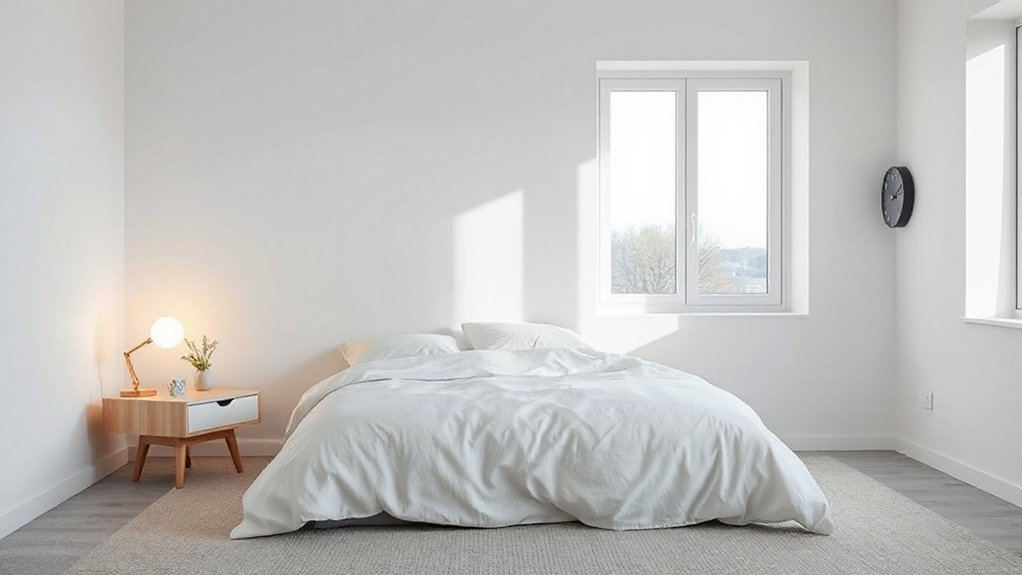
To cultivate calm mornings and quiet nights, choose lighting that blends function with restraint. Opt for dimmable sources and warm color temperatures to minimize visual noise while preserving focus.
Subtle vintage accents and decorative patterns can appear in fixtures without dominating the room, adding character without clutter. Favor understated fixtures with clean lines that cast soft, even illumination across surfaces.
- Use dimmers on bedside and ambient lights to *gradually* smoothly between wakefulness and rest.
- Select lamps with warm white bulbs (2700–3000K) to foster relaxation and reduce glare.
- Integrate a single decorative fixture or accent piece that nods to vintage style without overpowering the space.
Keep cables concealed, and prioritize multi‑use lighting that serves both morning prep and evening unwinding.
Textiles That Add Warmth Without Clutter
Textiles can warmth a minimalist bedroom without clutter when you prioritize texture, weight, and tonal restraint. You choose fabrics with subtle variation rather than bold patterns, so the room feels calm rather than busy.
Textile textures matter: a soft wool throw, a linen duvet, or a cotton blanket can add tactile depth without visual noise. Opt for weightier materials for drapery and bedding to create a sense of coziness that remains streamlined.
Fabric layering is your tool for nuance: layer a light coverlet over a structured duvet, then finish with a single textured accent pillow.
Limit color shifts to a restrained palette that echoes the walls and flooring. By balancing texture and tone, you achieve warmth without clutter in a serene sanctuary.
Built-Ins and Wall-Mmounted Solutions for Clean Lines
Built-ins and wall-mounted solutions streamline a minimalist bedroom by delivering storage and surface area without extraneous bulk. You’ll preserve clean lines while maximizing usable space, so surfaces stay uncluttered and calm.
Precision installation matters: alignment, seam consistency, and weight-bearing checks guarantee durability and a polished look.
To personalize without bulk, weave decorative accents and personal expressions into your chosen pieces.
- Choose flush cabinetry with hidden hardware to maintain uninterrupted surfaces.
- Opt for floating shelves that float above floor clutter, creating light shadow lines.
- Integrate mounts for bedside lighting and accessories, keeping nightstands minimal.
Keep materials cohesive—same wood tone, matte finish, and minimal hardware—so the room reads serene, cohesive, and intentional.
Tech Minimalism: Hiding Devices for Better Sleep
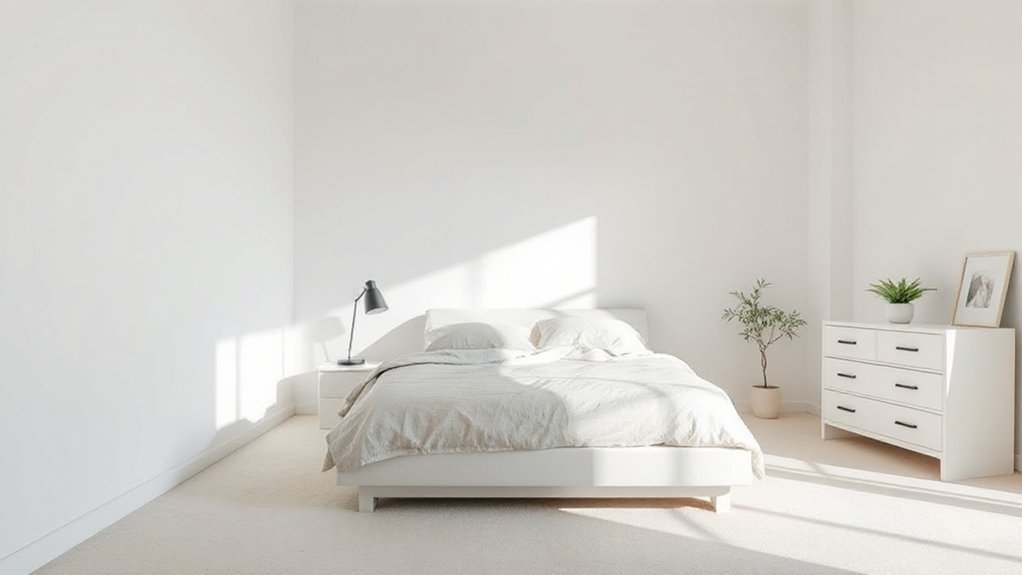
Tech devices don’t belong in plain sight if you want a restful bedroom, so hide them where you sleep and charge. You’ll minimize visual clutter by placing charging stations behind furniture, inside a cabinet, or within a shallow drawer.
Opt for knotless cable management and wireless charging where possible, eliminating tangled cords. When considering tech, prioritize essential functions: Smart gadgets should operate quietly and blend with decor, not dominate it.
Sleep trackers, if used, stay out of arm’s reach and away from the bed frame to prevent disruption.
Create a dedicated, centralized charging nook, powered by a single outlet, to maintain a serene atmosphere.
Regularly review active devices, removing unnecessary apps and notifications for a calmer, distraction-free night.
Flow-Driven Floor Plans for Breathing Space
To optimize flow, prioritize clear pathways that guide you effortlessly through the room.
Create calm spaces by spacing furniture thoughtfully and minimizing clutter, so each area feels quiet and purposeful.
Favor a positive flow through rooms by aligning movement with sight lines and natural light, inviting you to breathe easier as you move from one zone to the next.
Clear Pathways, Calm Spaces
Clear pathways are the backbone of calm spaces; when circulation feels effortless, every activity—getting dressed, reading, or strolling between zones—flows without friction. You design routes that prioritize function over excess, ensuring doors open fully and furniture aligns with natural sightlines. The result is breathable space that reduces distraction and invites intentional living.
- Map clear entry-to-bed transitions, avoiding clutter chokepoints.
- Position storage to keep surfaces unbroken and eyes focused forward.
- Zone softly with lighting and textile cues that guide movement without shouting.
Prioritize garden decor and seasonal decor accents sparingly, letting they enhance relaxation rather than compete with a minimalist mood. You achieve serenity by maintaining flow, precision, and restraint in every choice.
Positive Flow Through Rooms
Positive movement through rooms starts with how you move from one area to the next. You design progressions that feel effortless, guiding traffic with clear sightlines and logical sequencing.
Arrange furniture to minimize interruptions; keep pathways wide enough for comfortable passage and conceal storage behind doors rather than exposed clutter. Use feng shui principles to balance energy, placing the bed and seating to face open spaces and natural corridors.
Prioritize natural light by aligning windows with major walkways, allowing daylight to sweep through without harsh glare or interruptions. Choose low-profile, multi-functional pieces that preserve openness and emphasize breathing space.
Color, texture, and material consistency reinforce continuity, while defined zones maintain purpose without crowding. In practice, flow becomes a quiet backbone for peaceful, clutter-free living.
Artwork and Personal Touches Without Noise
Artwork and personal touches can elevate a minimalist bedroom without creating visual noise; select pieces that resonate stillness and purpose. You curate with intent, letting artistic expression and personal mementos remain quiet anchors rather than focal clashes.
- Choose a single, meaningful artwork that echoes your mood rather than filling space.
- Display a small collection of personal mementos in a single vignette, edited for coherence.
- Rotate objects seasonally to preserve freshness without clutter.
Approach every item as a deliberate statement: balance, proportion, and texture matter. Favor subdued tones, matte finishes, and clean lines that align with the room’s discipline. Your choices should whisper rather than shout, guiding rest and reflection.
This restraint enhances calm and preserves the room’s uncluttered aura.
Simple Maintenance Routines for Longevity
Maintaining a minimalist bedroom hinges on simple, repeatable routines that protect its calm core. You establish longevity through concise maintenance: weekly cleaning, monthly checks, and disciplined decluttering.
Focus on essential surfaces, drawers, and storage to prevent buildup that invites chaos. Implement organizational tips that streamline flow: designate locations, label containers, and rotate rarely used items out of sight.
Create a cleaning schedule with fixed tasks, time blocks, and accountability, so habits form without friction. Use absorbent mats, proper ventilation, and air-quality basics to reduce wear on textiles and finishes.
Test routines quarterly, adjusting for seasonality and wear. Document outcomes, refine steps, and sustain momentum.
Precision in upkeep sustains clarity, reduces stress, and preserves the room’s uncluttered, intentional character.
Budget-Smart Minimalist Upgrades
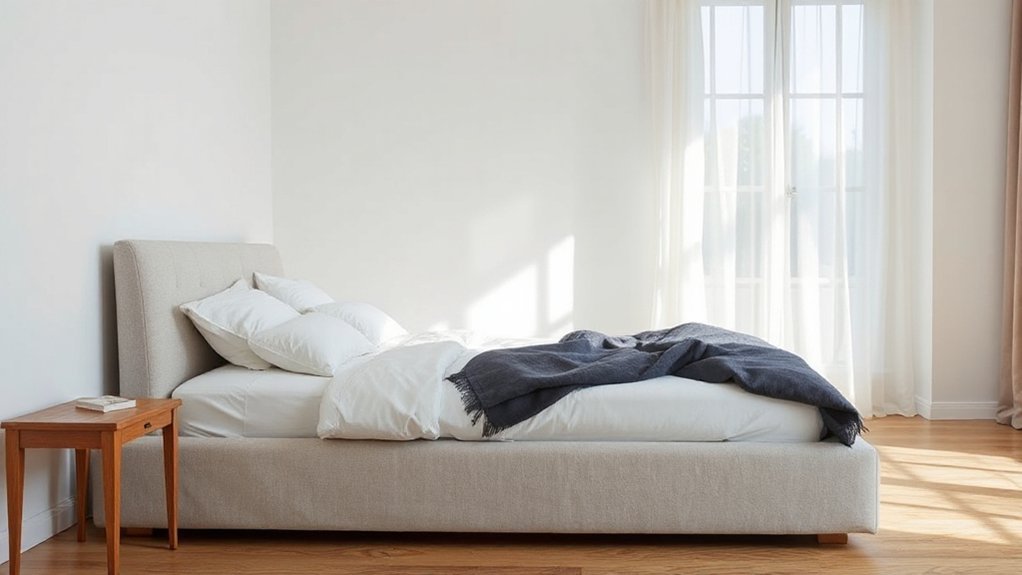
When you upgrade on a budget, start with budget-friendly materials that don’t compromise on feel or durability.
Opt for streamlined storage solutions that maximize vertical space and reduce clutter, while keeping surfaces clean and accessible.
Choose multifunctional furniture that serves more than one purpose, so you gain flexibility without adding bulk.
Budget-Friendly Materials
- Eco friendly fabrics for bedding, curtains, and throws offer softness with lower environmental impact.
- Recycled decor accents—lamps, frames, and shelving—provide texture and warmth while decreasing waste.
- Sustainably sourced wood or bamboo furniture guarantees longevity and a clean, cohesive line.
Pair these picks with simple finishes and neutral tones to maintain a serene, uncluttered space.
Focus on quality over quantity, and verify certifications to confirm responsible production.
Your room becomes calm, refined, and budget-smart.
Streamlined Storage Solutions
Efficient storage is the backbone of a calm, minimalist bedroom, and budget-smart upgrades make it practical without sacrificing style. You organize with purpose, choosing shallow drawers and wall-mounted units that keep surfaces clear.
Opt for open boxes with labeled contents to reduce rummaging, and install modular systems you can adjust as clutter evolves. Prioritize vertical space: tall wardrobes, hanging organizers, and rail systems maximize capacity without widening footprints.
Choose discreet hardware and matte finishes to maintain a calm palette. Decorative accents should remain intentional, not decorative overload; select a few pieces that unify the room.
Personal memorabilia belong behind doors or within labeled boxes, preserving accessibility while preserving serenity. Keep routines simple: rotate seasonal items, quarterly edits, and strict discard thresholds.
Multifunctional Furniture Choices
Multifunctional furniture stretches the impact of a minimalist bedroom without adding clutter. By selecting pieces that serve dual roles, you maximize function without expanding footprint. You’ll tighten lines, simplify connections, and preserve calm.
Focus on budget-smart upgrades that mix storage and seating with streamlined profiles. Prioritize pieces that support quick reconfiguration for different moods or guests.
- A storage ottoman that doubles as a coffee table or seating, hidden compartments keeping surfaces clear.
- A wall bed or fold-away workstation that frees floor space during the day and provides utility at night.
- A mirrored or glass-topped console with hidden drawers to display decorative accents and keep statement art prominent.
These choices maintain serenity while preserving personality through decorative accents and statement art.
Small-Space Minimalism: Apartments and Tiny Rooms
Small-space minimalism isn’t about sacrificing comfort; it’s about maximizing function in every square inch. In apartments and tiny rooms, you optimize layout with intentional zones: sleeping, storage, and a small workspace.
Prioritize verticality—wall-mounted shelves, hooks, and slim profile furniture—so you reclaim floor space. Use a neutral, cohesive palette to expand perception, and introduce contrast with texture rather than color overload.
Choose versatile pieces: a sofa bed, modular storage, and a foldable desk that tairs away when not in use. Integrate vintage accents and botanical decor to add character without bulk, keeping clutter at bay.
Lighting matters: layer overhead, task, and ambient sources to enlarge the sense of depth. Maintain discipline: every item earns its place, every surface remains clear.
Real-Life Minimalist Bedroom Makeovers
You’ll see how streamlined wardrobe choices, hidden storage solutions, and calming color palettes transform real-life bedrooms into uncluttered sanctuaries.
By prioritizing versatile pieces, smart storage, and soft, cohesive tones, you’ll create spaces that feel serene and purposeful.
These strategies set the stage for practical, impactful makeovers that stay true to minimalist design.
Streamlined Wardrobe Choices
Wardrobe choices sharpen the room’s look and function, as real-life minimalist bedrooms prove that fewer, well-chosen pieces often do more. You curate with intent, aligning color psychology with daily use and furniture ergonomics to reduce decision fatigue. Each item earns its keep, swapping speculative buys for timeless essentials.
Partner your wardrobe with a streamlined dresser, a versatile wardrobe rail, and a compact bench for seating and staging outfits.
- Prioritize monochrome or cohesive tones to calm visual noise.
- Select modular pieces that adapt to seasons and space.
- Opt for hidden or integrated hardware to maintain clean lines.
Hidden Storage Solutions
Hidden storage is the backbone of real-life minimalist bedrooms, turning tight spaces into organized calm without sacrificing style. You optimize every inch with purpose, choosing pieces that blend form and function. Hidden compartments keep daily clutter out of sight, while remaining instantly accessible when you need them.
Consider beds with underframe drawers or lift-up platforms that reveal ample storage without protruding outlines. Clever shelving integrates vertically, freeing floor space while displaying essentials with restraint. In desks, recessed cubbies conceal cords and supplies, preserving clean lines.
Use modular units that reconfigure as needs change, ensuring longevity in a minimalist setup. Precision in design yields serenity: every storage decision supports a calmer, more focused morning routine and a neater evening unwind.
Calming Color Palettes
- Choose a dominant neutral—warm beige, cool gray, or taupe—and pair it with a single muted accent to maintain balance.
- Layer materials—linen, wool, and wood—so color interacts with texture, not overpowering the room.
- Incorporate small, intentional color pops through textiles or artwork without breaking the calm.
This approach yields serene rooms that feel cohesive, breathable, and thoughtfully designed for calm.
Step-by-Step Plan to Implement Your Minimalist Bedroom
Begin by evaluating your space and defining a clear minimal goal: a calm, clutter-free bedroom that supports restful sleep.
Start with a ruthless inventory: remove what doesn’t serve your sleep routine, measure surfaces, and map zones for sleeping, dressing, and storage.
Prioritize quality over quantity, selecting essential pieces that gain function with restraint.
Choose Eco friendly materials to align with sustainability and longevity, ensuring finishes are low VOC and easy to clean.
Opt for streamlined silhouettes, muted tones, and honest textures that reduce visual noise.
Introduce Vintage accents sparingly—one statement piece, a lamp, or a textured throw—to add character without distraction.
Implement a disciplined decluttering cadence, establish a weekly reset, and maintain a simple, intentional setup that you can preserve long-term.
Frequently Asked Questions
How Do I Measure Space for Minimalist Layouts?
To measure space for minimalist layouts, you measure your room’s length and width, then subtract furniture footprints. Map wall spacing first, then plan furniture placement to guarantee clear walkways and proportional negative space. Measure doorways, windows, and traffic paths.
Can Noise Control Vary With Minimalist Design?
Yes, noise control can vary with minimalist design. You’ll optimize Soundproofing techniques and evaluate acoustic panel options to tailor effectiveness, selecting materials and layouts that minimize transmission while preserving a calm, uncluttered aesthetic in your space.
What Inexpensive Luxuries Feel Minimalist yet Cozy?
Inexpensive luxuries that feel minimalist yet cozy include luxury bedding and soft textures, which you’ll savor daily. You’ll embrace clean lines and subtle warmth, choosing quality fabrics, layered whites, and gentle textures to elevate calm, understated comfort.
How Often Should I Refresh a Minimalist Bedroom?
Refresh a minimalist bedroom every season or every few months, you decide, and you’ll feel calmer as space breathes. Embrace deliberate Color palettes and precise Furniture selection to sustain serenity and purposeful simplicity.
Is Natural Light Enough for Calming Ambiance?
Yes, natural light alone can calm, but optimize Lighting options and Color palettes to maintain balance. Use sheer curtains, adjustable blinds, and warm neutrals; pair soft lighting with cool accents to sustain serene, clutter-free mood throughout the day.
Conclusion
You’ve got the blueprint to a calmer room—now act on it. Define your minimalist goal, pick a light palette, and select furniture with a small footprint. Prioritize quality over quantity, embrace quiet upgrades, and tidy routines that keep clutter at bay. Start with quick wins and apply the step-by-step plan, even in a compact space. With clarity and discipline, you’ll sleep easier and breathe easier—you’ll turn your bedroom into a sanctuary, one thoughtful choice at a time. Your move, your serenity. Keep it simple.
About the Author