Ribble Valley vs the Lake District: Which Area Should You Choose to Buy a Home?
Two of the most beautiful rural destinations in northern England, separated by less than an hour’s drive, yet remarkably different in what they offer the property buyer. The Ribble Valley — the stretch of Lancashire countryside centred on Clitheroe and the Forest of Bowland — and the Lake District, with its fells, lakes, and iconic Cumbrian villages, both attract buyers who have made a deliberate choice to prioritise landscape, community, and quality of life over urban convenience. But beyond the shared appeal of countryside living, they diverge considerably in property price, connectivity, lifestyle, and the practical realities of day-to-day life.
If you are weighing up these two destinations, this guide sets out the comparison honestly.
Property Prices: A Tale of Two Markets
This is the first and most practically significant dimension of any property comparison. As your local estate agents will confirm, these are popular areas.
Ribble Valley has established itself as one of the most sought-after rural locations in the North West, and its property prices reflect that. The average house price in Ribble Valley was £287,000 in October 2025, up 6.4% year-on-year — significantly outpacing the wider North West average growth of 3.1% over the same period. That average masks considerable variation: Clitheroe, the market town at the valley’s heart, offers more accessible pricing, while villages such as Whalley, Longridge, and the hamlets of the Hodder Valley command significant premiums. Home movers in Ribble Valley paid an average of £340,000 in October 2025.
What £300,000–£400,000 buys in the Ribble Valley is genuinely impressive by national standards: a substantial stone-built semi or detached house, often with good-sized gardens, in a village with a real community feel. At the £500,000–£700,000 level, detached farmhouses and period properties in prime village settings become accessible.
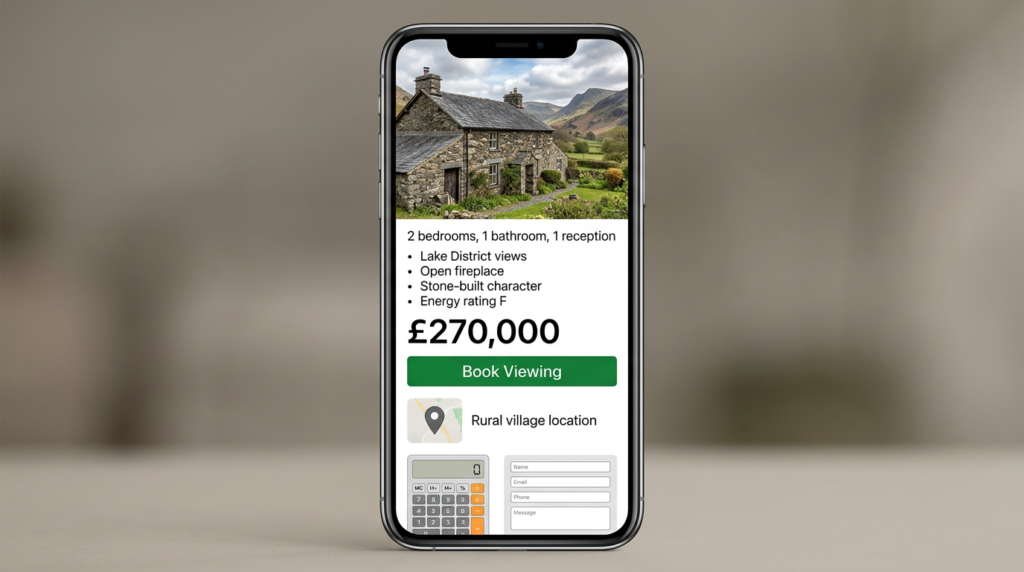
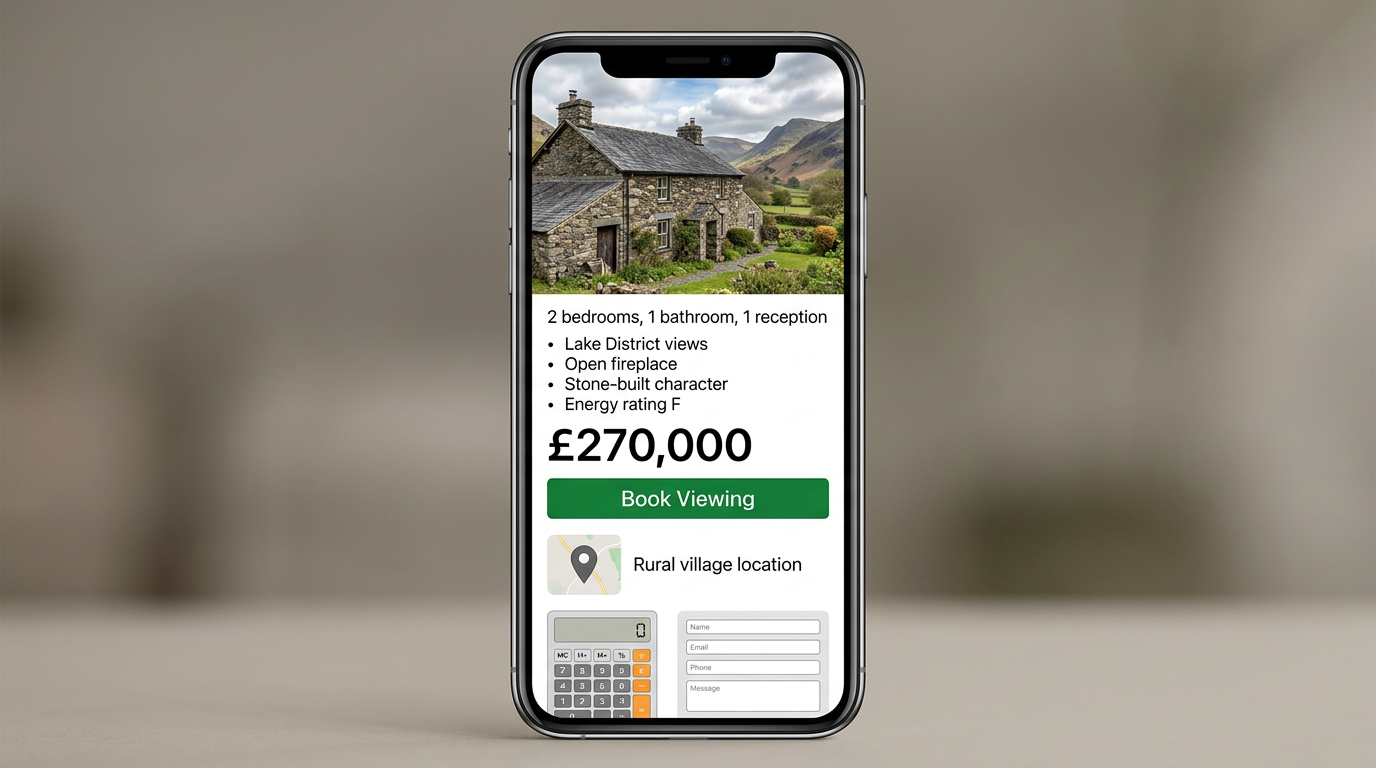
The Lake District operates at a different level. The average house price within the Lake District National Park stands at £455,711 — more than double the average in the surrounding Cumbrian areas, which is £233,677. The most premium locations — Windermere, Ambleside, Grasmere, Hawkshead — push considerably higher, with quality family homes in these locations typically requiring £600,000–£1 million or more. At the entry level of £300,000, the Lake District offers much less than the Ribble Valley for the equivalent spend.
The pricing premium in the Lake District is driven by two forces that operate simultaneously and reinforce each other: exceptional scenic appeal, and the significant proportion of the housing stock occupied by holiday lets and second homes. Several councils in the Lake District have implemented a 100% council tax uplift on second homes, with others planning to charge double from April 2025, in an attempt to deter second home ownership and encourage primary residence use. Whether this policy moderates the premium over time remains to be seen, but in the short term the effect of competition from investors and second home buyers on the market for homes in the most desirable locations remains a material factor for primary residence buyers.
The verdict on price: For a given budget, the Ribble Valley offers materially more property than the Lake District — larger footprint, better condition, more competitive pricing across the full range. If maximising what you get for your money is a priority, Ribble Valley wins this dimension clearly.
Connectivity and Commutability
This is the dimension that most clearly differentiates the two locations for buyers who have not fully retired or moved to fully remote working.
The Ribble Valley is one of the defining selling points of the area. Clitheroe sits approximately 14 miles from the M6 motorway and has a direct train service to Manchester Victoria — a journey of around 60–70 minutes — making it genuinely commutable to Manchester for buyers who can work partly from home. Preston is accessible by road in under 30 minutes. Burnley, Blackburn, and Accrington are all within 20 minutes. For buyers working in Manchester, Liverpool, or the M62 corridor who want a rural base without completely severing professional ties to the city, the Ribble Valley sits in a sweet spot that is relatively rare in England — genuinely rural landscape with genuinely manageable commuting options.
The Lake District is beautiful in inverse proportion to its connectivity. The national park sits at the western edge of the Pennines, removed from the motorway network, and with rail connections that serve Oxenholme and Penrith on the West Coast Main Line rather than the heart of the park. Windermere has a branch line from Oxenholme. The reality for most Lake District residents is car dependency for almost all daily movement — and in summer, that means navigating the tourist traffic that makes the A591 and the roads around Windermere and Ambleside unpredictable. Manchester is around 90 minutes by road in favourable conditions; the Lake District is not a commuter belt.
For buyers who need commutability — even one or two days a week — Ribble Valley has a meaningful practical advantage. For buyers who have left commuting behind entirely, this dimension carries less weight.
Schools
Both areas contain strong educational options, but the pattern differs.
Ribble Valley has a notable concentration of highly regarded schools. Clitheroe Royal Grammar School — a selective grammar school — consistently ranks among the top state schools in the North West and is a significant draw for families. Stonyhurst College, the prominent independent boarding school in the Hodder Valley, adds further educational prestige to the area. Several primary schools in the village catchments are well-regarded, and the broader Lancashire provision is solid.
The Lake District does not have the same concentration of top-performing schools. The secondary school provision across the national park and its fringes serves local needs but does not carry the consistent high-performance reputation that draws families specifically for educational reasons. The smaller communities of the Lake District — Ambleside, Grasmere, Hawkshead — have smaller schools that suit some families well but are not the draw they would be in Ribble Valley.
For families whose school choice is a significant factor in where they buy, Ribble Valley is the stronger proposition.
Community and Character
Ribble Valley is a working rural community rather than a primarily tourist destination. Clitheroe has a functioning town centre with independent shops, a weekly market, restaurants, and a Castle. The surrounding villages — Whalley, Barrow, Great Mitton, Hurst Green — have working farms, active village pubs, and a population that is predominantly there to live rather than to visit. The Forest of Bowland AONB, which covers much of the upland hinterland, is designated for its landscape quality but is not a national park with the attendant visitor pressure.
This distinction matters for daily life. The Ribble Valley has the feel of a community that has been there for centuries and will be there after the tourists have gone home. The rhythm of the place is determined by agriculture, by the school run, by the market day — not by the visitor economy.
The Lake District is a national park whose economy is substantially structured around tourism. In the villages most desired by buyers — Ambleside, Bowness, Grasmere — the shops, restaurants, and cafes are calibrated for visitors. There are genuinely tight-knit local communities in the Lake District, particularly in the quieter valleys and the working farming communities of the uplands — but in the most famous and most sought-after locations, the balance between locals and visitors tilts toward the latter for much of the year.
The summer months in the Lake District bring extraordinary pressure on roads, car parks, facilities, and outdoor amenities. A resident of Windermere or Ambleside between July and September lives through a sustained period of congestion and crowding that a resident of Clitheroe or Whalley does not experience. This is the price of the postcard setting — and buyers should experience it at first hand before committing to the destination.
The Landscape Itself
On pure scenic terms, this is close, and the right answer is personal.
Ribble Valley offers a varied and genuinely beautiful landscape — the valley floor of the River Ribble, the limestone country around Clitheroe, the austere upland moorland of the Forest of Bowland, and the rolling pastoral countryside of the Hodder Valley. It is landscape that rewards walking and cycling without requiring the planning that the Lake District’s terrain demands. It is also landscape that is not globally famous — which means you experience it without queuing.
The Lake District is objectively extraordinary. The combination of high fells, deep glacial lakes, stone-walled valleys, and the particular quality of north-western English light produces something that has been inspiring artists, writers, and walkers for three centuries. It is a World Heritage Site not as a bureaucratic designation but because it is genuinely among the most beautiful landscapes in England. For buyers who have visited, fallen in love with it, and are resolute about living there — this landscape is the point, and no other consideration comes close.
Which Is Right for You?
The Ribble Valley makes the strongest case for:
- Buyers with children and school choice as a priority
- Buyers who retain any level of professional connection to Manchester or the wider North West
- Buyers who want maximum property for their money
- Buyers who want a genuinely rural community rather than a tourist destination
The Lake District makes the strongest case for:
- Buyers for whom the landscape is the non-negotiable primary factor
- Buyers who have fully decoupled from commuting and professional connectivity requirements
- Buyers at a higher price point who can access the best of what the national park’s property market offers
- Buyers seeking premium holiday let investment alongside a main or second home
They are not competing for the same buyer. Both are exceptional rural destinations that offer quality of life that most of England cannot match. The choice between them depends almost entirely on what you are prioritising — and on being honest about which of those priorities you can live with and which you cannot.
Visit both. Walk the hills. Sit in the pubs. Drive the school routes on a Tuesday morning. The decision will become considerably clearer on the ground than it is in any comparison guide.
About the Author