To boost your Liverpool rental yield, start with a data-driven plan: assess demand, set ROI targets, and map upgrades that deliver the best payback—think curb appeal, insulation, and durable, neutral interiors. Prioritize quick wins that cut costs and downtime, then layer in energy-efficient upgrades and smart storage tailored to tenants. Tie every choice to compliance and vetted contractors, and track results to refine your strategy as you progress. Ready to translate insights into actions?
Assess Liverpool Rental Demand and Set Yield Targets

To evaluate Liverpool rental demand and set yield targets, start with current market data: vacancy rates, average rents by area, and tenant demographics.
You’ll map demand by submarket, comparing student, professional, and family profiles to local supply.
Track Historical trends to identify seasonal shifts, cyclical dips, and migration patterns that shape occupancy.
Examine Market saturation by assessing competing rentals, new builds, and conversion activity in core neighborhoods.
Use vacancy rates as a leading indicator of pressure, then align rent bands with observed willingness to pay across areas like Liverpool City Centre, Anfield, and Woolton.
Establish target yields by applying cost-based cash-on-cash and cap rate benchmarks, adjusting for risk, lease terms, and management efficiency.
Reforecast quarterly as data evolves to preserve peak profitability.
Create a Practical Upgrade Budget Aligned With ROI
A practical upgrade budget starts with a clear ROI framework: define which improvements lift value, by how much, and over what timeframe. You align each project to net income gains, expected occupancy, and maintenance cost reductions, then translate that into a reliable spend plan.
Map your Budget allocation to core categories—kitchens, bathrooms, flooring, systems—prioritizing high-ROI items with proven demand impact in Liverpool rentals. Use ROI analysis to set guardrails: target payback periods, acceptable cash-on-cash returns, and risk buffers for market shifts.
Quantify costs, timelines, and disruption costs, then test scenarios with sensitivity checks. This disciplined approach keeps upgrades purposeful and budget-bound, helping you avoid vanity fixes.
Document assumptions, track actuals, and adjust as data arrives to sustain profitability.
Boost Curb Appeal With Low-Cost, High-Impact Fixes
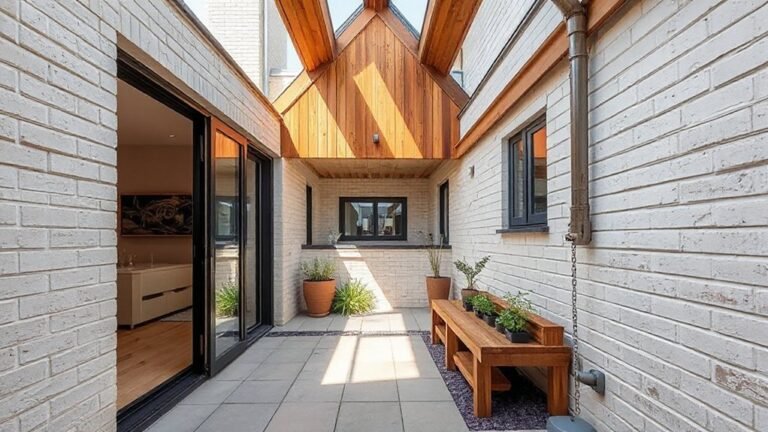
You can boost curb appeal quickly by adding fresh exterior touches, since small updates often yield outsized rental interest. Planting for curb appeal costs little but signals ongoing care, which renters notice in photos and tours.
Budget-light lighting on a budget further enhances safety and mood, driving perceived value without overhauling the property.
Fresh Exterior Touches
Fresh exterior touches can dramatically lift a property’s first impression without breaking the bank. You’ll drive higher perceived value by prioritizing simple, measurable upgrades that resonate with tenants and buyers.
Begin with a quick audit: assess door color, trim, and fascia for consistency with the building’s style, aiming for a cohesive palette that complements bricks or siding. Prioritize exterior painting where color fades or moisture damage exists; choose durable, low-maintenance finishes designed for Liverpool weather.
Refresh entryways with a clean step, updated house numbers, and a lightweight porch light to boost visibility and safety.
Schedule garden maintenance to present tidy borders and healthy greenery without overinvestment. Small fixes reduce vacancy risk, improve online photos, and support a stronger rent-to-value perspective in your market.
Planting For Curb Appeal
Planting for curb appeal is a low-cost, high-impact way to attract tenants and buyers while signaling ongoing property care. You’ll boost perceived value by prioritizing defensible, low-maintenance greenery that thrives in Liverpool’s climate.
Target high-visibility zones: entry paths, window boxes, and small front-yard beds. Use native or drought-tolerant plants to minimize water use and maintenance, aligning with data on cost-per-month reductions in vacancy risk.
Integrate urban gardening strategies to maximize year-round green presence without overbuilding space. Consider rooftop planting where feasible to extend greenery without crowding the ground level, improving microclimates and perceived quality.
Choose scalable options—perennial shrubs, compact perennials, and modular planters—so updates remain affordable as rents or strategies change. Maintain clear maintenance schedules to sustain curb appeal over time.
Lighting On A Budget
Efficient lighting is a high-impact upgrade that pays back in reduced vacancy risk and improved tenant safety. You’ll boost curb appeal without over-spending by targeting key areas: entryways, hallways, and communal stairs.
Start with a lighting design plan that maps function, ambiance, and safety—and ties to your overall property aesthetic. Prioritize durable, energy-efficient fixtures with universal compatibility to simplify maintenance and tenant turnover.
For budget allocation, set a cap per room and allocate a buffer for quick replacements or upgrades after inspections. Compare LED options by lumen output and color temperature to achieve clear, welcoming illumination without glare.
Track savings from lower energy use to justify future upgrades and communicate value to prospective tenants, reinforcing a data-driven, cost-conscious approach.
Improve Energy Efficiency Without Breaking the Bank
Upgrading energy efficiency in a rental property doesn’t have to drain your budget. You’ll start with a targeted energy audit to identify high-return fixes, then prioritize improvements by payback and impact on tenant comfort.
Data shows sealing air leaks typically delivers quick, cost-effective gains; pair this with insulation upgrades in key areas to lower heating demand.
Implement low- or no-cost habits alongside practical upgrades, tracking monthly energy use before and after.
Choose efficient, landlord-friendly products with solid warranties to minimize turnover risk.
Prioritize windows and doors only where upgrades surpass simple weatherization.
Consider phased upgrades aligned to tenancy cycles to spread costs.
With disciplined budgeting and clear metrics, you’ll lift energy performance and attract higher-yield tenants.
Refresh Interiors With Durable Landlord-Friendly Finishes
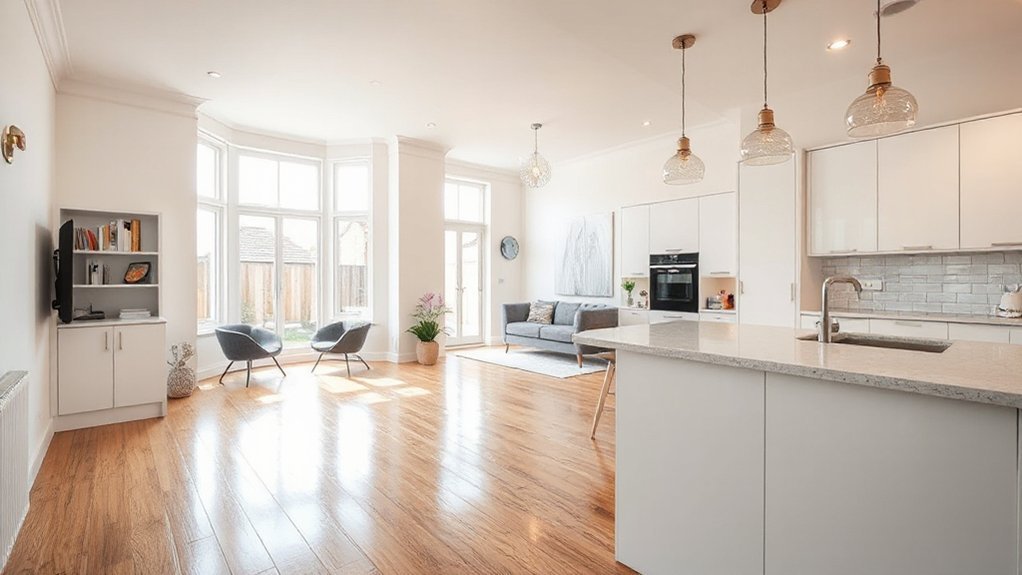
Refresh interiors with durable, landlord-friendly finishes to shorten turnover and protect your investment. You’ll choose finishes that outperform wear tests: scuff-resistant paint, ceramic or vinyl flooring, and easy-clean surfaces at a cost-per-year basis.
Prioritize neutral tones paired with durable textiles to appeal to a broad tenant pool, supporting longer tenancies. In practice, map finish life cycles to maintenance windows, minimizing rent-imputation gaps.
Align interior decor with rental type and local market trends, tracking vacancy days and repair costs to quantify value.
Furniture selection should emphasize modular, multi-use pieces that resist damage and optimize space without frequent replacement. Use standardized starter kits to reduce customization requests, streamlining turnovers while preserving perceived quality for higher yield.
Create Space: Smart Layouts and Clever Storage
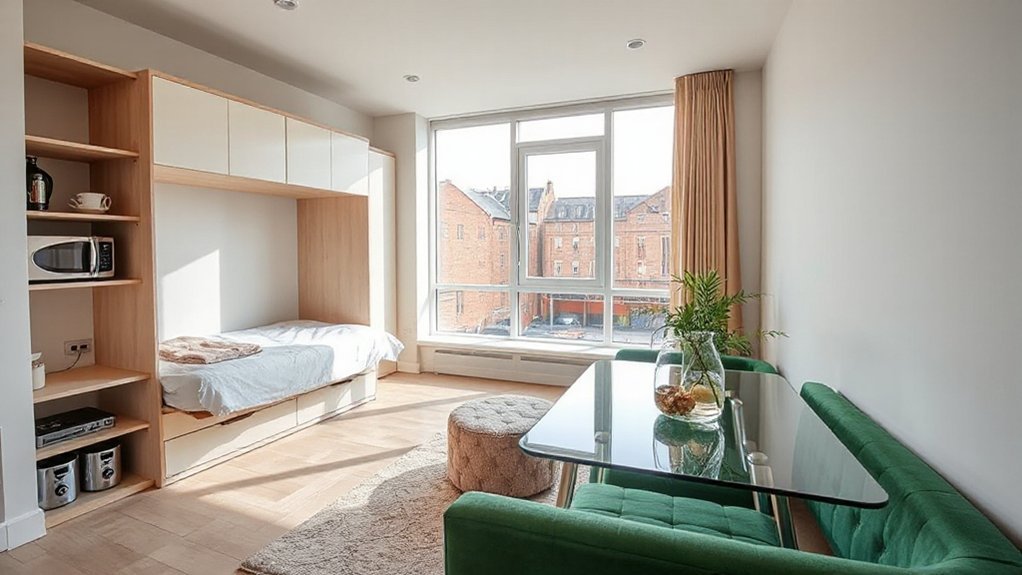
Prioritize smart space planning to maximize usable square footage without sacrificing comfort, using layouts that adapt to different tenant needs.
Implement clever storage solutions that reduce clutter and support optional furniture configurations, backed by data on rental yield and turnover.
This approach keeps spaces flexible, scalable, and appealing to a broad tenant pool in Liverpool.
Smart Space Planning
Smart space planning starts by mapping every room’s function and traffic flow, then choosing layouts that maximize usable area without crowding.
You should prioritize flexible zones that adapt to different tenants and intents, using measurements and clear circulation paths to guide furniture placement.
Focus on the core metrics: square footage utilization, wall-to-wall clearance, and access to natural light.
For furniture arrangement, test multiple configurations quickly with scale diagrams to compare efficiency and comfort, then select a layout that minimizes wasted space while supporting daily routines.
Align decor styling with the layout to reinforce perceived space without clutter.
This approach yields higher tenant satisfaction, lower turnover, and measurable yield improvements through disciplined, data-driven planning.
Clever Storage Solutions
Clever storage is your best multiplier for usable space: lean, data-driven layouts that couple smart furniture with targeted compartments to maximize every square foot. You’ll design each room around purpose, measuring flows, door swings, and load points to prevent clutter.
Use creative shelving to transform vertical space into functional zones, keeping daily items sighted and reachable without encroaching on living areas. Integrate hidden compartments under beds, stairs, and seating to stash odds and ends while maintaining clean lines.
Choose modular pieces that adapt as tenants shift, preserving value across tenancies. Label zones clearly to support maintenance and future upgrades. Prioritize durable finishes and soft-close mechanisms to reduce wear.
This approach lowers vacancy costs, boosts perceived quality, and delivers consistent yield through smarter, scalable storage.
ROI-Driven Conversions and Amenities for Liverpool Rentals
ROI-driven conversions and amenities are the levers that lift occupancy and rent in Liverpool’s rental market. By prioritizing high-impact upgrades, you can maximize net operating income while keeping capital spend measured.
You’ll align unit layouts with demand signals from Neighborhood demographics, targeting compact, efficient spaces for younger professionals and flexible options for families. Prioritize durable, low-maintenance finishes to lower lifecycle costs and improve uptime.
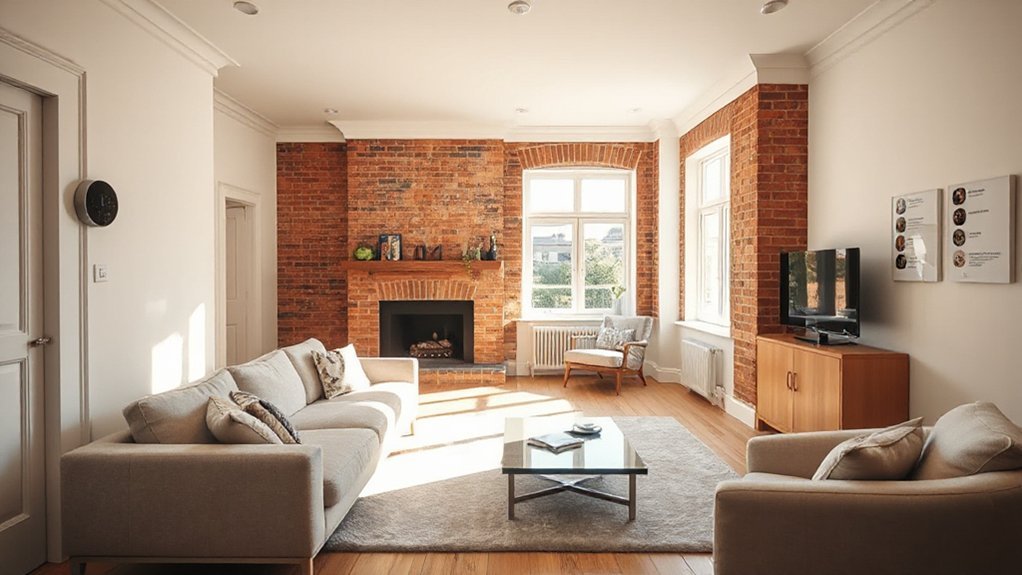
Historical preservation should guide aesthetic decisions, preserving curb appeal while enabling modern comfort—think updated kitchens, smart controls, and secure storage that respects heritage features.
Evaluate conversions that boost occupancy without overcommitting capex, using data on vacancy rates, time-to-rent, and rent per square foot. Test small, scalable upgrades, measure ROI, and scale winning formats across properties.
Stay Compliant: Liverpool Tenancy Rules and Landlord Obligations
Staying compliant is essential for protecting cash flow and avoiding costly penalties in Liverpool. You’ll align your approach with Legal compliance and Tenancy regulations to minimize risk and maximize uptime.
Start by documenting standard procedures for rent collection, repairs, and notice periods, then automate reminders and inspections to stay ahead of compliance deadlines.
Track your obligations for safety certificates, gas and electrical checks, and energy performance targets, scheduling renewals well in advance.
Maintain clear, landlord-tenant communications to support transparent dispute resolution.
Use a compliant tenancy agreement and up-to-date prescribed information to reduce confusion and potential claims.
Regularly review regulatory changes and adjust policies promptly, so your yield isn’t eroded by non-compliance costs.
This disciplined stance protects cash flow and sustains long-term profitability.
Source Local Trades and Schedule to Minimize Downtime
You source local trades with proven track records and clear cost estimates to keep budgets tight.
Align contractor timelines with your project milestones to minimize idle time and speed up occupancy-ready delivery.
Use a coordinated schedule to prevent overlaps, reduce downtime, and track progress with real-time updates.
Source Local Trades
To minimize downtime, assemble a local trades team early and anchor scheduling around your property’s critical renovations. You’ll want a vetted roster of Liverpool-area contractors with proven timelines and transparent pricing.
Prioritize electricians, plumbers, and carpenters who offer fixed-rate packages and phased work plans, reducing change orders. Compare bids not by lowest price alone, but by time-to-completion, scope clarity, and post-job warranty.
Build a short, prioritized scope of work and confirm lead times for each trade to identify inevitable bottlenecks.
Leverage innovative financing options with local lenders to fund essential upgrades while preserving cash flow.
Maintain ongoing tenant engagement by publishing a simple construction calendar and progress notes, so residents anticipate work and experience minimal disruption.
Align contracts to Flex schedules for weekend or off-peak access when feasible.
Schedule Downtime Minimization
Effective downtime minimization hinges on synchronized schedules with your local trades: establish fixed-start windows, track daily progress, and anticipate bottlenecks by cross-checking lead times for electricians, plumbers, and carpenters.
You’ll map project phases to limit idle days, allocate buffer slots for weather or supply delays, and use real-time updates to reallocate crews without dragging milestones.
Track metrics like tasks per day, days to complete each trade, and percentage of on-time arrivals to quantify improvement.
Prioritize tasks that liberate multiple trades; confirm clear handoffs to avoid backtracking.
Integrate garden maintenance planning to preserve curb appeal while repairs run, and reinforce neighborhood safety through well-lit work zones and secure material storage.
Use data-driven reviews post-job to refine future scheduling and minimize downtime across properties.
Coordinate Contractor Timeline
Coordinating contractor timelines starts with sourcing trusted local trades and aligning their schedules to your project milestones. You’ll map critical tasks, identify lead times, and plug in buffers for weather or delays, keeping downtime to a minimum.
Use a shared calendar to synchronize dependencies, so you don’t stall one trade while another waits. Track progress daily, note variances, and adjust scope or crew assignments accordingly.
Prioritize overlapping phases where feasible, like framing while permits finalize, to shave days off the overall timeline.
Maintain clear communication channels, with weekly check-ins and a single point of contact for changes. This approach supports contractor coordination and timeline management, delivering predictable completion dates, tighter cost control, and higher yield for your Liverpool rental upgrades.
Track Yield, Occupancy, and Tenant Satisfaction to Refine Strategy
By tracking yield, occupancy, and tenant satisfaction, you gain a clear view of where your strategy works and where it doesn’t. You’ll quantify performance with months-to-month trends, vacancy durations, and rent, comparing actuals against targets.
Use a dashboard to flag deviations: rising vacancy, slipping rents, or falling satisfaction. Correlate tenant engagement surveys with lease renewal rates to uncover service gaps and opportunity areas.
If occupancy remains high but yields drop, reassess pricing tiers, incentives, and lease terms for rent optimization. Prioritize actions with the strongest ROI and shorter payback periods, then re-measure.
Build a repeatable loop: set targets, monitor, adjust, and reforecast quarterly. This disciplined approach sharpens strategy and boosts long‑term yield.
Frequently Asked Questions
How Long Does ROI Payback Typically Take in Liverpool Rentals?
ROI payback in Liverpool rentals typically ranges 4–7 years, depending on turnover and upgrades. You should monitor Property management costs and apply Investment strategies to shorten timelines, optimize cash flow, and improve net yields through data-driven decisions.
What Are Common Hidden Costs in Liverpool Property Upgrades?
Imagine this: you spot hidden fees snagging cash at every corner, and renovation surprises popping up like lurking traps. You’ll avoid them by budgeting for contingencies, tracking quotes, and monitoring progress to minimize hidden fees and surprises.
Which Permits or Approvals Are Needed for Typical Liverpool Improvements?
You’ll need building permits and check neighborhood regulations before renovations. Verify with local council, submit plans, and obtain approvals for structural, electrical, and plumbing work. Comply with zoning rules, safeguarding timelines and documentation for a compliant upgrade strategy.
How Does Rental Demand Vary by Liverpool Neighborhood Seasons?
Answering you directly: Neighborhood amenities shape demand, with peak in warmer months as seasonal migration draws renters; off-peak dips follow school terms. You’ll notice higher occupancy where transit, parks, and shops cluster, benefiting from consistent seasonal flow.
What Tenancy Issues Most Impact Upgrade Decisions in Liverpool?
Tenant satisfaction and Maintenance responsiveness most impact upgrade decisions in Liverpool. You’ll prioritize fixes and value-adding renovations based on feedback metrics, keep response times tight, and align upgrades with tenant needs to sustain occupancy and maximize yield.
Conclusion
In this rental landscape, you’re the ship’s captain charting a profitable course. Each upgrade is a favorable wind: curb appeal, energy efficiency, and durable interiors steer you toward higher yields. Track demand like stars, budget with ROI as your compass, and hire trusted crews who minimize downtime. Stay compliant, source local, and adjust course by occupancy and satisfaction data. With disciplined tactics, you’ll reach a steady harbor of increased income and steadier tenancies.
About the Author