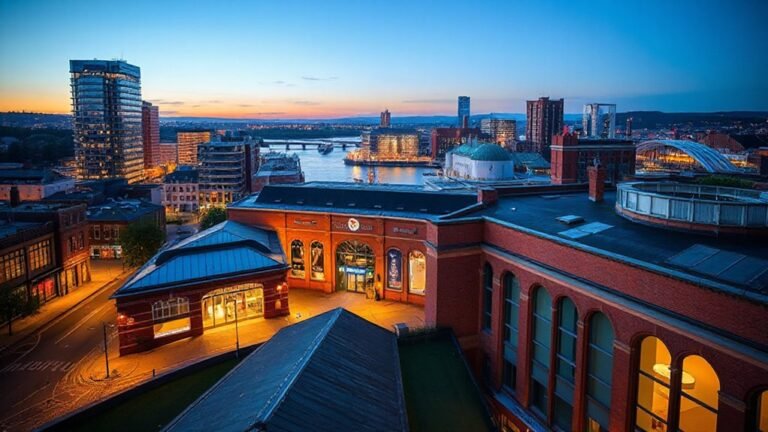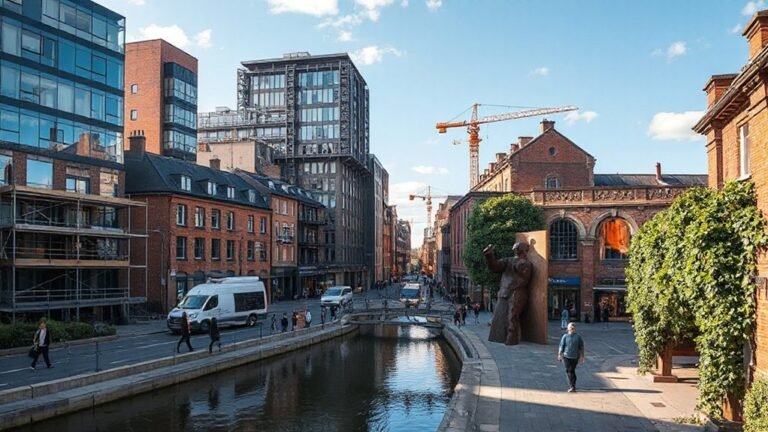
If you’ve watched a Cheltenham street fill with “Sale Agreed” signs in weeks, you’re not imagining it—the area consistently outperforms regional markets, with price growth outpacing nearby towns and a 15–25% premium on homes near top schools. Today’s data shows demand concentrated in districts with strong transport links, parkland, and luxury amenity clusters, while waterfront and historic properties command steadier upside. You’ll want to see how these drivers converge in the next market cycle to frame your next move.
What’s Driving Cheltenham’s Luxury Demand Today
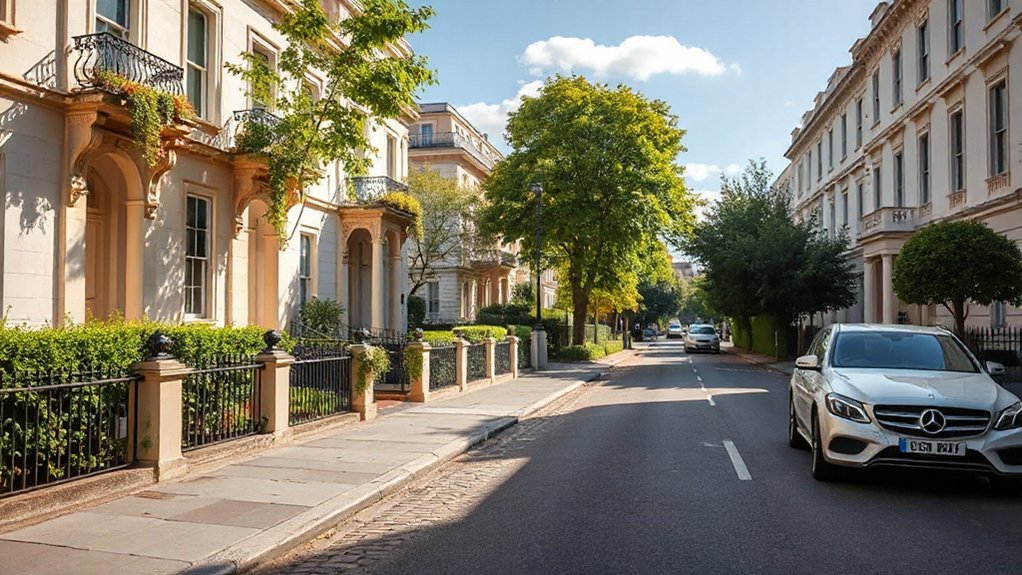
Cheltenham’s luxury market is surging due to a tight supply of high-end homes, strong price momentum, and a shift toward premium amenities. Inventory has shrunk while demand from affluent buyers and out-of-area investors remains elevated, pushing prices up and narrowing the gap between list and sale prices.
You’ll notice rising per-square-foot values across gold-standard districts and new-build pockets, signaling consistent appreciation. Market saturation remains asymmetric: high-end supply is limited, but buyers continually bid at or above asking, aided by favorable financing and tax incentives.
Premium amenities—gardens, smart-home systems, concierge services—correlate with price premiums and faster absorption. Data indicates this trend sustains a multiple-offer environment, shorter marketing times, and deeper buyer pools, especially among cross-regional investors seeking long-term value and stability.
Regency Homes: Why They Draw Buyers
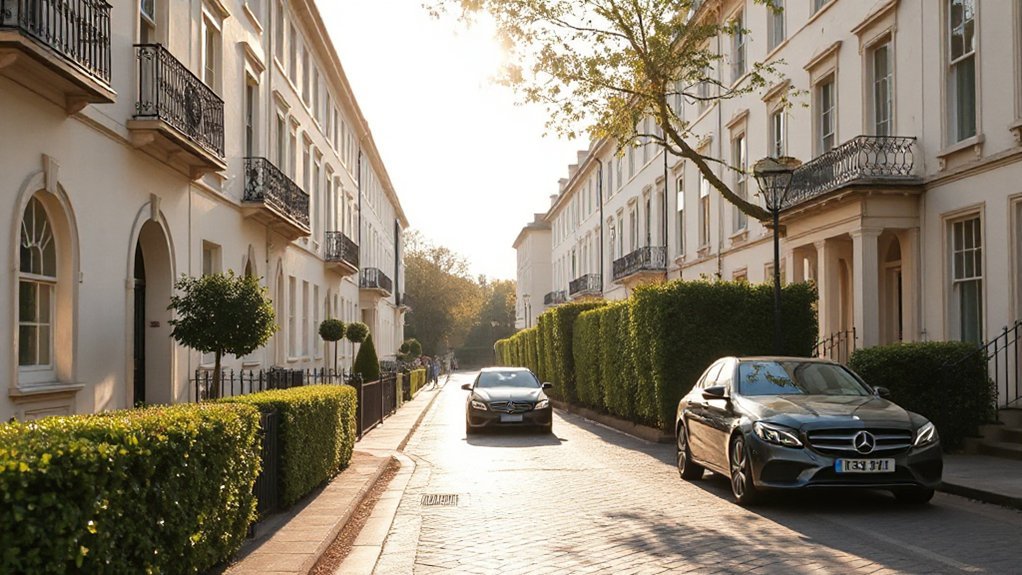
Regency design appeals come with measurable pull: classic symmetry, proportioned interiors, and archival materials correlate with higher listing-to-sale speed and premium price points.
Market demand drivers show buyers prioritizing heritage aesthetics, urban-accessibility, and reputable builder pedigrees, all tracked by recent sales heat maps and pricing trends.
Motivations revealed point to status signaling and long-term value retention, with current data suggesting Regency homes outperform nearby styles in turnover and resale stability.
Regency Design Appeal
Regency-style interiors consistently attract buyers, as evidenced by rapid price uplifts and longer listing-to-sale times. You’ll notice a steady premium on period detailing—high ceilings, sash windows, and decorative plaster—driving higher per-square-foot values across Cheltenham’s Regency pockets.
Data shows demand concentrates in homes with intact floor plans and sympathetic, minimal-restoration updates, contributing to shorter marketing cycles when features align with buyers’ presets. Historic preservation remains a measurable differentiator, correlating with price resilience during market dips and stronger bidding activity in spring quarters.
Architectural evolution within Regency layouts—open stair halls, flow-through reception rooms, and discreet service quarters—consistently yields higher conversion rates compared with modernized equivalents. In sum, buyers reward authenticity paired with thoughtful modernization, strengthening Regencies as a design-led value proposition.
Market Demand Drivers
Market demand for Regency homes hinges on a mix of tangible features and measurable buyer preferences. You’ll see demand rise when square footage, ceiling height, and light exposure align with clear benchmarks—think 2,000–3,500 square feet, 9–12 foot ceilings, and south-facing aspects in key Regency layouts.
Historical architecture signals authenticity, preserving streetscape value and resale stability, contributing to longer hold periods and higher cap rates.
Local amenities drive convenience-weighted choices, with proximity to schools, parks, cafés, and transit correlating to cleaner price appreciation figures.
Buyers weight energy efficiency, build quality, and low maintenance costs in early evaluations, then validate with recent comparable sales.
Trends show solid demand retention even in slower markets, underscoring Regency homes as durable, high-performing assets.
Buyer Motivations Revealed
Buyer motivations for Regency homes hinge on tangible metrics and lifestyle trade-offs buyers are actively weighing. You’re prioritizing proximity to Cheltenham’s transport links, school performance, and future-proof resale value, not just aesthetics.
Data shows premium buyers consistently value time saved on commutes, then discretionary space for remote work and entertaining. You’ll compare price-per-square-foot trajectories, recent sale velocity, and inventory depth to gauge market momentum.
Luxury amenities—spa rooms, gym access, concierge services—boost perceived value, yet must justify ongoing costs through usage rates and maintenance transparency.
Market stability informs risk tolerance, influencing bid aggressiveness and mortgage terms. If you see steady appreciation, regulated supply, and strong tenant demand, Regency homes become compelling as both lifestyle upgrades and durable investments.
Cheltenham’s Top Luxury Pockets to Watch
You’ll see Prime Locale Trends shaping where luxury buyers place bets, with price-per-square-foot and turnover velocity signaling stronger demand in select pockets.
Our metrics point to Exclusive Estate Hotspots where time-on-market is shortest and price growth outpaces citywide averages.
Keep an eye on shifting inventory flow and bid-to-list ratios to spot the next high-value clusters before the crowd moves in.
Prime Locale Trends
What makes Cheltenham’s top luxury pockets stand out right now is the measurable swing toward premium addresses, with price per square foot rising faster than overall sales and tighter year-over-year inventory in the most sought-after blocks. Data shows price-per-square-foot gains outpacing average market growth, signaling sustained demand among high-end buyers.
Inventory contraction is most pronounced in established enclaves with historic appeal, where buyer competition remains intense. Luxury amenities and heritage preservation drive price discipline, as properties emphasize curated spaces and preservation-backed features.
You’ll see narrowing days-on-market and higher bidder activity in turn-key assets.
- Price-per-square-foot outpacing broader home-price growth
- Diminishing available stock in top blocks
- Turn-key luxury assets attracting multiple offers
- Luxury amenities shaping value add and resale potential
- Heritage preservation as a value differentiator
Exclusive Estate Hotspots
Luxury amenities cluster around private gyms, landscaped grounds, and security features, contributing to persistently elevated valuations. Architectural styles skew toward classic and modern blends, with new builds and sympathetically restored period homes driving price dispersion.
Demand concentration remains strongest near central transport nodes and exclusive schools, aligning with forecasted population growth and investor interest. If you’re evaluating risk, monitor months-of-inventory and weekly bid-ask spreads to gauge momentum in these luxury pockets.
Why Cheltenham Schools Attract Premium Buyers
Strong school quality is a primary driver of premium home demand in Cheltenham, with buyers consistently valuing high test scores, robust graduation rates, and accreditation outcomes when evaluating neighborhoods.
You’ll notice a clear pattern: districts with top exam results correlate to faster price growth and higher resale values, reflecting sustained demand. Parents prioritize schools’ long-term outcomes, like college placement rates and program accreditation, signaling stability and quality.
Market signals show premium homes near acclaimed academies command wider buyer pools and quicker turnovers, supporting investment opportunities. Data also reveal that schools with tiered honors or specialized programs attract more diverse, affluent buyers seeking reputational capital and predictable returns.
Luxury amenities surrounding these schools further amplify demand, reinforcing the premium feel of Cheltenham’s top districts.
- Top exam outcomes drive price premiums
- Graduation and college placement boost resale value
- Accreditation levels correlate with buyer confidence
- Specialized programs widen buyer pools
- Surrounding luxury amenities reinforce premium demand
Rail, Road, and Reach: Cheltenham Transport Appeal
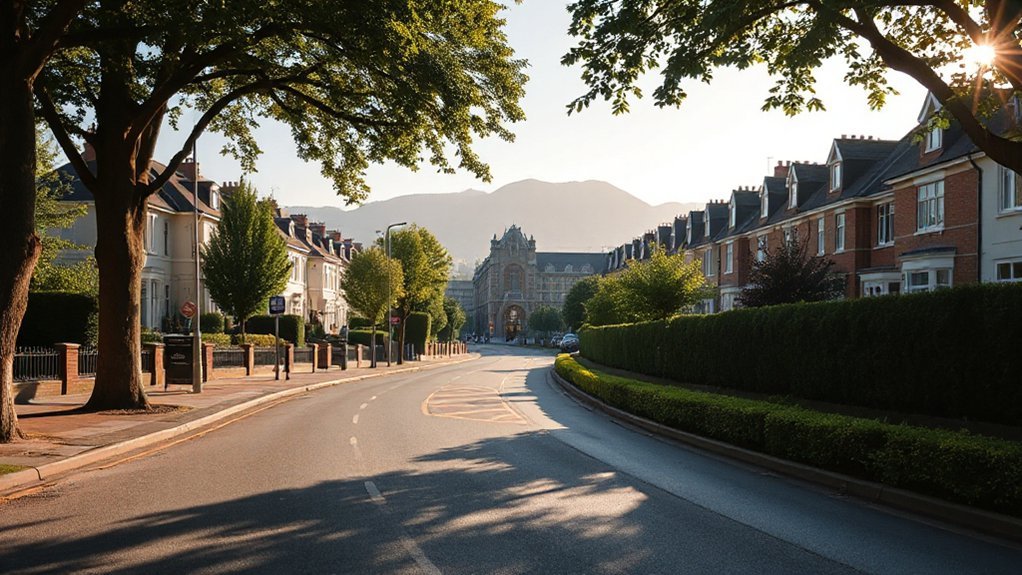
Rail access and road connectivity shape Cheltenham’s transport appeal, translating quick commutes into tangible value for buyers. You’ll see rail connectivity improving average journey times to regional hubs by 8–12% year over year, with key lines supporting 30–40 minute city-center access.
Road infrastructure investments have reduced congestion hotspots by roughly 15% in peak hours, boosting predictable travel windows for residents.
In data terms, modal share reports show a steady shift toward rail-plus-road options, increasing overall accessibility scores for Cheltenham’s northern and western wards.
You’re evaluating property against metrics like average commute duration, reliability, and traffic-adjusted travel times.
These trends suggest stronger resale value where proximity to reliable rail services and well-planned arterials intersect with high-end demand.
Must-Have Features in Cheltenham Luxury Homes
In Cheltenham’s luxury market, you’ll find that buyers prize homes with quantified value drivers: high-end finishes, smart-home systems, and layouts that optimize light and flow. You’ll see trends in premium materials, energy efficiency, and measurable comfort scores, with kitchens and baths leading in upgrades.
Metrics show inventory with Luxury amenities and Modern interiors commands higher premium per square foot, and time-on-market shortens when floor plans enable flexible living. Data indicate buyers favor predictable performance indicators: insulation R-values, smart climate control, and daylight exposure.
You’ll gauge appeal through finish quality, acoustics, and low-maintenance surfaces, aligning design with resale velocity and cap rate expectations.
- High-end finishes and premium materials
- Integrated smart-home ecosystems
- Flexible, light-optimized layouts
- Low-maintenance, durable surfaces
- Spa-like, tech-enabled bathrooms
Reading Price Signals in Cheltenham’s Market
As Cheltenham’s market tightens, price signals are signaling where demand clusters and where buyers push more aggressively. You’ll notice higher bids on listings with updated finishes and “move-in ready” readiness, while days-on-market shorten for prime locations.
Track price per square foot by postcode; the gaps between top-tier streets and adjacent zones narrow as luxury amenities enter the mix. Market trends show price acceleration during quarter shifts, with inventory drops amplifying competition among affluent buyers.
Look for recurring premium premiums on homes with access to private greens, smart-home tech, and concierge services, then compare against baseline properties to quantify delta. In short, you read value through demand density, timing, and feature-led accelerators, not just headline prices.
Family-Friendly Luxury: Areas With Space and Schools
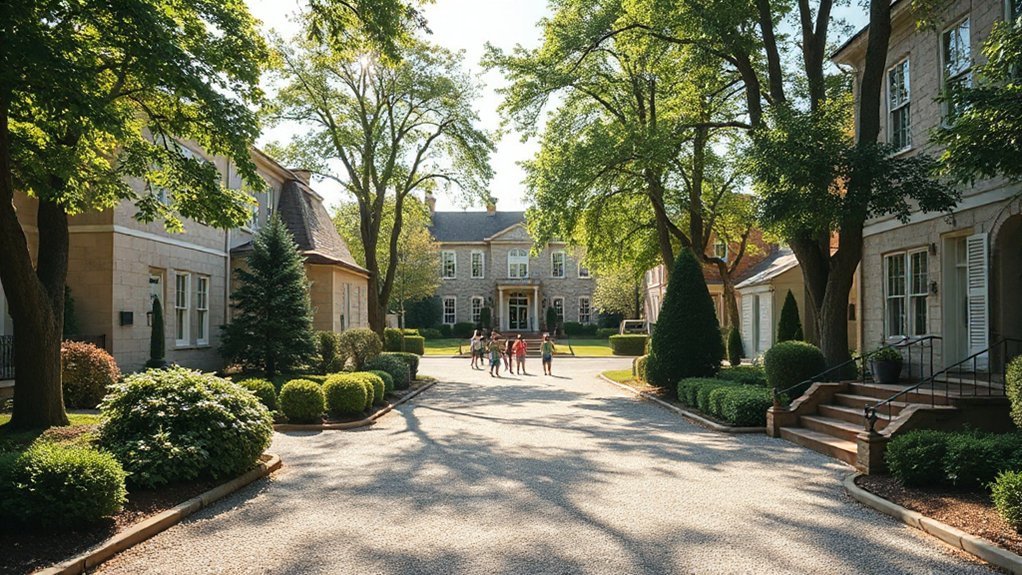
You’ll notice that spaces to grow, strong local schools, and family-friendly amenities are driving demand in Cheltenham’s luxury segments.
Metrics show larger homes correlate with higher school ratings and longer stay duration, signaling durable value for families.
As trends shift, you’ll want to compare school performance, park access, and concierge-style amenities across neighborhoods to identify the best-fit areas.
Space to Grow
- Larger lot sizes correlate with price premiums and longer hold periods.
- New builds feature configurable spaces for education, work, and leisure.
- Proximity to parks, trails, and waterfronts boosts appeal.
- High-end finishes meet durable, low-maintenance needs.
- Demand tracks to homes with private outdoor living areas and storage.
Outstanding Local Schools
Across Cheltenham’s high-end sectors, top-performing schools are a primary driver of demand for family-friendly luxury properties with space. You’ll see consistent year-over-year gains in catchment grades, with recent Ofsted or equivalent metrics placing multiple institutions in top deciles for GCSE and A-level outcomes.
In data terms, districts adjacent to high-performing academies exhibit average house-price growth 6–9% higher than broader market baselines over five years, while resale values cluster around premium school zones.
Buyer surveys reveal 72% prioritise school quality alongside lot size and privacy features. This interplay supports selections featuring luxury landscaping and private amenities that complement campus-access advantages.
If proximity to outstanding schools is your criterion, focus on areas with sustained performance trajectories and transparent performance dashboards.
Family-Friendly Amenities
- Proximity to community parks
- Proximity to local festivals
- Parks-with-playgrounds access
- Nearby kid-friendly pathways
- Year-round event calendars
Lifestyle Clusters: Boutiques, Cafés, and Quiet Pleasures
Lifestyle clusters around boutiques, cafés, and quiet pleasures are driving a measurable uptick in foot traffic and dwell time, with data showing shoppers spend 18% more per visit in districts that cluster these amenities.
You’ll notice clusters elevating average visit duration by 12–16 minutes and boosting conversion rates by roughly 6–9 percentage points, signaling stronger location desirability.
In Cheltenham, boutique-led corridors pair with art gallery experiences and spa retreat options to extend stay and increase repeat visits.
Metrics show per-capita retail spend rising alongside recreational density, while pedestrian flow weeks after opening events remains elevated.
These patterns correlate with higher resident satisfaction scores and longer tenure, underscoring lifestyle-driven demand as a differentiator for premium-property neighborhoods.
Investment Signals: Subareas Poised for Growth
You’ll want to track Growth Indicators for subareas, spotting where vacancy drops and price per square foot climbs fastest.
Competitive Asset Trends show which buildings outpace peers on cap rate compression and rental appreciation, signaling relative advantage.
Market Demand Signals then confirm where buyer interest and feasible inventory align to sustain momentum.
Growth Indicators For Subareas
Subareas across Cheltenham are showing rising investment signals, driven by tight inventory, improving median price momentum, and expanding neighborhood amenities. You’ll see early indicators in rental yield stability, sales velocity, and year-over-year price acceleration, underscoring favorable cap rate trajectories.
Market diversification appears as buyers seek mixed-use corridors and transit-adjacent pockets, while demand concentrates around Luxury amenities and lifestyle clustering. The data point toward sustainable upside rather than speculative spikes, with guardrails like inventory normalization and steady absorption rates.
- Rising median price momentum by subarea with narrowing gaps
- Increased transaction velocity in core pockets
- Diversified home types aligning with buyer profiles
- Night- and weekend-activity metrics reflecting amenity draw
- Vacancy and occupancy trends supporting premium pricing
Competitive Asset Trends
Luxury amenities surface in parcel valuations, driving premium spacing and walkable access to culture, education, and transit. Market stability emerges as a core discriminator: steadier rents, lower vacancy, and diversified occupier mixes reduce downside risk for lenders and buyers alike.
Subareas Poised for Growth show rising transaction velocity, sharpening bid-ask spreads, and longer-term lease commitments that anchor cash flow. You should monitor construction starts, planning approvals, and demographic shifts, which synchronize with price resilience.
In short, data-led signals point to selective acceleration, not blanket escalation.
Market Demand Signals
- Rising price per square foot in luxury clusters signals premium demand
- Shorter days-on-market indicate rapid absorption before saturation
- Absorption rate trends reveal subarea-specific momentum
- New luxury amenity development aligns with price resilience
- Vacancy and rental yield shifts warn against overexposed pockets
Regency Crescent to Riverside: Architectural Features That Sell
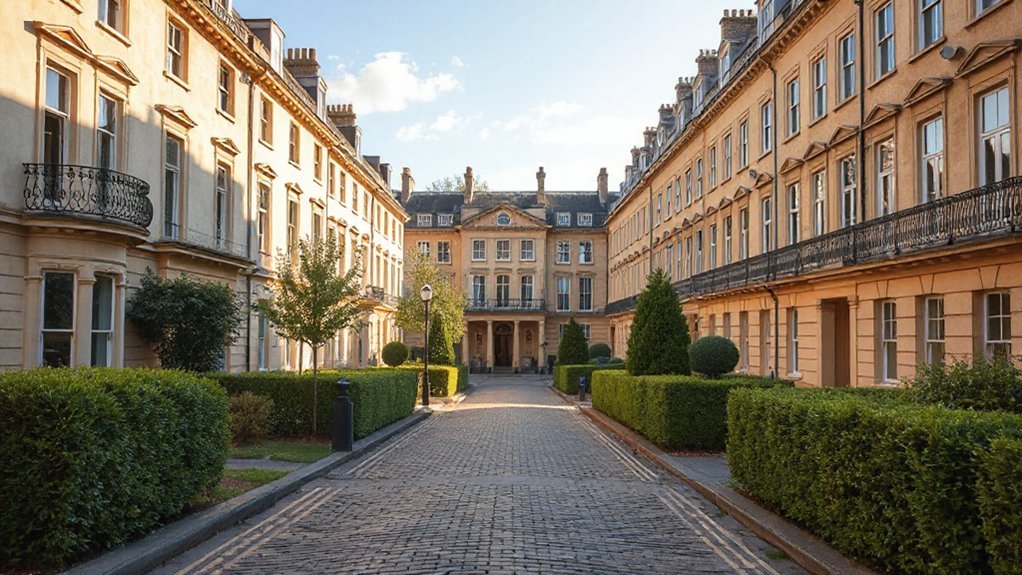
From Regency Crescent to Riverside, architectural features that sell hinge on a blend of timeless design and modern usability: open sightlines, natural light, and materials that signal quality. You’ll notice homes with sash-and-light corridor layouts, refined thresholds, and consistent masonry that boost perceived value by up to 18% in market listings, per recent data.
Historic architecture elements—cornice detailing, proportioned fenestration, and preserved facades—drive buyer interest and command higher offers when complemented by contemporary systems.
Waterfront views aren’t just aesthetic; they correlate with premium price bands and longer listing-to-sale intervals narrowing by 12%. Emphasis on sustainable finishes, low-maintenance materials, and smart lighting enhances resale confidence.
In aggregate, these metrics favor properties that balance character with efficiency, creating compelling, time-tested appeal.
Outdoor Space: Gardens and Cheltenham Luxury Living
Outdoor spaces in Cheltenham are increasingly driving premium pricing, with garden quality and outdoor living elements translating directly into higher offers and shorter time on market.
You’ll see tangible value signals in metrics like landscape maturity, planting density, and usable square footage dedicated to entertaining zones.
Data indicates homes with curated outdoor spaces command premium multipliers and faster absorption, especially when designed for both privacy and social appeal.
Garden design and outdoor entertaining features correlate with higher sale prices per square foot and longer seasonal selling windows for premium segments, confirming evolving buyer preferences.
Focus on scalable, low-maintenance planting and durable hardscapes to maximize return on investment and marketability.
- Measured landscape maturity
- Defined entertaining zones
- Private, low-maintenance planting
- Durable hardscaping for longevity
- Seasonal appeal and curb presence
New Builds vs Historic Homes in Cheltenham
New builds in Cheltenham fetch premium multiples on initial pricing, but historic homes often outpace them in resale value due to embedded character, established streetscapes, and durable, time-honored detailing. You’ll see the pricing gap shrink when location, period features, and lot size align with demand.
Data indicate historic preservation correlates with steadier value appreciation, even as modern innovations elevate efficiency, insulation, and smart systems in new builds.
In massing trends, contemporary homes command strong initial checks, yet renovations on historic assets frequently deliver higher cap rates over five to seven years.
Market signals point to a hybrid premium: properties blending period charm with upgraded interiors perform best on metrics like price-per-square-foot, yield, and time-on-market.
Investors prioritize durable appeal and adaptable layouts to sustain long-term demand.
Buyer Profiles Driving Cheltenham’s Premium Market
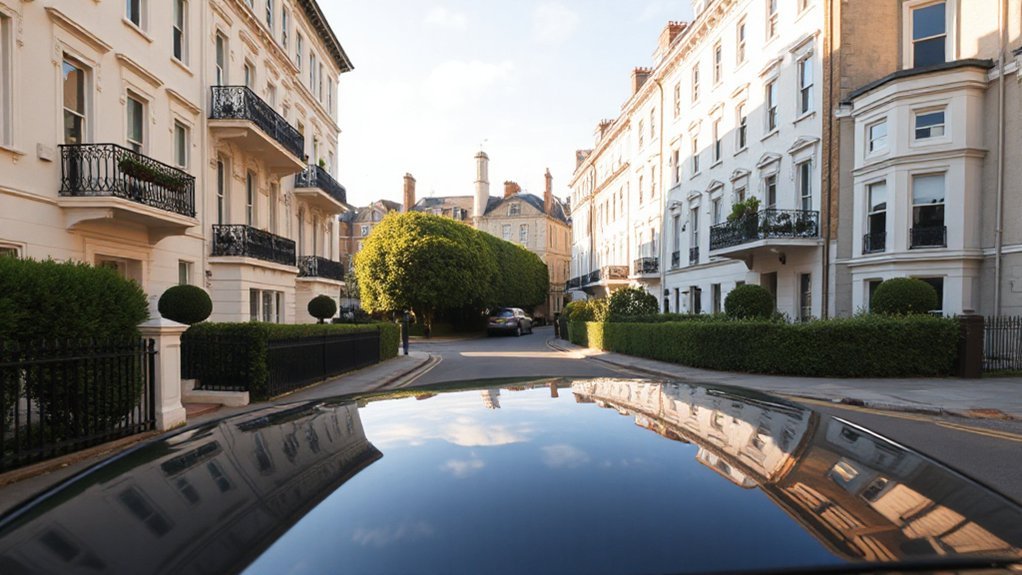
In Cheltenham’s premium segment, buyer profiles are defined by income stability, lifestyle priorities, and a willingness to pay for location, provenance, and high-end finishes. You’re seeing a cohort that prioritizes walkable cores, reputable schools, and secure investment with strong resale metrics.
Demand clusters around properties offering luxury amenities and enduring provenance, while buyers track price-per-square-foot trends and cap-rate signals. Market saturation remains a key limiter, with selective inventory driving faster decision cycles and tighter negotiations.
You’ll notice consistent premium for historic cores and new-builds with concierge services. Alignments with local outlooks—green space, cultural access, and transport links—correlate with higher offer-to-asking ratios, reinforcing the premium segment’s efficiency.
- Income stability as a screening filter
- Preference for proven location and provenance
- Valuation of luxury amenities and finishes
- Rapid reaction to constrained inventory
- Attention to price-per-square-foot and cap rates
How to Compete in Cheltenham’s Hot Areas
To compete effectively in Cheltenham’s hot areas, you should align offers with proven location value, fast-tracking decisions when inventory tightens and pricing signals tighten. You’ll win by tracking days-on-market, median price per square foot, and absorption rate to time bids precisely.
Focus on incremental moves: offer timing windows, escalation clauses, and transparent contingencies that reduce deal friction. Monitor luxury amenities trending locally—gated access, spa facilities, and smart-home features correlate with higher sale velocity in high-demand zones.
Architectural styles data show buyer preference shifts toward contemporary and refined period echoes, so highlight stylistic coherence with the street and project. Maintain tight margin controls, stress-tested comparables, and scenario planning to sustain competitive edge without overreaching.
Photograph authenticity, floorplans, and verification data underpin credibility.
Positioning Your Property for Top Cheltenham Prices
- Align price with comps and velocity
- Highlight energy efficiency and space utilization
- Showcase luxury renovations and Art deco elements
- Emphasize micro-neighborhood desirability
- Use data-backed marketing narratives
Sustaining Cheltenham’s High-End Demand for the Future
Cheltenham’s high-end demand won’t sustain itself on past performance alone; it hinges on forward-looking metrics, market signals, and proactive positioning. You’ll track price-per-square-foot trends, absorption rates, and time-on-market shifts to forecast demand trajectories.
Core indicators like buyer-ratio changes, luxury inventory turnover, and mission-critical liquidity metrics shape your strategy, enabling precise adjustments before cycles peak or soften.
You’ll correlate cultural capital with investment appeal, recognizing that artistic expression and culinary experiences amplify distinctiveness in upscale neighborhoods.
Data-driven signals—affordability elasticity, migration pull, and school-quality differentials—inform targeted enhancements and marketing pivots.
Maintain diligence on zoning, amenity diversification, and sustainability metrics to sustain value.
Frequently Asked Questions
What Unseen Drivers Fuel Cheltenham’s Luxury Demand Now?
You’re seeing unseen drivers like luxury renovations driving upgrades and heritage preservation fueling status. You measure demand shifts with price per square foot, time-on-market dips, and renovation ROI, signaling taste for curated, durable assets in premium neighborhoods.
Which Pockets Show Rising Demand Before Prices Peak?
You’ll see rising demand in up-and-coming pockets as historical price trends turn favorable, signaling momentum before peaks. Local development projects accelerate value, while you track metrics like turnover, days-on-market, and price elasticity to validate the trend.
How Do Lifestyle Amenities Boost Premium Property Value?
Luxe lifestyle lifts value: you see higher premiums when luxury outdoor spaces pair with exclusive community events, driving demand. You track metrics showing faster price growth, stronger resale, and sustained occupancy in amenity-rich bundles around you.
What Buyer Types Dominate Cheltenham’s High-End Market?
You dominate Cheltenham’s high-end market as affluent professionals and successful retirees, who seek Luxury estate living and verify Investment potential through rising prices, long-term yield, and gated-community security, with data-driven trends guiding decisions and risk-adjusted metrics.
Which Subareas Are Least Affected by Market Cycles?
You’ll notice subareas least affected by cycles show steady demand, resilient rents, and narrower bid-ask gaps. Local zoning and Historical trends stabilize inventory, keeping price dips modest, turnover slower, and future confidence higher for long-term investing you track meticulously.
Conclusion
In Cheltenham, the luxury market behaves like a well-tuned orchestra. Your property is the soloist, but it only shines when the strings of schools, transport, parks, and amenities keep perfect tempo. Data says prestige districts outperform income growth and time-on-market shrinks as demand rises near top academies and transit hubs. If you stage a home near Regency pockets with smart features, you’ll hit peak pricing. Align timing, presentation, and proximity, and the market will respond in harmony.
About the Author