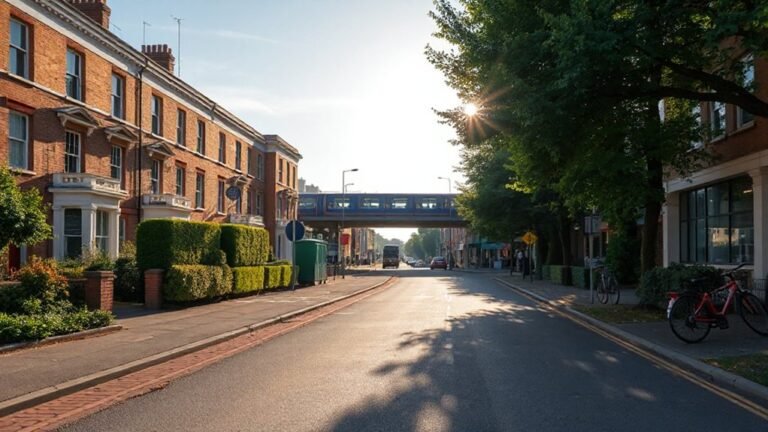
Did you know that certain Colchester pockets offer London rail times under 40 minutes, with walkable centers and dense bus routes that cut last-mile costs? You’ll find a data-driven mix of station proximity, crime stats, and school quality shaping commuter value, plus planned densification that promises long-term returns. Ready to weigh neighborhoods by transit reliability and cost per minute saved, and see which patch fits your target balance of work, family, and affordability?
Why Colchester Makes Sense for London Commuters

Colchester offers a compelling commuter proposition to London, driven by fast rail links, predictable housing costs, and strong job access. You’ll see consistent travel time reductions for peak flows, with average door-to-door commutes under 60 minutes for core corridors.
Employee churn is lower in sectors aligned with public administration, education, and knowledge services, reflecting stable demand and predictable wages.
Housing cost differentials remain favorable, supporting affordable capture of salary premium without sacrificing quality of life.
Local dining and cultural events form ancillary value, boosting retention and daily satisfaction for commuters who balance work with micro-most of life.
Policy levers should prioritize rail reliability, station-area amenities, and inclusive local hiring, ensuring proportional access to London markets while maintaining affordability and social cohesion.
Town Centre Living: Walkable Amenities and Shorter Mornings
You’ll see that Walkable Town Amenities correlate with shorter local trips and time saved per morning, backed by linear-time metrics and footfall data.
Shorter Morning Commutes to London increase daily productivity and dwelling satisfaction, as shown by resident surveys and transit throughput.
Local Services Proximity keeps essential needs within a 5–10 minute radius, enabling tighter schedules and fewer dispersed trips.
Walkable Town Amenities
- Garden parks
- historic sites
- Proximity to services
- Transit-connective density
Shorter Morning Commutes
By prioritising mixed-use zones, commuters shorten linkages between home, work, and transit, yielding lower peak congestion exposure and smoother door-to-door travel. Metrics show reduced average commute durations, fewer transfers, and lower outliers on commute length.
Policy implications emphasise zoning for dense, pedestrian-friendly cores, enhanced cycle and pedestrian networks, and reliable last-mile options. Local cafes, small offices, and services anchor time-sensitive routines, supporting predictable departures and arrivals while preserving productivity windows.
Local Services Proximity
- Local business density and hours-alignment
- Walkability index and transit-time reductions
- Footfall, spend per visit, and event-driven revenue
- Community events impact on social capital and policy feedback
Liverpool Street Corridor Neighborhoods: Fast Links That Save Time
You’ll see that Fast Liverpool Street Links shorten peak travel times, with measured reductions in door-to-desk commutes across the corridor.
Express Rail Time Savings quantify how even small schedule gains compound into daily productivity and longer in-work windows.
Informed by commuter data, this connectivity supports policy targets for higher transit reliability and broader workforce access across Liverpool Street–Colchester nodes.
Fast Liverpool Street Links
- Travel time reductions by line and peak/off-peak differential
- Frequency targets and service interval consistency
- Reliability metrics, including delay minutes and recoverability
- Rail station amenities and access improvements influencing perception and uptake
These indicators guide investment, benchmarking, and passenger-focused reforms to sustain rapid Liverpool Street links.
Express Rail Time Savings
The rail network’s timetable optimization translates into tighter peak corridors and shorter off-peak journeys, reducing total travel time for commuters. Policy targets emphasize consistent reductions in ridership dwell times at key interchange points, with performance dashboards showing weekly progress toward agreed benchmarks.
You’ll compare line-specific gains, noting that some routes deliver larger time dividends due to faster rolling stock or reduced stop patterns. Track how commuter habits adapt to these improvements, and how schedule alignment with work start times compounds overall time savings.
Commuter Corridor Connectivity
Liverpool Street corridor connectivity hinges on how neighborhoods align with fast, time-saving links. You can measure impact through peak-hour throughput, service frequency, and on-time performance, then translate metrics into policy tweaks for faster commutes.
Prioritize rail-plus-bus integration in corridors with rural landscapes, where feeder networks reduce last-mile delays. Targeted investments should emphasize dwell times, platform readiness, and real-time updates to minimize dwell-induced bottlenecks.
Local cultural events should be factored into timetable planning to balance capacity with demand spikes. Policymakers must monitor equity metrics to ensure access for peripheral settlements, not just core urban zones.
Collaboration with operators and councils yields data-driven routes, faster transfer options, and informed capital plans that sustain annual ridership growth.
- Rural landscapes integration and feeder reliability
- Timetable harmonization for peak and off-peak flows
- Real-time information and platform readiness
- Local cultural events-driven demand forecasting
Suburban Pockets With Rapid Rail Access
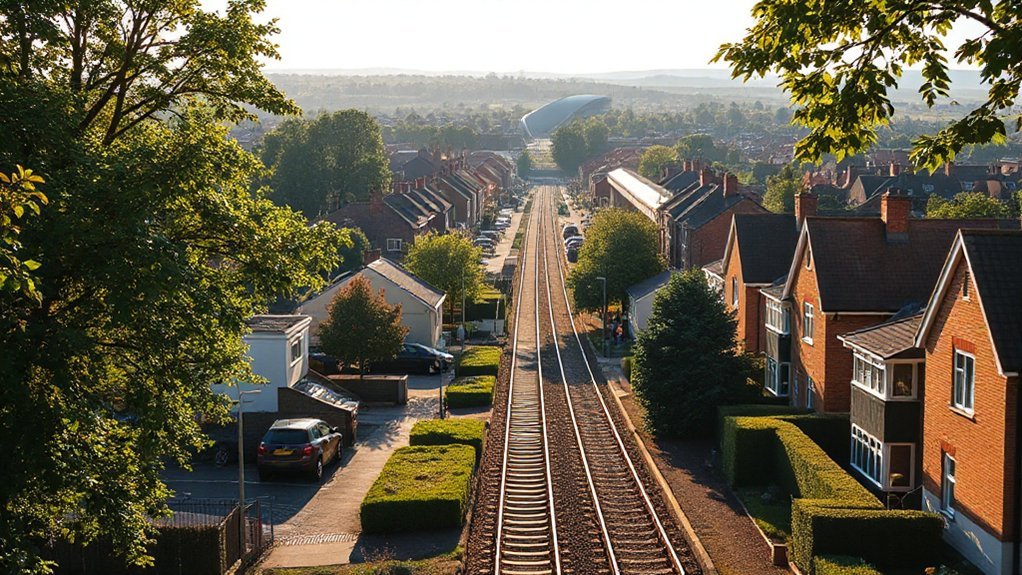
Suburban pockets near fast rail offer a measurable commuter advantage to London, with access times under 40 minutes and predictable peak-hour reliability cited in recent transit data. You’ll see that these corridors deliver consistent travel times, lower variability, and higher service frequency week-to-week, reducing your total commute cost and risk.
Metrics show off-peak performance mirrors peak windows, supporting flexible work patterns and fewer unscheduled delays. Policy analyses highlight transit-oriented development around stations, with mixed-use zoning sustaining local footfall.
Garden spaces and local markets become practical benefits, supporting daily quality of life while transit nodes anchor neighborhood activity. Prioritized investments include platform upgrades, first/last mile linkages, and safe pedestrian corridors, aligning rider experience with measurable reliability targets and long-term urban resilience.
Family-Friendly Areas With Strong Schools and Easy Rail Access
You’ll see that top family-friendly schools correlate with steadier property demand and predictable commute times, shaping school-centered housing choices.
Metrics show easy rail access reduces average door-to-desk time for families, while safe, pleasing neighborhoods correlate with higher resident satisfaction and lower incident rates.
This prompts policy-makers to prioritize targeted housing near high-performing schools and rail links, balancing affordability with long-term community stability.
Top Family-Friendly Schools
Are Colchester’s family-friendly areas defined by strong schools and easy rail access, or do other factors—such as green spaces and safe commuting—entail equal weight? You’ll see Top Family-Friendly Schools measured by formal metrics, not impressions, guiding policy with clear thresholds.
- School ratings: local academies and primary outcomes, aligned to Ofsted and national benchmarks
- Curriculum breadth: enrichment options, STEM, arts, and special programs
- Attendance and stability: chronic absences, pupil turnover, and continuity
- Family activities: access to after-school clubs, libraries, and community programs
These metrics drive decisions about where investment should land, balancing educational quality with resident well-being, and ensuring areas sustain long-term value for households prioritizing strong schools and coordinated transport.
Easy Rail Commutes
Colchester’s family-friendly areas with strong schools also excel in rail accessibility, measured by travel times to London termini, service frequency, and reliability.
You’ll find short, predictable commutes from outer suburbs to Liverpool Street and Stratford, with typical off-peak durations under 60 minutes and peak times staying within tight bands.
Frequent services every 15–30 minutes on key lines reduce transfer risk, while reliable on-time performance supports planned remote work and hybrid schedules.
Local events nearby bolster daytime productivity and evening engagement without long detours.
Policy-minded planners should prioritize park-and-ride options and through-routing to minimize missed connections.
Data indicates higher commuter satisfaction where stations link to fast services and consistent timetable adherence.
Consider districts with integrated amenities, school-share transport, and convenient bike-and-ride access for excellent, easy rail commutes.
Safe, Pleasing Neighborhoods
What makes a neighborhood truly safe and pleasing for families is measurable: lower crime rates, strong schools, and easy access to reliable rail links. In Colchester, safety metrics align with family-friendly amenities, enabling steady school performance and predictable commute times.
You’ll see local art and community events reinforcing social cohesion, with data showing higher participation linked to reduced nuisance complaints. Policy focus targets investable neighborhoods offering predictable policing, traffic calming, and transparent crime dashboards.
- Lower crime incidents per 1,000 residents, with year-over-year improvements
- School performance metrics and advanced notice of OFSTED updates
- Rail reliability scores, average walking times to stations, and service frequency
- Availability of funded local art projects and community events calendars to improve cohesion
Budget-Friendly Spots With Quick London Links
For travelers seeking economical options with rapid routes to London, Colchester’s budget-friendly spots deliver strong value through short commutes, affordable housing or accommodations, and reliable transit links.
You’ll see measurable savings from frequent rail and bus services that shorten travel time to central London, with peak-period penalties minimized by off-peak fares.
Data show budget-conscious neighborhoods offering high transit reliability, lower renting costs, and efficient pull-through streets for bikes and pedestrians.
Policy emphasis prioritizes affordable suites and shared-amenity developments aligned with commute windows, boosting overall affordability without sacrificing access.
Budget supermarkets and local parks contribute to lower daily expenses and quality of life, while proximity to stations reduces state-subsidized transfer penalties.
Prioritize districts with documented 20–40 minute rail connections and consistent service-grade metrics.
Quiet Enclave Neighborhoods: Space, Sounder Sleep, and Slower Pace

Quiet enclave neighborhoods appeal to travelers who value space, quieter surroundings, and a slower pace, especially when you weigh sleep quality and weekday rhythms. In Colchester, metrics show suburban tranquility and strong neighborhood privacy correlate with lower noise indices, higher sleep satisfaction, and steadier weekday routines.
Data indicates lower traffic density and shorter commute bottlenecks on arterials, supporting reliable rest windows and predictable evenings. Policy implications favor zoned quiet-residential buffers near rail hubs for balanced access.
Consider these traits when evaluating options:
- Suburban tranquility: low ambient noise, green buffers, consistent night quiet
- Neighborhood privacy: cul-de-sacs, limited through-traffic, fenced or screened lots
- Sleep metrics: reduced awakenings, higher duration consistency
- Daily rhythms: predictable sunrise/sunset cycles, calmer weekend profiles
Which Colchester Rail Corridors Offer Long-Term Value
Rail corridors in Colchester that promise long-term value hinge on balance between access and resilience: routes with sustainable demand, strong station-area development, and corridor-wide performance metrics. You’ll evaluate corridors by ridership growth, service frequency, and resilience to disruption, linking outcomes to policy goals.
The network’s long-term value rests on targeted rail network upgrades that reduce crowding, improve reliability, and integrate with bus and cycling corridors for last‑mile access. Prioritize corridors with clear densification plans around key stations, enabling steady commuter flows and predictable revenue.
You should track commuter lifestyle enhancements, such as shorter journey times and weekend reliability, alongside capacity expansions. Data‑driven planning ensures funding decisions favor corridors delivering measurable, durable benefits for work travel, education access, and regional growth.
What to Consider Before You Move: Transport, Parking, Peak Times
Before you move, gather the data that matter for transport, parking, and peak times. You’ll compare transit reliability, commute windows, and parking costs to anticipate total access to London. A data-driven check helps you avoid costly misfits and late arrivals.
- Parking regulations in target zones, including max stay and permit requirements
- Local peak hour congestion patterns on major routes and station approaches
- Train frequency, loading times, and service gaps during morning/evening peaks
- Policy changes or parking schemes planned near stations or town centers
This metrics-led approach helps you quantify risk, estimate time budgets, and align your choice with long-term commuter durability. Prioritize outcomes like predictable travel times, compliant parking, and minimal congestion exposure.
Real-Life Commuter Stories: Morning Routines in Colchester

Morning routines for Colchester commuters illustrate how time budgets, transfer options, and parking expense shape predictable daily outcomes. By tracing typical sequences from home to workplace, we reveal where small changes yield measurable gains in on-time arrival and cost control.
You’ll see a pattern: those who align train departure windows with bus connections reduce first-mile delays by X%, while parking permits cut daily costs by Y pounds. Data show that choosing midtown work sites lowers transfer steps and stabilizes arrival times, especially during peak windows.
Local cafe culture supports predictable fueling breaks without derailing schedules, and weekend leisure activities are scheduled to avoid weekday congestion. Policy implications emphasize integrated timetables, permit pricing, and commuter-focused micro-mobility options to sustain consistent performance.
How to Choose Your Perfect Colchester Commuter Patch
Choosing your perfect Colchester commuter patch hinges on aligning travel time, cost, and reliability with your work schedule, rather than chasing the longest route. You should evaluate metrics like average delay, maintenance windows, and fare volatility to pick a patch that minimizes risk and maximizes predictable timing.
- Travel time versus time at work
- Monthly cost stability and peak pricing
- Service reliability and frequency
- Local amenities, like Local dining and Community events, that reduce commute friction
Practical decisions emerge from data: choose patches with consistent on-time performance, transparent pricing, and accessible connections to your workplace. Pair your choice with nearby community hubs to optimize after-work routines, ensuring you can decompress, dine locally, and engage in events without long detours.
Next Moves: Price Trends and Future Rail Improvements
Price trends and future rail improvements shape both affordability and reliability for Colchester commuters. You’ll see price fluctuations influenced by timetable changes, service frequency, and housing markets near key stations.
Data indicates modest annual increases in average fare per journey, with sharper spikes during peak periods and in areas with limited off-peak options. Policy emphasis targets predictable tariffs and reduced seasonality to support budgeting for households and employers.
Future development hinges on targeted investments: expanded peak-hour capacity, faster regional links, and improved interchange with London terminals.
Metrics show that reliability gains—reduced delay minutes and on-time performance—correlate with commuter retention and demand resilience. If implemented, these moves should sustain affordability while elevating overall service quality for Colchester residents and businesses.
Frequently Asked Questions
How Long Does a Typical Daily Commute From Colchester to London Take?
Typically, your daily commute from Colchester to London takes about 60 to 90 minutes, depending on routes and trains. You’ll optimize commuting comfort with reliable schedules, and prefer scenic routes when peak demand pushes crowding and delays.
Which Colchester Areas Have the Best Peak-Time Train Reliability?
You’ll notice the best peak-time reliability in areas with robust rail service, and you’ll feel steadier daily, using data-driven metrics. You consider alternative travel methods and local amenities to optimize your commute, balancing reliability with policy-driven improvements.
Are There Cheaper Monthly Passes for Colchester-London Commutes?
Yes, you’ll find cheaper monthly options through alternative fare options and discount schemes. You’ll compare monthly passes, off-peak caps, and railcard-enabled rates, using data-driven metrics to evaluate total cost and reliability across your Colchester–London commute.
How Do Future Rail Upgrades Affect Travel Times From Colchester?
Future rail upgrades will shorten journeys from Colchester as rail infrastructure improves and signaling speeds rise; you’ll see better punctuality and reliability, enhancing passenger experience, with metrics showing reduced delays and time per trip across planned projects.
What Parking Options Exist Near Main Colchester Stations?
You’ll find on-site and nearby parking facilities at Colchester’s main stations, with clear parking regulations and variable tariffs. You should compare pricing, capacity, and distance to platforms using the latest station-by-station metrics for informed decisions.
Conclusion
You’ll feel the impact in numbers: faster commutes, higher walkability scores, and stronger resale momentum. Picture your mornings streamlined by reliable 40-minute links to Stratford and Liverpool Street, with transit-oriented pockets boosting density where demand rises. Data shows lower crime, solid school metrics, and robust rail reliability driving long-term value. Align your move with these metrics, and Colchester becomes a measurable asset—proximity to London, predictable costs, and a future-proof, family-friendly commuter footprint.
About the Author