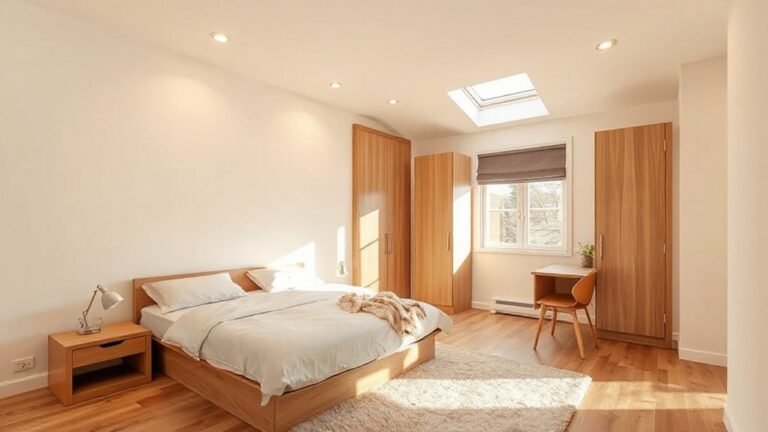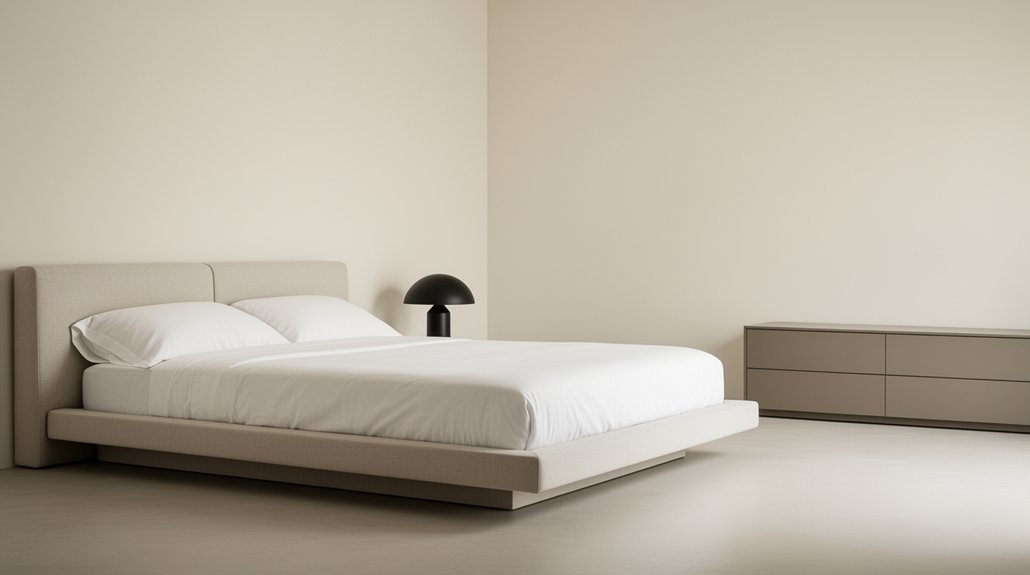
A calm, clutter-free bedroom starts with a strict minimalism: essentials only, clean surfaces, and restrained textures that invite rest. Build visual calm with five elements—balanced color, harmonious lighting, simple textures, and a dominant neutral base accented purposefully. Maximize smart storage, closed systems, and hidden solutions to reduce visual noise. Layer lighting for day and night, and choose honest materials like linen or wool. Regular decluttering keeps the space serene. If you keep going, you’ll learn how to apply this master plan.
Define Calm: Why a Minimalist Bedroom Restores Sleep
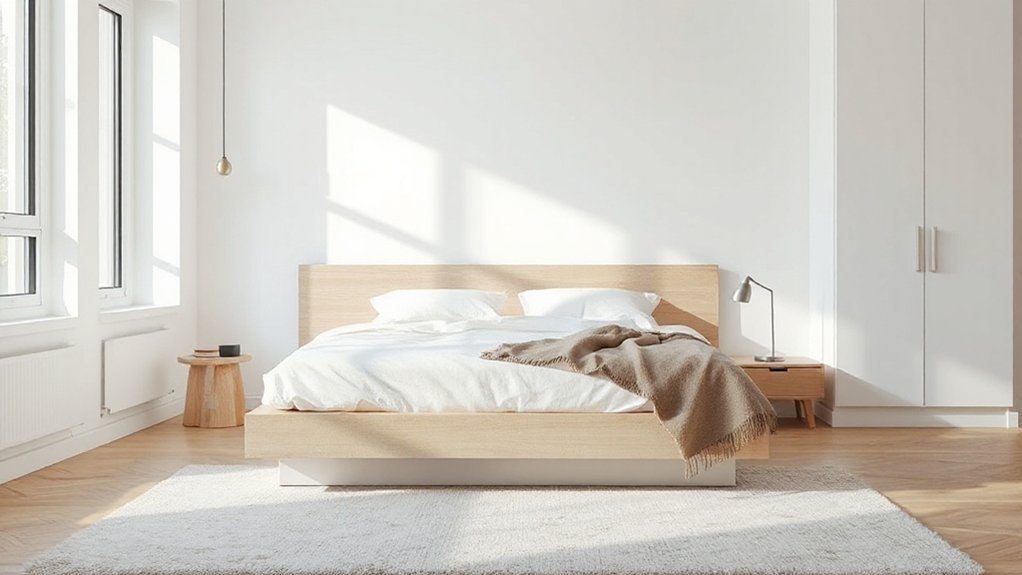
A minimalist bedroom creates a calm environment by removing visual clutter and reducing stimuli, which helps your brain wind down for sleep. You prioritize Sleep hygiene by aligning textures, tones, and surfaces to support rest rather than stimulation.
Remove excess furnishings and keep only essentials, so your field of view narrows to a single, restful focus. This restraint minimizes cognitive load, fostering mental clarity as you prepare for sleep.
Heighten this effect with deliberate lighting and quiet, consistent routines that reinforce bedtime cues. The result is a space that signals safety and rest, not pressure or distraction.
Five Elements for Visual Calm
Color harmony creates a cohesive feel, balancing tones so you read the room at a glance.
Be mindful of spatial light balance to keep surfaces and corners breathable, avoiding harsh contrasts.
Add texture with restraint to enrich tactility without clutter, letting every element earn its place.
Color Harmony Basics
Five elements guide color harmony in a minimalist bedroom: warm, cool, neutral, earthy, and accent tones.
You balance these by assigning each element a purpose: warm tones invite coziness, cool tones foster calm, neutrals provide space, earthy hues ground the space, and accents punctuate without overwhelming.
Start with a dominant neutral base to maximize perceived order, then layer one warm and one cool hue for contrast.
Use the earthy spectrum sparingly as texture—wood, stone, or linen—so it reads as tactile, not busy.
Accent colors should appear in small doses: a throw, pillow, or vase.
This approach leverages color psychology for mood enhancement, aligning lighting, materials, and fabric choices.
You’ll create a cohesive scene that feels uncluttered, intentional, and soothing.
Spatial Light Balance
How you balance light shapes the perception of space more than any pigment. In this section, you align artificial and natural illumination to enhance calm without glare.
Choose daylight sources that echo its warmth, then temper brightness with controlled shadows to create depth. You’ll prioritize even distribution, avoiding hotspots that disrupt spatial perception.
Position windows and mirrors to reflect natural light across surfaces, extending the room’s feel without multiplying objects. Use muted fixtures and low-contrast tones to preserve the five-elements balance, letting natural light become the primary actor.
Dimmers support shifts from bright morning to subdued evening, maintaining visual order.
Consistency in light temperature, intensity, and placement ensures a tranquil, uncluttered environment.
Texture With Restraint
Texture should read as quiet tactility rather than a visual shout; choose fibers, weaves, and surfaces that invite touch without competing with the room’s clarity. You balance textural contrast with restrained accents, creating tactile harmony across materials and finishes.
Let surfaces align in scale and tone, so each element contributes to calm rather than distraction. Prioritize tactile variety that remains subtle: choose natural fibers, low-sheen textures, and clean lines.
Avoid busy patterns; opt for uniform textures that read cohesively from afar and reveal detail up close. This disciplined approach yields a quiet, refined atmosphere.
- Natural fibers with controlled finish for restrained warmth
- Low-sheen textures that read as calm rather than glossy
- Subtle, consistent surface tones to preserve clarity
Smart Storage for a Clutter-Free Minimalist Bedroom
Smart storage is the backbone of a clutter-free minimalist bedroom: it keeps essentials accessible while preserving clean lines and open space. You implement intelligent solutions that hide rather than reveal, so every item has a precise place.
Prioritize built-ins, vertical organizers, and multi-purpose furniture to minimize visible clutter. Choose closed storage to maintain a calm surface, and use labeling or consistent bins to speed retrieval.
Plan a command center for daily routines—tray, charging dock, and a small, shallow drawer for small items. Integrate storage with your bed, desk, and wardrobe to reduce trips and friction.
This approach enhances clutter control by reducing deviation from the design intent while ensuring you can access what you need without sacrificing space.
Color Schemes and Materials to Ground the Space
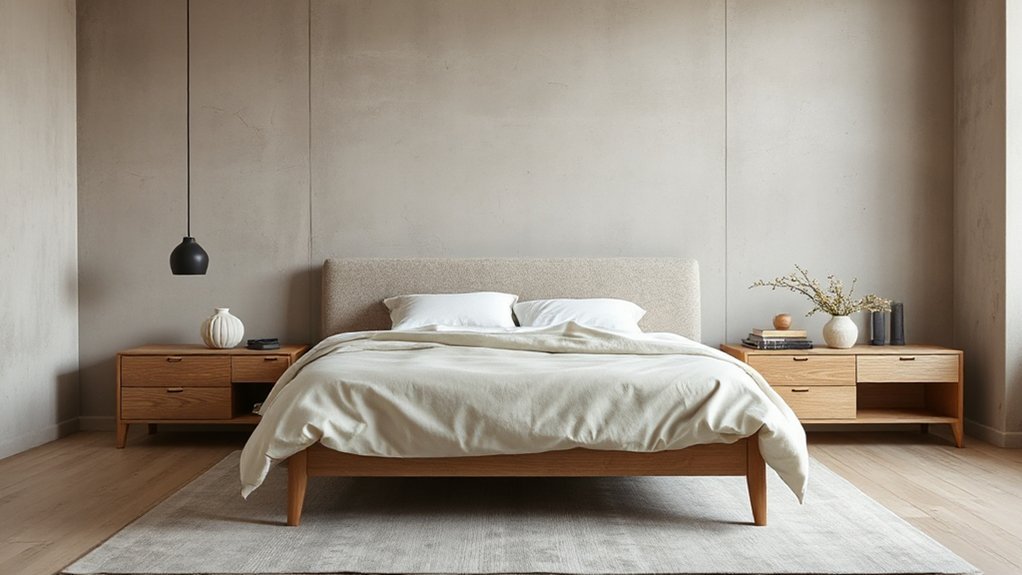
Color and material choices ground a minimalist bedroom by establishing calm, cohesive cues that the eye can rest on. You favor neutral bases, then introduce texture with natural materials and restrained contrast. Use a restrained palette—soft whites, stone grays, and warm wood—so accent walls or subtle architectural details become focal points without noise.
Materials should feel honest: linen, wool, concrete, or plaster provide tactility that reads calm rather than busy. Bold patterns appear sparingly, in small doses, to reinforce structure rather than overwhelm. Keep surfaces uncluttered to preserve flow and balance.
- accent walls used with care to anchor the room
- bold patterns limited to one element for emphasis
- textures chosen for subtle depth and cohesion
Layered Lighting for Day and Night
Layered lighting is essential for a minimalist bedroom because it creates depth and flexibility without clutter. You design with function in mind, blending ambient, task, and accent layers to suit day and night routines.
Begin with ceiling fixtures for broad, even illumination that remains unobtrusive during the day. Pair this with bedside lamps to provide intimate, controllable light for reading or winding down, avoiding harsh overhead glare.
Create zones by dimming capabilities or smart controls, so you can brighten for morning tasks and soften for evening relaxation. Choose fixtures with clean lines and neutral finishes to maintain calm, uncluttered aesthetics.
Guarantee compatibility across bulbs and switches for seamless transitions, and place lighting to avoid shadows that distort the room’s simple rhythm.
Furnishings That Serve a Clear Purpose
Furnishings should clearly support daily use without adding visual noise. You select pieces that perform a function, then eliminate anything that doesn’t. Prioritize storage, seating, and surfaces that reinforce calm without crowding sightlines.
Keep decorative accents restrained; choose one or two meaningful objects to avoid distraction. Personal mementos should be contemplated, not showcased as a cluttered gallery. Each item earns its keep by contributing to routine, not just ambiance.
Use multi-functional furniture to reduce quantity, like a nightstand with built-in charging or a bench that doubles as seating and storage. Aim for clean lines, durable finishes, and deliberate spacing that guides movement.
Your goal is a room that feels useful, uncluttered, and serene.
- Minimal decorative accents
- Selective personal mementos
- Purposeful, multi-functional furnishings
A Step-by-Step Minimalist Master Plan
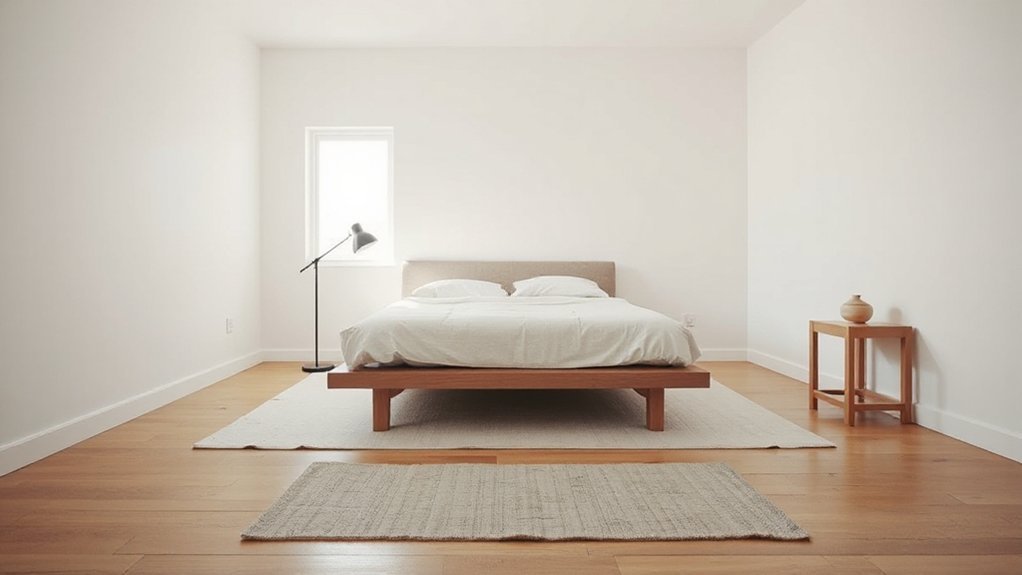
Begin with a clear goal: design a bedroom that feels calm, uncluttered, and functional. You’ll build a minimalist plan in clear, actionable steps, not vague promises.
First, audit every item: keep only what serves a purpose or enhances artistic expression, removing duplicates and hidden dependencies.
Second, define zones: sleeping, dressing, and a small work nook, each with intentional placement and lighting.
Third, select a restrained palette and materials that age well, contributing personal comfort without visual noise.
Fourth, implement storage that hides clutter: built-ins, shallow drawers, and vertical solutions.
Fifth, reduce tech to essentials, routing cables cleanly.
Finally, test the room daily; adjust posture, airflow, and rhythm.
You’ll achieve personal comfort through disciplined choices and steady refinement.
Frequently Asked Questions
How Can I Start Minimalism Without Abandoning Personality?
Start minimalism by prioritizing what matters to you and keeping Personal expression alive through decorative accents. Declutter consciously, curate a few meaningful pieces, and let space breathe. You’ll feel calmer, stylish, and authentically you without excess.
What’s the First Step to Decluttering a Bedroom?
Start by choosing a single symbol—the quiet box—then declutter with intention. You’ll identify what truly sparks calm. Store essentials in smart storage solutions, add tasteful decor accents, and keep surfaces clear to reveal your room’s core purpose.
Can Color Affect Sleep Quality in a Minimalist Space?
Yes. In a minimalist space, color can affect sleep quality; choose soothing tones. Color psychology guides choices, aiming for calm. This mood enhancement helps you wind down faster, improving restfulness and consistency for nighttime routines.
How Do I Choose Furniture That Truly Serves Function?
To choose furniture that truly serves function, test layouts first and trust scale. Visualize daily use, then refine with purpose: prioritize functional furniture placement and thoughtful material selection, ensuring accessibility, durability, and minimal clutter for calm, efficient living.
Is a Smaller Room Easier to Design Minimalist?
Yes, a smaller room is easier to design minimalist. You optimize space with clever storage and multifunctional furniture, and you leverage lighting techniques to expand perceived space while maintaining calm, uncluttered aesthetics.
Conclusion
In the end, your bedroom becomes a quiet harbor for the mind. You trim the noise, not the soul—letting essentials stand as steady lighthouses. With calm visuals, purposeful storage, and layered light, you curate an atmosphere that invites rest, not rescue. Colors ground you like a soft earth-toned shoreline; materials whisper with restraint. Each piece earns its keep, and the room breathes with you, turning waking hours into calm, uncluttered lanes leading straight to restorative sleep.
About the Author