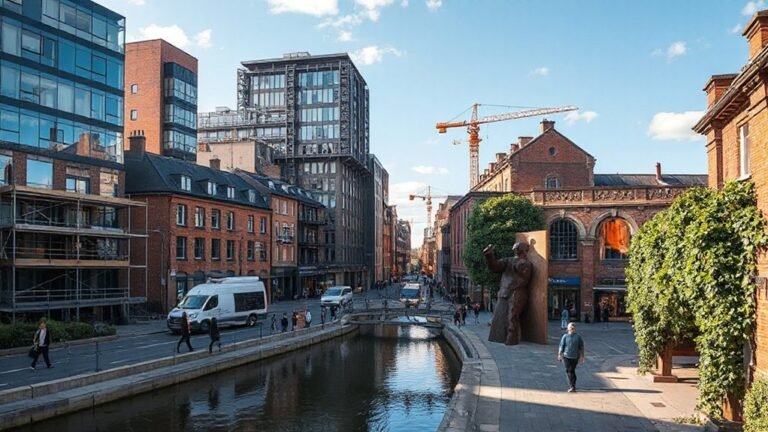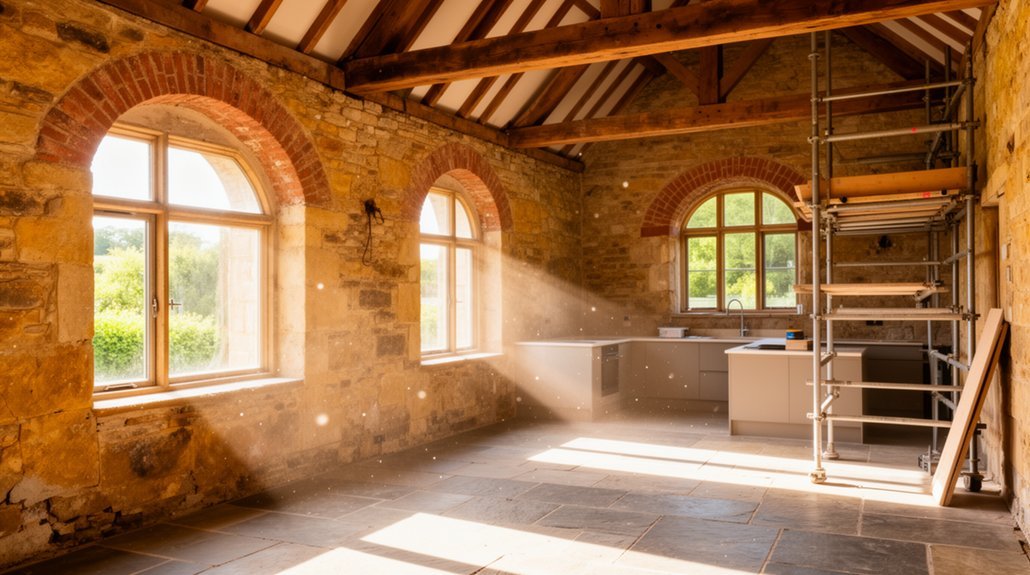
Renovating a stone barn in Northumberland combines heritage respect with modern comfort. Start with a clear vision that maps living, working, and entertaining zones around the stone’s rhythm, then assess structure, foundations, and medieval joints to guide remediation. Seek early permits and conservation guidance to safeguard fabric. Plan airtight, breathable insulation and daylight-rich layouts with timber framing as a design highlight. Manage moisture, acoustics, and IAQ with controlled ventilation, and budget with staged milestones—you’ll uncover how these elements align for durable, elegant transformation. If you keep exploring, you’ll uncover more nuances.
Define Your Northumberland Barn Renovation Vision
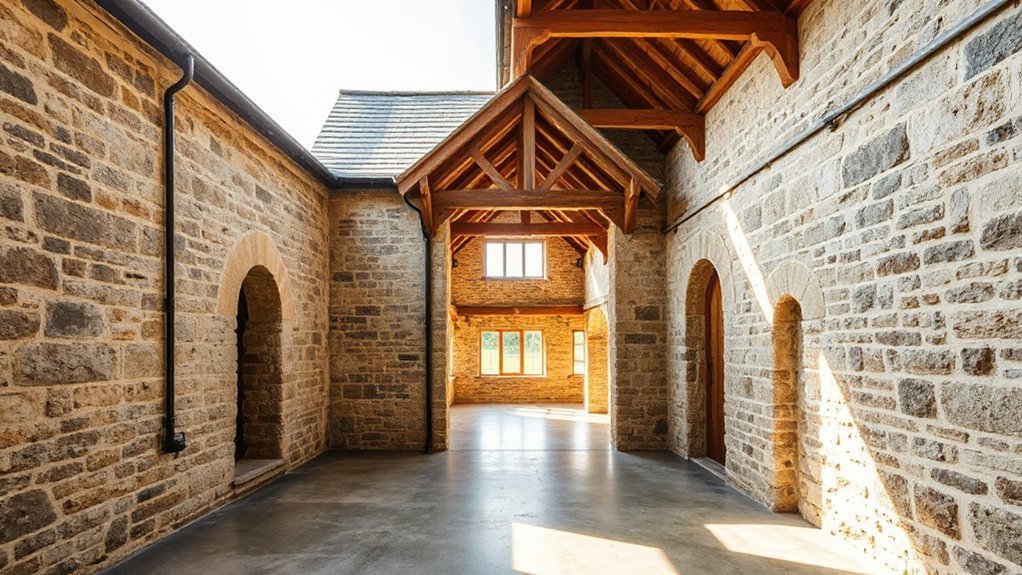
Start by mapping the functional goals you need from the space—how you’ll live, work, and entertain—in a layout that respects the barn’s structure.
You’ll define a target program that aligns with the stone’s rhythm, ensuring circulation respects historic lines while enabling modern efficiency.
Translate this program into zones: living, dining, cooking, work, and retreat, each with clear visual and acoustic delineation.
Specify performance criteria—max daylight, thermal comfort, air exchange, and storage—so systems can be integrated without visual clutter.
Embrace farmhouse decor as a guiding aesthetic: authentic materials, muted palettes, tactile finishes, and purposeful detailing.
Plan garden integration early, linking interior thresholds to exterior spaces for seasonal flow.
Your vision should balance heritage integrity with contemporary function, producing a coherent, aspirational, and technically feasible renovation.
Assess the Stone Barn: Structure, Damp, and Medieval Bones
You assess the stone barn for structural integrity and stability, identifying load paths, foundation condition, and wall adhesions with precise, metric-driven checks.
You evaluate damp risks, moisture sources, and ventilation needs, prioritizing intervention to prevent decay and mold while preserving historic fabric.
You examine medieval bones—framing patterns, joint methods, and historical mortars—to inform remediation choices that respect the building’s timeline and future performance.
Structure and Stability
How stable is the stone barn, and what damp and medieval remnants threaten its integrity? You assess the shell for structural symmetry, load paths, and material continuity, focusing on how stones bond and how courses bear weight. You identify cracking patterns, mortar loss, and bedrock exposure that influence load transfer without dwelling on damp specifics.
Your aim is precision: verify that joints resist shear, monitor lintel support, and confirm that parapets and curbs align with walls. You outline preventative steps that emphasize structural reinforcement and controlled loading, ensuring plaster, timber, and infill won’t induce unplanned stresses.
You establish foundation stability as a baseline, documenting settlement indicators and footing cohesion to guide restoration and future resilience.
Damp and Medieval Bones
Damp presence and medieval bone remnants require a precise, diagnostic approach to the stone barn. You assess fabric, joints, and lime mortar for signs of rising damp, capillary rise, and historical moisture traps. Chart moisture gradients with non-destructive tools, note salt efflorescence, and correlate to wall thickness and ventilation.
You’re not just diagnosing; you’re planning damp prevention strategies that respect medieval architecture, preserving character while stabilizing humidity. Examine floor and foundation drainage, verify threshold seals, and identify soil moisture sources adjacent to the building envelope.
Priorities include reducing humidity peaks, improving air movement, and coordinating with heritage constraints. Document findings, propose targeted interventions, and monitor results.
Your meticulous approach aligns modern performance with timeless craft, sustaining integrity of the stone barn.
Planning Permits and Conservation: What You Really Need to Know
Securing planning permits and steering conservation requirements are essential steps when renovating a stone barn conversion in Northumberland. Start by clarifying what permissions you’ll need from local planning authorities and any designated heritage or conservation bodies.
You’ll assess listed status, potential scheduled protections, and any national or regional design guides that apply to masonry, rooflines, and fenestration. Engage early with conservation officers to outline mitigating measures for materials, finishes, and traditional craftsmanship.
Guarantee ongoing legal compliance by documenting changes, maintaining traceable execution, and aligning with heritage preservation objectives. Treat approvals as an integrated process, not a hurdle, and embed risk controls into the project plan.
With this discipline, you’ll preserve authenticity while delivering durable, compliant, and aspirational renovation outcomes.
Plan Family-Friendly Barn Layouts: Zoning, Circulation, and Privacy
When planning a family-friendly barn layout, prioritize clear zoning, intuitive circulation, and robust privacy without sacrificing character. You’ll map zones for living, sleeping, and childcare, ensuring logical proximity and safety.
Use a circulation loop that minimizes cross-traffic between public and private areas, with sightlines kept short to reduce confusion for children. Corridor width, door locations, and floor finishes should support accessibility and ease of flow.
Integrate private retreats—mudroom, study or den—that buffer common areas from bedrooms. Apply timber framing and traditional joinery to reinforce farmhouse charm while meeting modern performance standards.
Durable, low-maintenance finishes keep aesthetics cohesive, and daylight strategies—skylights, clerestory windows—enhance orientation.
Document zoning rationales for future renovations, preserving farmhouse charm and timber framing as defining features.
Insulate Thick Walls Without Sacrificing Character
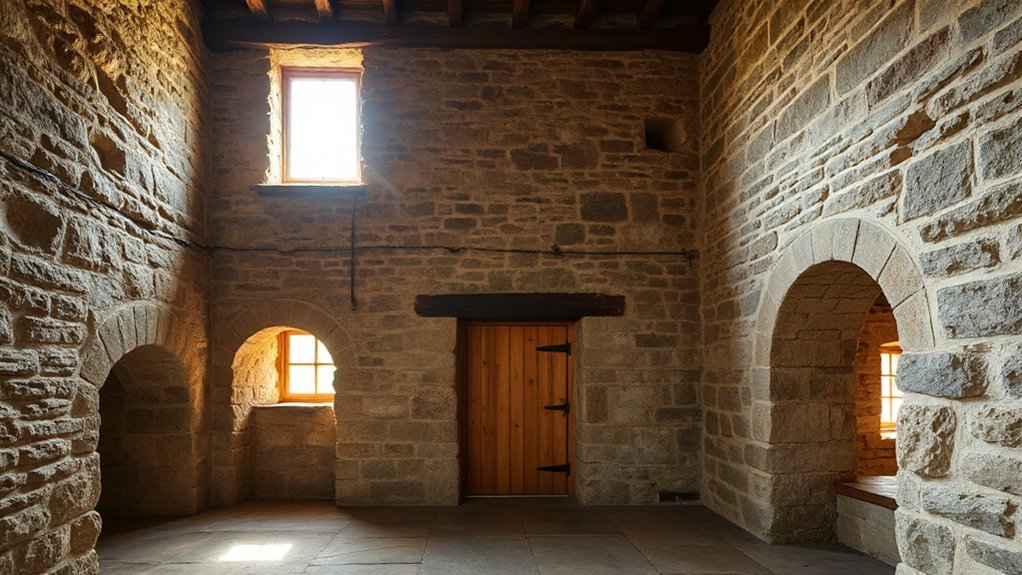
You’ll explore thick-walled insulation options that respect stone aesthetics while delivering modern warmth.
We’ll compare materials and techniques that minimize bulk and visual change, keeping the barn’s character intact.
Thick-Walled Insulation Options
Thick-walled stone barns pose an insulation challenge, but modern options let you preserve character while maximizing energy efficiency. You evaluate cavity, external, and internal solutions that minimize disruption to structure and appearance.
Begin with external insulation over a breathable render, combining mineral wool with a wind-tight membrane to maintain breathability and reduce thermal bridging. For interior approaches, consider rigid foam boards aligned to studs, then a continuous lime plaster finish to sustain stone aesthetics.
Tie into existing quoins and voussoirs with precisely cut battens to prevent thermal gaps. Guarantee airtightness with taped joints and a perforated air gap behind finishes to collect moisture.
Emphasize stone craftsmanship in detailing, and maintain the barn aesthetics while achieving high U-values.
Preserving Stone Aesthetics
- Use cavity and external render systems that maintain wall surface continuity without masking carving details.
- Select breathable insulation with low emissivity to preserve stone color and microclimate.
- Employ lime-based mortars and compatible fixings to reduce risk to joints.
- Document fabric changes to support future preservation and interpretation of historic significance.
Sustainable Materials for Northumberland Barns
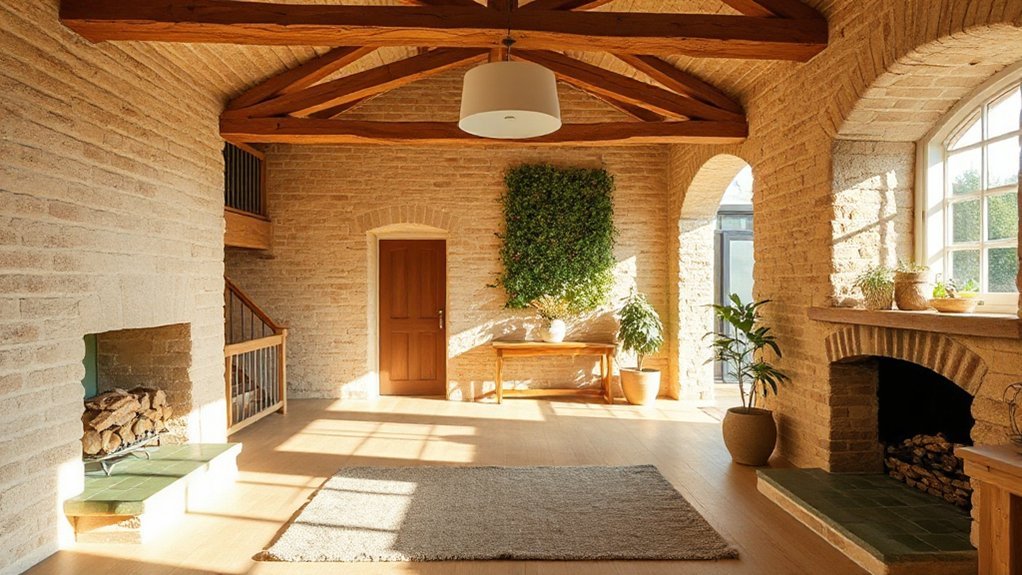
You should favor breathable, moisture-mitigating systems that resist decay while honoring traditional methods. Where possible, you choose regional timber species, sourced from sustainable forests, to reduce transport emissions and support local economies.
Lime mortars, hydraulic or NHL blends, enhance durability and self-regulation of humidity, aligning with the climate and stone substrate. Traditional craftsmanship and local craftsmanship inform detailing, joinery, and finish quality, ensuring authenticity without compromising performance.
You document embodied energy metrics, lifecycle considerations, and maintenance regimes to sustain value over decades.
Heating, Cooling, and Comfort for Stone Homes
When renovating a stone barn, optimizing heating, cooling, and overall comfort hinges on embracing thermal mass, airtight detailing, and low-energy systems that respect the building’s fabric. You’ll balance passive gains with efficient control, leveraging thermal inertia to smooth fluctuations, while addressing airtightness to minimize drafts.
Solar heating can preheat water and spaces, reducing peak loads, whereas smart cooling modulates airflow and humidity without over-conditioning. Your approach prioritizes reliability, low maintenance, and durable materials that resist the Northumberland climate.
- Optimize thermal mass integration for steady indoor temperatures
- Implement high-performance airtight detailing with controlled ventilation
- Deploy solar heating to reduce hot-water and space-heating needs
- Use smart cooling to maintain comfort with minimal energy use
Northumberland Barn Windows and Natural Light
Northumberland barn windows play a pivotal role in shaping daylighting strategies that respect thick masonry while reducing energy use. You optimize window placements to maximize natural light without compromising thermal mass, using orientation, glazing type, and sill heights that align with room function.
Emphasize narrow, mullioned profiles and high-performance glass to preserve stone craftsmanship while minimizing heat gain. You leverage clerestories and dormers selectively, maintaining barn aesthetics and structural integrity.
Consider solar shading devices that blend with historic textures, reducing glare during bright afternoons. You specify low-emissivity coatings, insulated frames, and airtight interfaces to prevent drafts while retaining visual connection to the landscape.
Document performance targets for daylight levels, glare control, and seasonal variation to sustain comfort and efficiency.
Control Acoustics, Moisture, and Indoor Air Quality
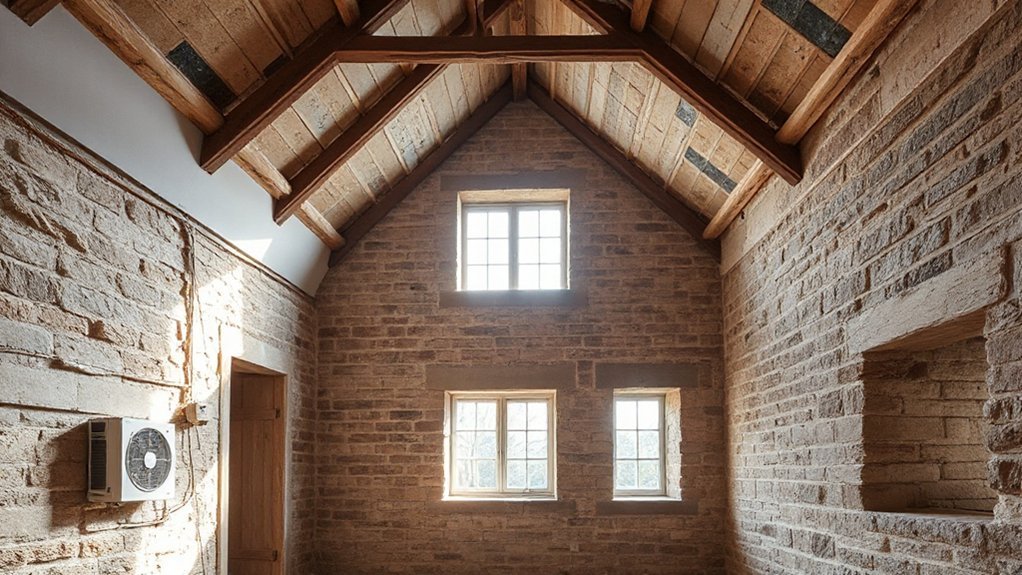
Effective control of acoustics, moisture, and indoor air quality is essential in a stone barn conversion to preserve comfort, durability, and historic character. You should implement targeted strategies that balance insulation with breathability, ensuring timber framing remains sound and dry. Precision in detailing reduces condensation risks and sustains indoor air quality without compromising heritage aesthetics.
- Soundproofing strategies that minimize transmission between rooms while retaining authentic spaces.
- Moisture management through vapor-open barriers and controlled ventilation to prevent mold and timber decay.
- Humidity and IAQ control via balanced ventilation, filtration, and low-emission materials.
- Indoor pollen control with efficient filtration and airtight sealing around eaves and doors.
Focus on measurable performance, documenting airflow, humidity, and noise reduction to meet durable, breathable comfort standards.
Rustic-Chic Kitchens and Bathrooms: Modern Utility in a Barn
Rustic-chic kitchens and bathrooms in a stone barn demand utility without compromising character. You design layouts that maximize flow between living zones while preserving thick walls and vaulted ceilings.
Precision matters: specify heat-resistant surfaces, moisture-rated cabinetry, and sealed joints to endure Northumberland’s climate. You balance rustic charm with modern amenities—concealed lighting, programmable controls, and energy-efficient appliances—to deliver durable practicality.
In kitchens, choose slate or honed stone worktops paired with steel pulls and terrazzo floors for a tactile, enduring finish; integrate under-counter refrigeration and induction cooking for efficiency.
In bathrooms, install vapor-rated plaster, wall-hung sanitaryware, and anti-microbial finishes. You ensure ventilation aligns with existing masonry, preventing damp and maintaining indoor air quality.
The result blends timeless appeal with reliable, contemporary performance.
Budgeting and Project Management: Timeline, Costs, and Risk Mitigation
A clear budget and a disciplined project plan are your map and compass for renovating a stone barn conversion. You’ll anchor scope, sequence, and contingencies to minimize disruption, while safeguarding quality and reliability.
With cost estimation and timeline planning, you’ll quantify every phase, align procurement, and track progress against milestones. Early risk assessment surfaces schedule shocks and cost overruns, so you can deploy mitigations before they escalate.
Your approach combines disciplined change control, staged approvals, and transparent reporting to stakeholders.
- Establish baseline costs and reserve a contingency aligned to risk exposure
- Lock in a realistic timeline with critical path milestones and buffer periods
- Trace every expenditure to a subtask and adjust promptly
- Review variance weekly and reforecast to keep the project on track
Frequently Asked Questions
How Long Does a Stone Barn Renovation Typically Take?
A typical stone barn renovation takes several months, depending on scope. You’ll balance historical preservation with precise modern insulation, scheduling phased milestones. You’ll coordinate surveys, approvals, and trades, maintaining quality while progressing efficiently toward a durable, energy-efficient restoration.
What Are Common Hidden Structural Issues in Old Barns?
Hidden structural issues you’ll face include foundation stability concerns and wall deterioration. You notice weaknesses early, so you brace yourself: foundations settle unevenly, walls crack, and you adjust plans to preserve integrity while achieving precise, aspirational restoration.
Can I Convert a Barn Without Planning Permission?
No, you can’t convert a barn without planning permission. You must navigate Barn preservation considerations and Planning regulations, ensuring proposals align with preservation standards, impact assessments, and statutory controls, while pursuing permitted development routes only where legally applicable.
What Grants or Tax Relief Apply to Renovations?
Did you know 40% of eligible renovations qualified for tax incentives last year? You can leverage tax incentives and renovation grants to offset costs, prioritize energy-efficient upgrades, and meet compliance while preserving heritage value and long-term property resilience.
How Do I Preserve Original Features During Upgrades?
You preserve original features by prioritizing historic preservation and interior restoration during upgrades, carefully documenting each change, using compatible materials, and collaborating with conservation officers while maintaining structural integrity and aesthetic authenticity throughout the process.
Conclusion
You’ve mapped a clear, ambitious path for your Northumberland barn renovation. By grounding your design in structure, damp control, and conservation needs, you’ll balance character with modern comfort. Modern insulation, light-filled layouts, and sound management will elevate daily living without erasing Medieval bones. Stay disciplined on permits, budgeting, and risk, and your project will unfold like a well-tuned instrument—precise, harmonious, and enduring. Your vision isn’t just possible; with focus, it’s inevitable.
About the Author