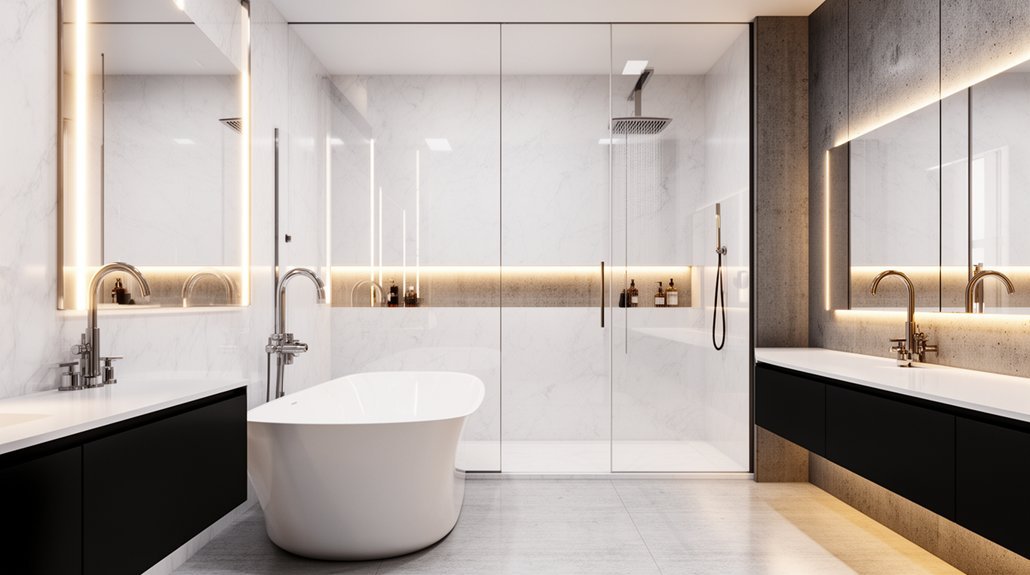
For ultra-modern bathroom ideas, prioritize bold statement fixtures—centerpiece sinks, dramatic tubs, or sculptural lighting—paired with restrained architecture to keep the space calm and legible. Choose luxe materials like slab marble or engineered quartz, with restrained finishes in matte metals. Balance high-impact pieces with clean lines, minimal grout, and negative space to emphasize form. Plan lighting to sculpt surfaces and reduce glare, and set a practical budget that favors longevity. If you keep exploring, you’ll uncover practical steps to apply this approach.
Define Ultra-Modern Bathroom Style: Core Criteria for Statement Fixtures
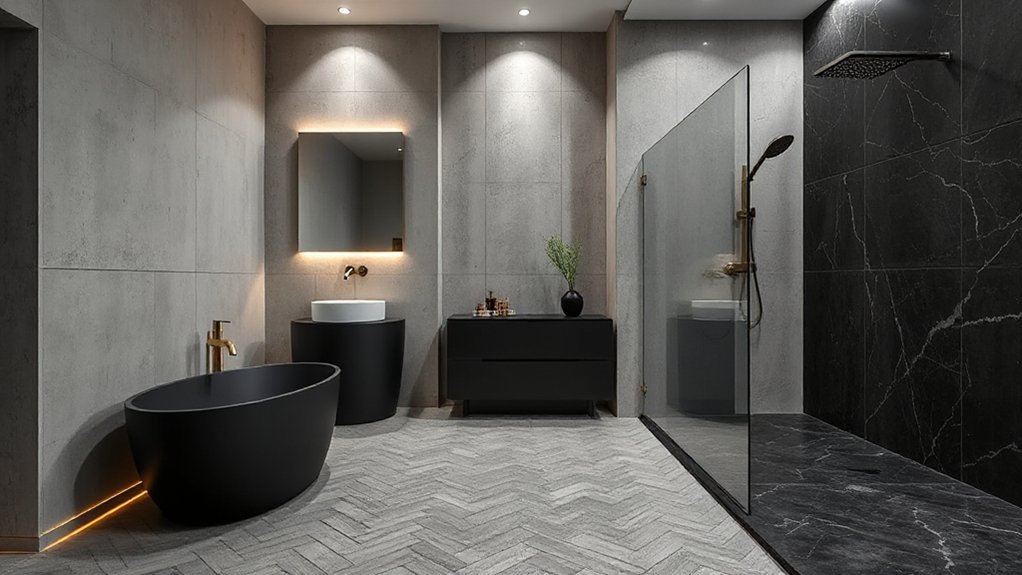
To define an ultra-modern bathroom, focus on clean lines, pared-down forms, and high-contrast materials that emphasize function and minimalism. You assess fixtures by their silhouette, integration, and material logic, ensuring each element serves a clear purpose.
Prioritize geometry over ornament, opting for flush installations, seamless joints, and restrained hardware. Lighting should sculpt surfaces without revealing excess detail, while finishes contrast—matte blacks with polished whites, glass with stone—to highlight form.
The core criteria center on efficiency, durability, and tactile honesty; every fixture communicates purpose through proportion, rim, and interface. Vintage charm and Rustic accents can appear as subtle counterpoints, provided they remain restrained and discreet, preserving the space’s dominant modern identity.
Your chosen fixtures must reinforce clarity, precision, and uncompromised usability.
Decide Your Focal Fixture: Centerpiece Sink, Tub, or Lighting
Choose which fixture will anchor your bathroom’s statement: a centerpiece sink, a standout tub, or dramatic lighting. You weigh impact, scale, and how it guides the eye, then design the rest to support that focal choice.
Start by clarifying your intended mood and accessibility needs, then align materials, finishes, and proportions to reinforce the selected centerpiece.
Centerpiece Sink Focus
When you decide on a centerpiece, sink takes the lead by anchoring the bath’s silhouette and shaping the eye’s flow. A considered sink choice sets the tone, guiding material, finish, and hardware decisions toward a cohesive focal moment.
Choose a form that reads as sculpture while remaining functional, and let surrounding surfaces echo its presence. Vintage charm and rustic accents can be integrated through patinated metal, ceramic glazes, or hammered textures that resist fleeting trends.
- Select a basin with sculptural lines that complements the room’s proportions.
- Pair finishes that harmonize with cabinetry and mirror framing for unified texture.
- Use counter surfaces and backsplash to reinforce the sink’s visual weight without overcrowding.
This approach yields a refined, timeless centerpiece.
Lighting as Focal Point
Lighting can set the tone as your focal point, shaping mood, texture, and perceived scale. If you choose Lighting as the centerpiece, select fixtures that anchor the space with high-contrast form and artful silhouettes.
Opt for dimmable layers—ambient, task, and accent—to sculpt depth without clutter. Consider a statement pendant or sculptural wall sconce as the room’s emotional core, then balance with restrained vanity lighting for clarity.
Integrate vintage accents to nod to history while keeping lines contemporary, ensuring the fixture reads as a sculpture rather than an afterthought. Use eco-friendly materials—rattan, recycled glass, or powder-coated metal—to reinforce sustainability without compromising refinement.
Aim for proportional harmony: fixture size, ceiling height, and mirror scale should read as a single, intentional installation.
Choose Luxe Materials That Read Contemporary
To read as contemporary, select luxe materials that emphasize clean lines and tactile contrast. You’ll pair finishes with restraint, letting texture determine depth while keeping edges crisp and deliberate. Focus on material honesty: slab marble, engineered quartz, and brushed metals read modern when their seams vanish and reflections stay controlled.
Introduce warmth through wood-toned veneers or limestone to balance cool surfaces, avoiding fussy ornament. Vintage charm and Classic elegance should surface in proportion, not pattern, so choose timeless silhouettes over trendy motifs.
- Emphasize monolithic slabs and honed textures for a seamless, high-end feel
- Combine matte metals with satin finishes to reduce glare and enhance tactility
- Integrate subtle wood-inflected elements for warmth without compromising modernity
Balance Bold Fixtures With Clean, Quiet Architecture
Bold fixtures can anchor a bathroom, but they should play off a restrained architecture rather than overpower it. You balance contrast by pairing high-impact pieces with quiet surroundings that emphasize negative space and light.
Choose clean-lined vanities, restrained tiling, and unobtrusive hardware to let statement fixtures read as focal points rather than dominate. Materials should echo the fixture’s precision: smooth stone, matte metals, and glass with minimal grout lines.
Introduce texture through subtle details, like a woven rug or a timber detailing that won’t compete with chrome or ceramic forms. Incorporate vintage accents and rustic textures sparingly to add warmth without clutter.
Keep scale thoughtful, ensuring every element supports the fixture’s silhouette and the room’s calm, cohesive rhythm.
Plan Color and Finish Strategies for High-Impact Spaces
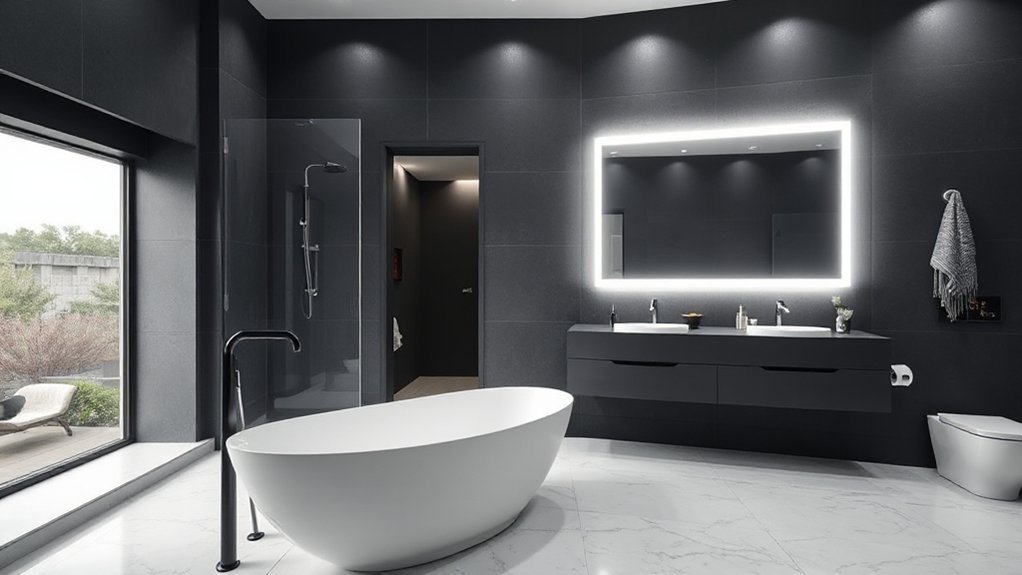
Color and finish choices should reinforce the room’s high-impact intent while keeping the space legible. You pair bold geometry with restrained palettes to sustain clarity, mood, and legibility. Choose finishes with durable, low-maintenance properties to support long-term polish.
Eco-friendly finishes reduce environmental impact without compromising luster or resilience, ensuring you can sustain the statement without tradeoffs. Introduce vintage accents sparingly to create dialogue between eras, balancing modern fixtures with nostalgic warmth.
For surfaces, favor matte or satin sheens on larger planes and reserve high-gloss for focal points to control glare and rhythm. Maintain contrast through texture instead of color alone to preserve depth and readability.
- Cohesive color language that blends bold and quiet tones.
- Material hierarchy that prioritizes tactile variety.
- Subtle vintage notes integrated as accents.
Lighting Play: Neon Mirrors, Backlit Options, and Glare Control
You’ll shape a bathroom dialogue around Neon Mirror Dynamics, exploring how color, brightness, and reflected lines alter mood and function.
Backlit Layered Illumination guides emphasis, depth, and task clarity while keeping glare controlled through placement and diffusers.
Glare Reduction Techniques form a concise framework for comfort and visual balance without sacrificing statement quality.
Neon Mirror Dynamics
- Neon tube placement to balance function and ambiance
- Color temperature choices that flatter skin tones
- Glare-avoidance strategies around medicine cabinets and mirrors
Backlit Layered Illumination
Neon mirrors set a contemporary tone, but layered backlighting adds warmth through adjustable brightness and color temperature, letting you switch from clinical to intimate without changing fixtures.
For vintage charm, pair soft amber tones with dimmable LEDs and classic frame details; the result feels timeless rather than gimmicky.
Botanical accents—moss panels or sculpted planters—anchor the light in a tactile context, creating depth through shadows and texture. This approach prioritizes precision, control, and a curated focal hierarchy in every bathroom scene.
Glare Reduction Techniques
Neon mirrors and backlit options can dramatically shape how glare is perceived, so start with deliberate material and placement choices that minimize hotspots. You’ll balance brightness with diffusion, selecting fixtures and surfaces that soften reflections while preserving punch. Precision matters: dimmable drivers, angle-controlled housings, and matte finishes reduce hot spots without sacrificing impact.
Incorporate vintage accents subtly to temper clinical glare, and lean on eco-friendly materials to guarantee longevity and compatibility with bathroom humidity. Control is strategic, not punitive—layer light with task, ambient, and accent layers to guide the eye.
- Choose frosted diffusion between light source and mirror for even glow
- Use indirect cove or toe-kick lighting to reduce direct reflections
- Integrate vintage accents and eco-friendly materials for timeless restraint
Geometry in Metal: Chrome, Brushed Nickel, and Architectural Silhouettes
Chrome, brushed nickel, and architectural silhouettes shape the geometry of modern bathroom fixtures, so choose profiles that enhance line, proportion, and light. You align metal finishes with form, ensuring joints, bends, and radii read as intentional sculpture rather than mere hardware.
Precision matters: dial in wall brackets, valve spacing, and mirror mounts to preserve clean sightlines and balanced weight. When you select profiles, favor geometric simplicity that amplifies space, then temper with tactile materials.
Integrate vintage accents or rustic textures thoughtfully—polished chrome against weathered wood or brass aged patina adds depth without clutter. Your aim is seamless harmony between reflection, shadow, and material honesty, where hardware becomes the architectural silhouette that defines the room, not its distraction.
Freestanding Tubs: Shapes, Placement, and Architectural Integration
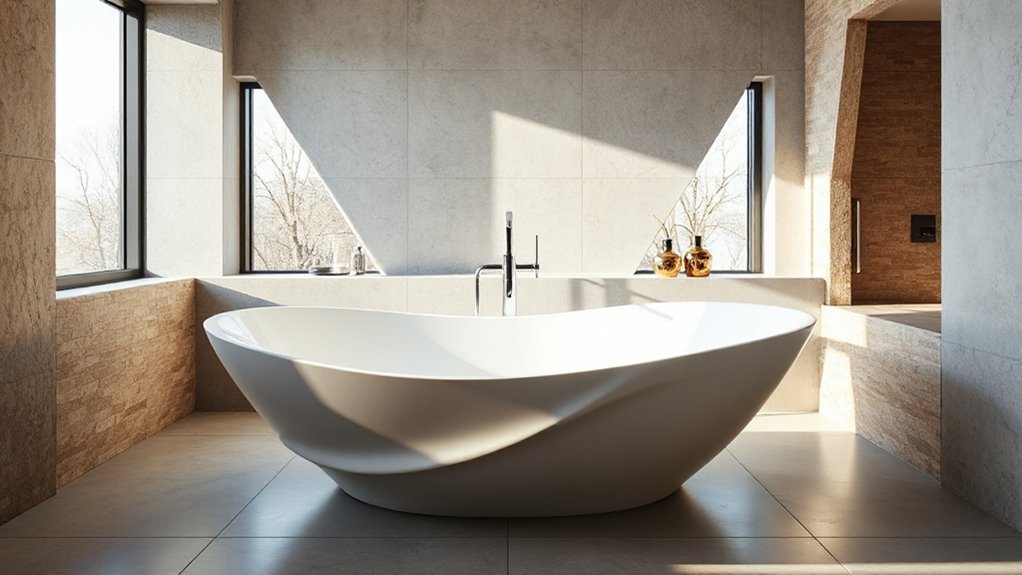
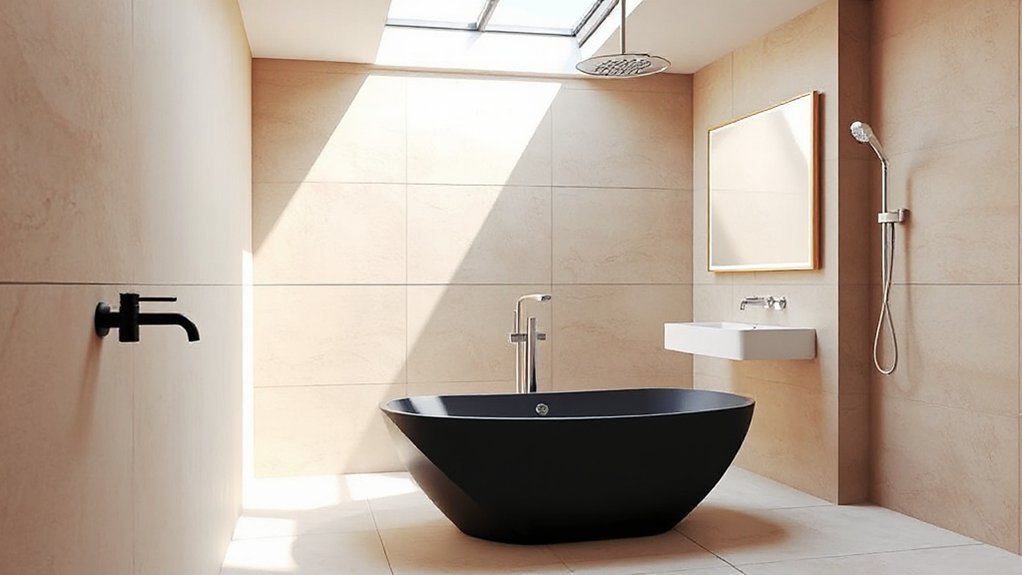
Freestanding tubs redefine the room’s silhouette by anchoring the plan with sculptural mass and generous negative space. You’ll evaluate shapes—oval, rectangular, asymmetric—against ceiling height, floor pattern, and window placement to achieve steady rhythm.
Placement matters: center stage in views, tucked beside a wall for balance, or angled to frame architectural features.
Consider material continuity with the room’s palette, and allow for ample access around the basin to enhance usability.
Vintage charm and Rustic accents can be integrated through finish, hardware, and surrounding detailing, amplifying tactility without overpowering the tub’s form.
Align plumbing access with discretion to maintain clean sightlines and architectural clarity.
- Evaluate shape and scale against room dimensions
- Position to highlight architectural features and views
- Pair finishes and surrounding details for cohesive character
Sinks as Art: Sculptural Bowls and Pedestal Options
You explore sculptural sink forms that act as focal points, balancing bold bowls with understated vitrine hardware.
Compare pedestal configurations against counter-integrated spaces to optimize sightlines, workflow, and storage harmony.
Consider materials and finishes—stone, ceramic, or metal—along with glaze or patina options that reinforce the sculpture while resisting daily use.
Sculptural Sink Forms
- Emphasize material contrast for tactile depth
- Choose one statement pedestal for visual anchor
- Pair muted tones with warm metallic accents
Pedestal Versus Counter Space
When considering sinks as sculptural focal points, pedestal basins and counter-integrated bowls offer distinct visual impacts. Pedestals elevate the vessel, isolating it as a standalone artwork, while counter space treats the sink as part of the horizontal plane, emphasizing flow and material continuity.
Pedestal configurations prioritize negative space beneath and around the basin, creating a vertical signature that anchors the bathroom’s geometry. Counter-integrated designs streamline edges, reinforcing a seamless, monolithic surface ideal for clean lines and uninterrupted countertops.
Faucet evolution informs both approaches, guiding proportion, reach, and splash control without compromising sculpture.
Prioritize water conservation through efficient aerators and flow-rated fixtures, ensuring performance aligns with minimal waste.
Choose pedestal for gallery-like presence; select counter space for cohesive modernism.
Material And Finish Options
Material and finish choices define the sculpture of a sink as much as its form. You’ll discover how material depth transforms a bathroom, from sheen to texture, while influencing maintenance and mood.
Sculptural bowls invite tactile drama, and pedestal options gain presence when paired with bold finishes. Consider how color, patina, and surface treatment read light and create focal points without overpowering the room.
Vintage accents can lace a contemporary silhouette with timeless credibility, while eco-friendly materials align performance with responsibility.
Below are three precise picks to elevate your choice:
1) Cast mineral bowls in matte stoneware for warmth and durability
2) Semi‑gloss ceramic with brushed-metal rims for subtle contrast
3) Recycled glass or composite aggregates in neutral hues for modern honesty
When to Use Statement Toilets and Bidets: Timing, Considerations, Tradeoffs
Statement toilets and bidets should be chosen for impact and practicality, not novelty, so you’ll want to time their introduction around project milestones like a full bathroom overhaul or a major remodel.
You’ll assess timing, budget, and plumbing compatibility, prioritizing systems that align with your overall design language. Consider spacing, water efficiency, and ergonomic seating as core criteria.
Eco friendly innovations matter, but don’t overshadow user comfort or maintenance. Weigh tradeoffs between wall-hung versus floor-standing models, and evaluate bidet functions in relation to daily routines.
Historical influences can guide aesthetics without dictating function, ensuring longevity. In the end, select fixtures that harmonize with finishes and lighting while delivering reliable performance, clear water efficiency metrics, and effortless daily use.
Storage That Stays Obtrusive: Hidden Storage Solutions and Niches
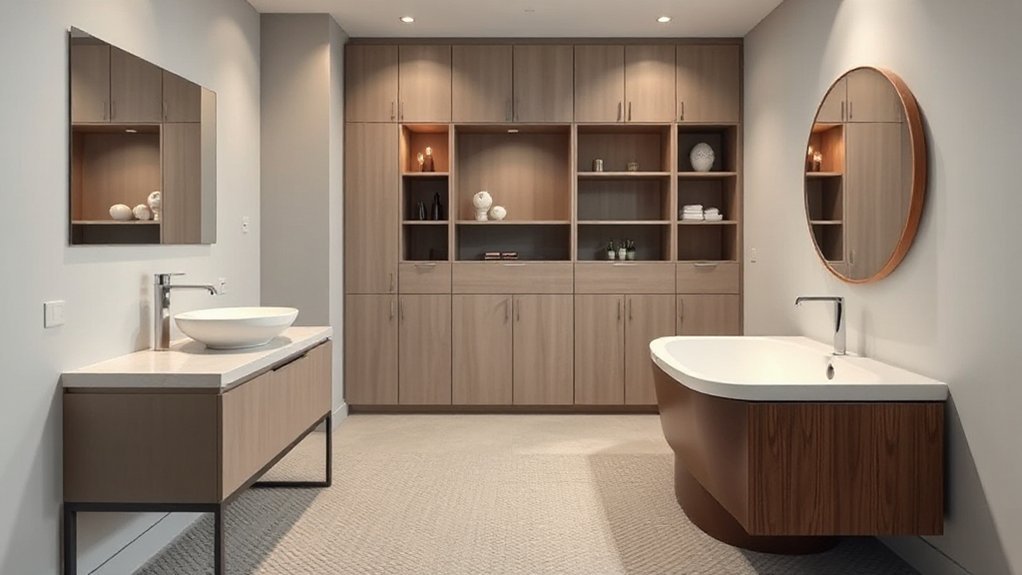
Hidden storage can quietly elevate a bathroom’s organization without competing with the room’s statement fixtures. You optimize space by layering recessed niches, wall recesses, and cabinetry that disappears behind sleek doors, keeping the focal points intact.
Choose forms that feel deliberate, not cluttered, and pick finishes that echo vintage accents while remaining timeless. Eco-friendly materials guarantee durability and low impact, without sacrificing polish.
- Integrate slim, recessed niches around a vanity mirror to hide daily essentials.
- Use frameless, soft-close cabinetry with matte finishes and vintage-inspired hardware for subtle character.
- Select modular, eco-conscious shelving that can be rearranged as needs evolve while staying unobtrusive.
Tactile Details That Elevate Spa Vibes: Textures, Materials, and Acoustics
Texture and tactility are the pulse of spa-worthy bathrooms: you pair materials with acoustics and finishes to create a calm, immersive experience. You select textures that read as calm and durable, balancing soft surfaces with structured, high-performance ones.
Prioritize tactile contrast: a honed stone slab next to woolly rugs, or silicone-treated tiles beside plastered walls to diffuse sound without dulling warmth. Rustic accents, like oak veneers and flax-made textiles, bring retro warmth while maintaining modern clarity.
Vintage charm emerges when patina is intentional—think brass fixtures with matte patina or terrazzo floors that tell a story. Keep acoustics deliberate: add paneling, diffusers, and under-sink partitions to control echoes.
The result is a coherent, spa-grade atmosphere that feels curated, timeless, and restrained.
Small-Bathroom Ideas: Big Impact in Compact Footprints
optimize your small bath with smart storage that frees floor space. choose light-reflecting finishes to amplify brightness, and select compact fixtures that maintain a polished, cohesive look.
you’ll balance form and function by prioritizing space-saving solutions, bright surfaces, and streamlined silhouettes. this approach sets the stage for bold statement fixtures without overwhelming compact footprints.
Space-Saving Storage Solutions
When space is tight, smart storage is as important as the fixtures themselves. You’ll maximize impact with built-in rails, wall baskets, and layered niches that keep essentials accessible without visual clutter.
Precision placement matters: align drawers with plumbing lines, and choose shallow depths to avoid bulk in narrow rooms.
For style, integrate storage that echoes Vintage charm and classic motifs—think bowed fronts, brass fittings, and softly curved silhouettes that read timeless rather than utilitarian.
- Optimize vertical shelves behind the door for daily items
- Select recessed, adjustable niches within the shower wall
- Use pull-out organizers in slim cabinets to reduce bulk without sacrificing capacity
Light-Reflecting Decor Tricks
Brighten a compact bath by pairing reflective surfaces with strategic lighting to create the illusion of spaciousness. You optimize wall and cabinet finishes with high-gloss paints or mirrored panels, then couple them with focused task lighting to eliminate shadows.
Choose fixtures and hardware in polished chrome or brushed nickel to amplify light distribution without visual heaviness. Consider incorporating glass shelves and a clear shower enclosure to minimize visual clutter while maximizing transparency.
Introduce vintage accents in small doses—think a slim, antique faucet or a retro ceramic soap dish—to add character without overpowering the palette. Balance these with natural textures: matte stone countertops, linen-like towels, and wood veneer accents.
The result is a cohesive, refined space that feels brighter, larger, and thoughtfully curated.
Compact Fixture Selections
In a compact bath, choosing the right fixtures can yield dramatic gains in usability and perceived space. You’ll optimize every square inch with slim profiles, wall-mounted options, and dual-purpose pieces that reduce clutter without compromising function.
Precision matters: select fixtures with compact footprints, shallow bowls, and efficient flow rates. The result is a cohesive, modern aesthetic that still nods to timeless details.
To enrich the look, weave vintage accents and botanical themes into fixtures like brass taps, matte-ceramic basins, and plant-friendly, moisture-safe materials. The goal is clear lines, clever mounting, and durable finishes that age gracefully.
- Wall-mounted vanity and basin pairings for footprint reduction and airflow
- Slimline toilets and trough-style urinals for minimized intrusion
- Brass or brushed-metal hardware paired with botanical-inspired finishes
Budgeting for High-Impact Fixtures Without Overspending
Smart budgeting for high-impact bathroom fixtures hinges on clear priorities and smart trade-offs. You’ll maximize impact by defining one or two focal statements, then selecting complementary pieces with disciplined curves, finishes, and scale. Aim for a cohesive design language rather than chasing every trend.
Prioritize durable, timeless materials for sinks, taps, and lighting—think solid brass and properly rated fixtures—so maintenance remains minimal. When choosing statement pieces, consider their long-term value, not just initial price.
Mix budget finds with a single elevated item, such as a sculptural faucet or a bold vanity mirror, to avoid overkill. Include Vintage accents and Traditional elements tactically to ground modern forms.
Verify compatibility with your space, then negotiate warranties and service plans to protect your investment.
Remodel Readiness: Planning, Permits, and Common Pitfalls
After narrowing your bathroom’s focal statements, you’re ready to map the remodel with real-world clarity: planning, permits, and common pitfalls. You’ll translate vision into a concrete blueprint, aligning scope with code requirements, budget, and timeline.
Prioritize eco friendly materials and thoughtful vintage accents to guarantee cohesion across fixtures and finishes. Anticipate permits early, document utility layouts, and secure approvals before any demolition.
Identify common pitfalls—scope creep, under‑estimating warranty needs, and supplier delays—and build contingencies into your schedule. Maintain a precise, design‑forward brief to guide trades and decisions. Clear milestones keep momentum, reduce rework, and safeguard your investment.
1) Create a permit checklist aligned with local code.
2) List compliant, eco friendly materials and vintage accents.
3) Establish a phased timeline with risk buffers.
Maintenance Tips to Keep Statement Fixtures Pristine
Proactive maintenance keeps statement fixtures striking and functional long after installation. To preserve their impact, clean with pH-neutral products that respect finishes, and avoid abrasive pads that can scratch surfaces.
Wipe chrome and brass weekly to prevent water spots and fingerprints; microfiber helps control streaks while reducing micro-scratches.
Inspect seals and connections quarterly, tightening only as needed to avoid stripping threads. Lubricate moving parts with manufacturer-recommended compounds, prioritizing smooth operation over aggressive tightening.
Address mineral buildup promptly; a gentle soak or vinegar solution can restore luster without harming eco-friendly features. Choose care routines that minimize chemical waste, aligning with eco-friendly features.
For a timeless vibe, integrate vintage-inspired accents into maintenance tools and storage to keep fixtures pristine without compromising design coherence.
Regular checks sustain performance and visual impact.
How to Curate a Cohesive Ultra-Modern Look: Mood Boards and Sample Testing
A cohesive ultra-modern look starts with a focused mood board that translates your space’s desired temperature, materiality, and scale into actionable decisions. You’ll align lighting, fixtures, and surfaces by testing samples against this reference, ensuring tactile coherence and color harmony across elements.
- Gather swatches for finishes, metals, and textiles and compare them under your intended lighting conditions.
- Build a material cadence on a board, mixing Vintage accents with clean, modern forms to test if Traditional motifs feel integrated rather than nostalgic.
- Prototype layouts in scale, using 3D renders or mini mockups to validate flow, sightlines, and functional relationships before committing.
This disciplined approach prevents missteps, delivering a cohesive, purpose-driven ultra-modern bathroom design.
Frequently Asked Questions
How Do I Identify the True Focal Fixture in a Small Bath?
The true focal fixture in a small bath is the one you light first, using lighting placement to highlight its silhouette; guarantee color accentuation remains cohesive with nearby tiles and fixtures, drawing eyes toward its strongest design detail.
What Materials Best Resist Fingerprints on Metallic Accents?
Fingerprint‑resistant coatings and matte finishes best resist fingerprints on metallic accents. Like a chef’s slate: wipe once, perfection remains. You’ll choose matte finishes and durable coatings, ensuring pristine surfaces while maintaining refined, design‑focused metallic detail.
Which Permits Are Typically Required for Major Plumbing Changes?
You’ll typically need permits for major plumbing changes, adhering to the permitting process and plumbing regulations. Contact your local building department, submit plans, and schedule inspections to guarantee compliance, safety, and seamless integration with your design goals.
How Can Acoustics Be Improved Around Hard, Reflective Surfaces?
To soften echoes, you’ll install acoustic treatments and add soft surface accents to balance reflections. You’ll upscale with precise, design-focused choices, ensuring ideal sound quality while maintaining a sleek aesthetic.
What Budget-Safe Shortcuts Preserve High-Impact Aesthetics?
Yes—opt for eco friendly finishes and vintage inspired fixtures, choosing affordable yet high-impact options like sealed, low-VOC paints, reclaimed wood accents, and matte metals, which preserve aesthetics while keeping costs down and environmental impact minimal.
Conclusion
You’ve got the eye for drama, so lock in a focal fixture and let the rest recede. In ultra‑modern spaces, precision, material honesty, and clean lines win—no clutter, just bold geometry. Test finishes, iterate with mood boards, and plan permits upfront to avoid backpedaling. This isn’t decoration; it’s architectural intent. Think of your bathroom as a canvas where every fixture speaks softly yet decisively, a symphony of form guiding function. Your statement reads clearly, beautifully, and enduringly.
About the Author