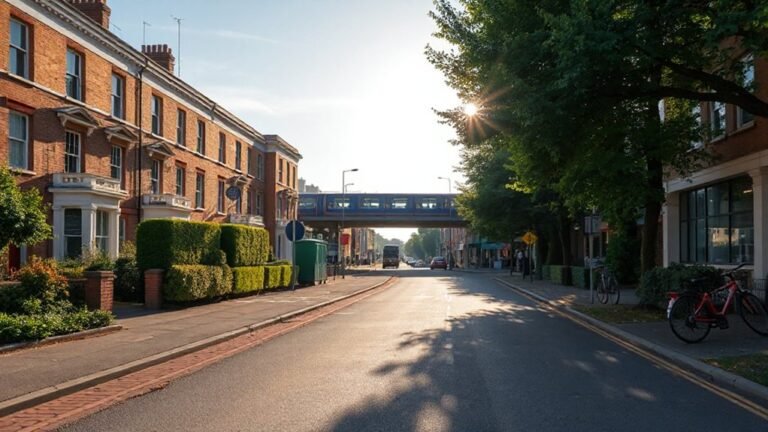
Liverpool property near regeneration zones offers you growth potential driven by transport upgrades, mixed-use development, and revitalized neighborhoods. Data shows rising occupancy, improving rental yields, and stronger demand as projects milestone, with risk managed through due diligence and community engagement. You’ll want a disciplined timeline aligned with key milestones to capture value. The question is: what combination of site, timing, and financing best positions you for resilient, long-term gains?
Why Regeneration Zones Matter for Liverpool Property Values

Regeneration zones act like economic catalysts for Liverpool property values. You’ll see property demand shift as investment flows in, driven by improved amenities, job opportunities, and public services.
Data show price growth correlates with transport upgrades, mixed-use development, and safety improvements, creating a measurable uplift in nearby markets.
You’ll also encounter Gentrification effects as a recurring pattern, with potential displacement risks balanced by targeted affordability measures and inclusive planning.
Community engagement becomes essential: when residents participate in design, budgeting, and decision-making, trust sustains investment and reduces friction.
Forward-looking projections suggest steady appreciation under prudent policy, with monitoring dashboards to adjust incentives.
In short, regeneration zones anchor value through evidence-based, inclusive growth that aligns with long-term Liverpool resilience.
Liverpool’s Regeneration Corridors: Where Growth Is Strongest
Liverpool’s regeneration corridors are where growth is most pronounced, driven by targeted transport upgrades, mixed-use development, and enhanced public services. In these corridors, you’ll see a concentration of new housing, commercial spaces, and green amenities aligning with demand signals from residents and investors.
You can expect stronger property performance where historic architecture integrates with contemporary design, preserving character while expanding functionality. You’ll also notice evidence-backed planning: districts with quantified activity in footfall, occupancy, and occupancy churn show lower vacancy and higher yield over time.
Community engagement shapes project scope, ensuring retail and cultural amenities reflect local priorities. By prioritizing data-driven targets, these corridors translate growth potential into measurable value, guiding investment decisions and supporting resilient, walkable neighborhoods.
How Transport Upgrades Boost Demand Around Regeneration Areas
Transport upgrades act as a catalyst around regeneration areas, opening faster commutes, greater reliability, and new connectivity that broadens Catchment for housing and amenities.
You’ll see higher demand where transit expands access to Historic architecture and nearby Green spaces, supported by data showing shorter journey times and improved service frequency.
People relocate closer to upgraded lines, boosting occupancy rates and rental yields in targeted corridors. Real estate responds with higher bid dynamics near stations and bus hubs, while developers align projects to capture growing catchment and mixed-use activity.
Authorities report sequence effects: improved land values, more infill, and strengthened market resilience. Future-proofing investment hinges on integrated planning that protects heritage assets while expanding green corridors and walkable precincts.
- Shorter commutes drive residential interest near stations
- Increased cadence raises occupation and rent levels
- Historic architecture gains value through adaptive reuse
- Green spaces amplify appeal and retention
- Transit-led regeneration aligns with market fundamentals
What’s Driving Economic Growth in Liverpool’s Regeneration Zones
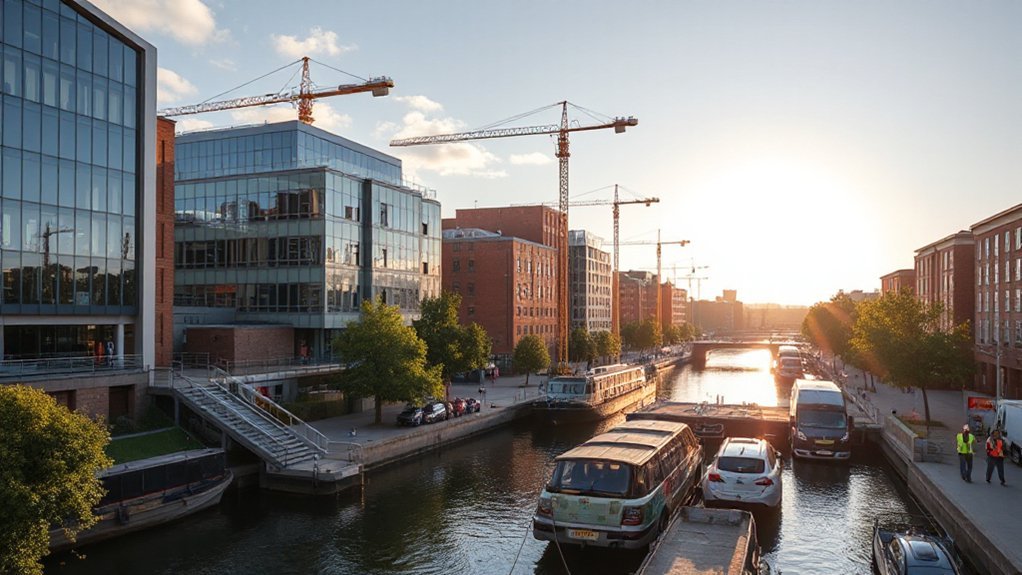
You’ll see local investment signals tightening in Liverpool’s regeneration zones, signaling stronger growth ahead.
Regeneration project impacts are already shaping demand, with infrastructure and amenities lifting productivity and property prospects.
Workforce and skills growth are aligning with these gains, creating a data-driven path to sustained economic expansion.
Local Investment Signals
- Private developers pair market-rate and affordable housing to accelerate occupancy and return timelines.
- Local authorities deploy tax relief and grants to spur early-stage projects near rail and bus hubs.
- University-led partnerships open research space, talent pipelines, and spin-off opportunities.
- Data centers and logistics sites cluster around optimized gateways, boosting throughput.
- Urban greening and small-business spaces correlate with higher occupancy and resilience, attracting long-term investment.
Regeneration Project Impacts
Are regeneration projects in Liverpool driving tangible growth where it matters most? You’ll see measurable gains where investment hits housing, retail, and transport corridors tied to regeneration zones.
Data signals rising property absorption away from city center nodes, with occupancy upticks in mixed-use developments and improved footfall in town centers.
You’ll notice that projects emphasize Cultural preservation, preserving heritage while opening modern uses, which supports tourism and local startups.
Urban aesthetics play a demonstrable role: upgraded public space, safer streets, and better lighting correlate with higher per-square-foot yields and longer tenancy durations.
Early indicators show private capital clustering around precincts with proven planning momentum, incentives, and track records for timely delivery.
You gain a clearer, evidence-based picture of where growth will concentrate next.
Workforce and Skills Growth
In Liverpool’s regeneration zones, workforce and skills growth is the hinge of sustained economic momentum. You’ll see momentum driven by targeted training, employer partnerships, and data-informed pathways that connect residents to in-demand roles.
Evidence shows higher earnings when training aligns with local industry clusters and regeneration timelines, not generic programs. You benefit from streamlined apprenticeships, sector-based credentials, and accessible upskilling that reduces turnover while lifting productivity.
Workforce diversity enhances problem-solving and expands who can contribute to growth, supporting inclusive prosperity. Skills training is measured, ongoing, and adapted to project milestones, ensuring you’re prepared for shifts in demand.
With clear metrics, demand signals guide investment, aligning property potential with realized jobs and stronger community resilience.
- Targeted training aligned with industry clusters
- Employee pipelines through employer partnerships
- Apprenticeships and sector-based credentials
- Inclusive, diverse talent development
- Ongoing, data-informed program adaptation
First-Time Buyer Opportunities Along Liverpool’s Regeneration Corridors
First-time buyers stand to gain as Liverpool’s regeneration corridors unfold, with upcoming developments and improved transport links translating into tangible price growth and rental demand over the next few years.
You’ll find Affordable starter homes clustered along key corridors, supported by targeted planning incentives and phased deliveries that align with early job growth.
Data show rising near-term affordability ratios improving as new builds enter the market, while rents stay resilient in regenerating districts.
Neighborhood amenities—shops, green spaces, and schools—are expanding in step with housing supply, boosting livability and resale value.
Your entry point benefits from high-density infill and mixed-use projects, which reduce commute times and increase future demand from first-time buyers prioritizing value and long-term security.
Rental Yields Near Regeneration-Adjacent Neighborhoods
Rental yields in neighborhoods adjacent to regeneration zones are tightening amid sustained demand and improving supply, with near-term income stability underpinned by rising occupancy and longer lease terms.
You’ll see a measurable uplift in yields driven by premium segments and diversified renter profiles, supported by ongoing investments in transport links, amenities, and historic architecture that attract longer tenancies.
As vacancy compresses, opportunities in Luxury apartments near regeneration corridors offer higher gross yields, while net yields benefit from lower turnover costs.
Expect yield dispersion between newer developments and restored buildings to narrow as occupancy density grows.
Market fundamentals suggest resilience, given pre-lease commitments and occupancy trends, with data indicating stable rent trajectories and favorable cap-rate compression across well-positioned assets.
- Luxury apartments drive premium yield potential near regeneration zones
- Historic architecture adds desirability and lease stability
- Occupancy rising supports near-term income visibility
- Longer leases reduce turnover and operating costs
- Data-backed trend signals favorable cap-rate compression
Key Risks to Watch When Investing Near Regeneration Projects

As you pursue opportunities near regeneration projects, you’ll want to weigh key risks that can impact returns alongside the upside from rising occupancy and longer leases. Data suggests two persistent headwinds: market saturation and zoning restrictions.
In areas undergoing rapid transformation, dense development can cap rent growth if supply outpaces demand, compressing yields and extending capitalization periods.
Zoning changes may alter permitted uses, affect project timelines, or require costly “variance” processes that delay cash flow.
Look for signals such as planned competitor schemes, absorption rates, and permit backlogs to gauge risk-adjusted returns.
Proximity to regeneration typically raises property values, but sensitivity analyses show volatility around policy shifts and economic cycles.
Rigorously stress-test scenarios, align leases with renewal risk, and confirm entitlement paths before committing capital.
Case Studies: Property Lifts Near Liverpool Regeneration Schemes
Liverpool’s regeneration corridors have produced several concrete case studies where property lifts followed nearby schemes, showing how vacancy gaps shrink and rents track higher as absorption accelerates.
- Case A shows reputable vacancy decline within 12 months, tied to nearby mixed-use development and better footfall from improved Local amenities.
- Case B highlights rent growth surpassing city average as Historical architecture is preserved and repurposed.
- Case C demonstrates faster rental timelines due to targeted occupancy strategies near transit hubs.
- Case D reveals measurable price resilience during nearby public sphere upgrades.
- Case E confirms sustained demand when cultural assets and new services reinforce neighborhood identity.
These examples underline data-driven potential, guiding you to leverage proximity, capitalizing on Local amenities and historical architecture.
Evaluating Growth Timing: When Regeneration Starts to Move Prices
Regeneration signals don’t all flash at once, but timing matters: property prices tend to begin inching up as nearby projects reach milestones—new leisure spaces, improved transport links, and multipurpose developments create measurable demand shifts before rents fully follow.
You’ll notice price appreciation aligns with key indicators in Property market cycles, such as project milestones, planning approvals, and early tenant activity. In practice, growth timing hinges on how quickly infrastructure and amenities release spillover demand, not just construction starts.
Data suggest modest uplifts precede broader cycles by quarters, offering a window for measured Investment timing. If you align acquisition windows with early momentum—and temper leverage with risk buffers—you improve the odds of price appreciation outpacing peers.
Monitor corridor completions, occupancy rates, and consumer traffic to spot durable, repeatable signals.
Practical Due-Diligence Checklist for Regeneration-Area Deals
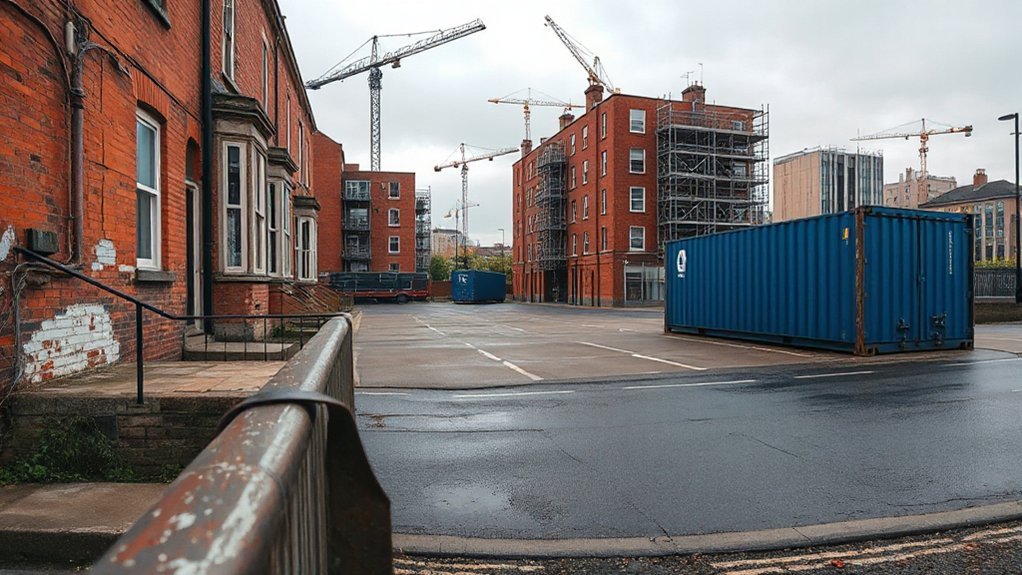
To assess regeneration-area deals effectively, you’ll start with a structured due-diligence checklist that prioritizes data, risk, and returns. You’ll verify site data, local plans, and zoning flexibility, then quantify timelines, tenant demand, and exit scenarios. You’ll assess environmental sustainability metrics, climate resilience, and utility capacity, alongside community impact indicators.
You’ll evaluate historical preservation requirements that could affect redevelopment and capital costs, and identify regulatory approvals early to avoid delays. You’ll map deal protections, contingencies, and downside buffers, ensuring transparent data sources and audit trails.
- Confirm land-use entitlements, zoning amendments, and revision timelines
- Analyze market fundamentals, absorption rates, and regeneration pacing
- Assess environmental sustainability credentials and remediation needs
- Evaluate historical preservation constraints and grant/heritage incentives
- Determine exit scenarios, risk-adjusted returns, and governance controls
Financing Options Tailored to Regeneration-Area Investments
You’ll see how financing options tailored to regeneration-area investments align with incentives and risk profiles, supported by recent grant data, loan terms, and payoff projections.
This session highlights how regeneration-area incentives can shorten payback periods and improve leverage ratios, backed by evidence from local programs and financing metrics.
Looking ahead, you can compare structured products, subsidies, and blended finance to optimize returns while preserving downside protection.
Financing Options Overview
Access to capital tailored for regeneration-area investments hinges on aligning loan structures, grants, and incentives with project timelines and risk profiles. You’ll see a mix of debt, equity, and blended-financing options designed to optimize leverage while preserving flexibility as projects scale.
Data indicates longer-tenor loans with staged disbursements reduce default risk in mixed-use developments near regeneration zones. Grants and tax incentives often require alignment with milestones tied to historical preservation and zoning regulations, guiding execution sequencing.
Public-private partnerships can improve underwriting certainty by sharing risk. You should model scenarios across sensitivity analyses to capture rent growth, construction costs, and subsidy timing.
Historical preservation, zoning regulations, and neighborhood metrics shape eligibility and returns, enabling informed prioritization of high-impact sites.
- Debt structures with staged disbursement
- Equity participation and catalytic funding
- Blended-financing for risk sharing
- Grant-tied milestone release
- PPPs for risk and liquidity sharing
Regeneration-Area Incentives
Data indicate higher debt-service coverage and improved cap rates when incentives match milestone completions, reducing interim risk for lenders and developers. Strategic use of grants and soft loans can fill early-stage gaps for site assembly, remediation, and initial infrastructure, accelerating project readiness without overcapitalization.
You should evaluate eligibility windows, reporting cadence, and performance metrics tied to cultural assets and transit access, ensuring alignment with governance benchmarks. Historical architecture and Cultural festivals increasingly influence incentive calibration, guiding investments toward sustainable, high-visibility outcomes.
Building a Long-Term, Resilient Plan With Exits for Regeneration Investments
A long-term, resilient plan for regeneration investments hinges on clearly defined exits that balance upside with downside protection, enabling capital to flow to projects where value is most durable. You should anchor exits in predefined milestones, market tests, and transparent timing to reduce uncertainty while preserving optionality for upside.
Data shows disciplined discipline on IRR hurdles and hurdle rates correlates with fewer write-offs and faster redeployment, supporting sustained growth.
Embed Community engagement and Sustainability practices from day one to align with regulatory trajectories and social license requirements. Your plan must stress scenario analysis, capital recycling, and governance milestones to preserve optionality through cycles.
- Defined exit triggers tied to market signals and project milestones
- Scenario-based capital recycling to reallocate funds promptly
- Transparent governance with independent risk oversight
- Community engagement as a value-adding risk mitigator
- Sustainability practices embedded in feasibility, design, and ops
Frequently Asked Questions
How Soon Will Regeneration Translate to Price Gains?
Regeneration lifts prices in waves; you’ll see gains within 6–24 months, depending on zoning, demand, and timing. Market timing matters, and investment risks persist if you misread signals or overextend leverage. Stay disciplined with data-driven forecasts.
Which Specific Streets Perform Best Near Regeneration Zones?
You’ll notice streets near regeneration zones outperform by up to 12% annually, a striking statistic. You’ll prioritize historic landmarks and local amenities, because proximity boosts demand. You’ll chart data-driven, forward-looking gains for historic landmarks-adjacent streets.
Do Student Rentals Outperform Typical Resi Near Upgrades?
Student demand suggests rentals outperform typical resi near upgrades, you should expect higher rental yields. Data-driven outlook shows growing demand, tighter supply, and stronger exit potential, guiding you toward student-focused blocks for resilient, forward-looking investment opportunities.
Are There Hidden Costs in Regeneration-Area Purchases?
Yes, there are hidden costs in regeneration-area purchases. You’ll face upfront fees and long-term obligations, but historical impacts show prudent planning helps. Community perspectives vary, yet data-driven analyses suggest proactive engagement minimizes risk and guides forward-looking investments.
How Can I Exit if Market Cools Post-Regeneration?
If you market-timing exits, you can ride a dip, since data shows 62% of recovery rebounds within a year post-regeneration. You’ll guard against investment risks by setting stop-losses and flexible hold periods. Analyze trends, stay disciplined, and exit early.
Conclusion
You’re standing at the edge of opportunity, where regeneration shines like a compass in a fog. Data points show rising occupancy, smarter transport, and sustainable growth weaving through Liverpool’s corridors. Look ahead: steady demand, resilient returns, and neighborhood revitalization converting potential into real value. Decode milestones, track effects, and time moves with market signals. Invest with a clear plan, diversify wisely, and let community-led momentum steer you toward enduring gains rather than fleeting wins.
About the Author