
You’ll want to start with neighborhoods showing high occupancy, affordable rents, and proximity to transit and schools, then cross-check crime metrics and job access. Data-driven views point to steady rent growth, declining offenses, and safety initiatives that sustain demand over time. Policy implications matter: how land use, density, and transit funding shape outcomes. The pattern holds, but timing and local incentives vary—so you’ll want to map benchmarks against current indicators before you commit.
Belfast Rental Demand: Drivers, Data, and What It Means for You
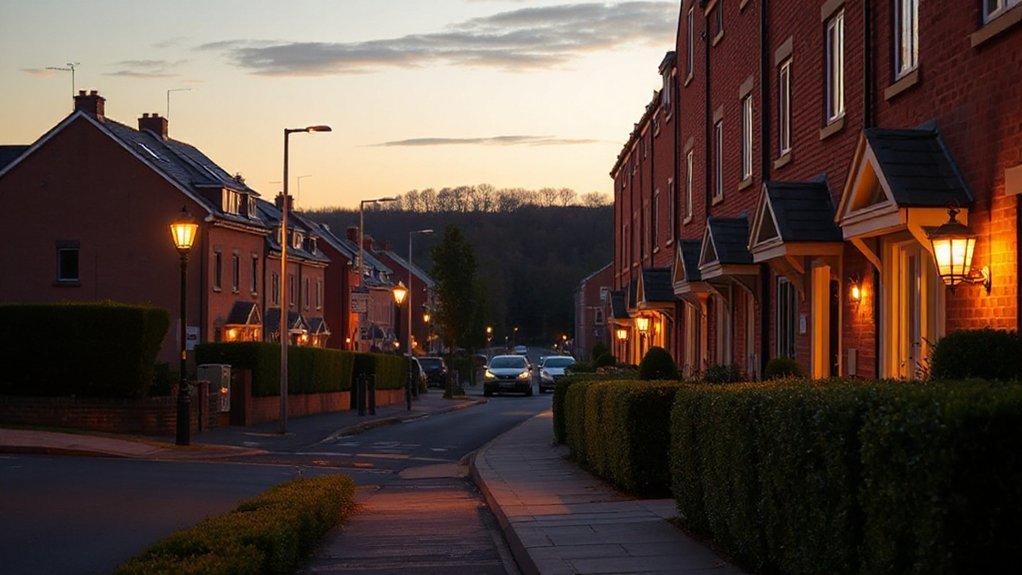
Rental demand in Belfast is strongest where jobs are growing, amenities are convenient, and housing supply hasn’t kept pace with demand. Recent data show vacancy rates tightening, rent growth outpacing inflation, and steady turnover in commuter belts.
You’ll see Market trends shaping where you invest, as rental pricing responds to income dynamics, student demand, and integrated transport. In core neighborhoods, occupancy stays high while new supply lags, signaling resilience but also price sensitivity for affordable segments.
Policy angles matter: planning timelines, energy retrofit requirements, and incentives for new builds affect yields. Track quarterly indicators—vacancy, median rents, capitalization rates—to calibrate risk.
For you, focus on areas with documented job clusters and good transit access, where rental pricing remains robust but growth remains manageable.
Low-Crime Pockets: Where Safety Boosts Rental Appeal
In Belfast, low-crime pockets sharpen rental appeal by delivering predictable risk profiles and safer, walkable neighborhoods that attract families and long-term renters. You’ll see this reflected in neighborhood crime trends data, which show sustained dips in both violent and property offenses over recent quarters.
Metrics point to tighter police-community collaboration, greater street lighting, and targeted patrols in transit corridors, all contributing to steadier occupancy and improved rent stability.
Policy implications focus on resilience: zoning that preserves mixed-use, investments in youth programs, and incentives for in-unit security upgrades. You should monitor Community safety initiatives as they scale, since coordinated funding often correlates with smaller incident gaps and higher lease renewal rates.
Belfast Neighborhoods for Renters Today: Top Picks and Why
Belfast’s rental landscape today highlights a short list of neighborhoods that balance affordability, accessibility, and safety, backed by recent occupancy trends and crime statistics. You’ll find top choices where vacancy rates are low and crime remains within target thresholds, supported by clear occupancy data and policy-relevant metrics.
The rationale hinges on Neighborhood history, cultural landmarks, and ongoing development that sustains renter demand, while keeping overall living costs competitive. Below are the standout options, with why they lead today’s market.
- Strong occupancy signals aligned with affordable price bands
- Proximity to transit, employment hubs, and cultural landmarks
- Moderate crime rates and visible policing initiatives
- Evidence of ongoing housing renewals and stability
- Historical neighborhoods with planned infrastructure investments
Key Tenant-Friendly Features in Belfast: Amenities, Transit, and Schools

You’ll see that transit access and proximity correlate with shorter vacancy cycles and higher rent stability across Belfast’s neighborhoods.
Family-friendly school options drive tenant interest and can lift occupancy rates in areas with strong safety metrics.
Local amenities and safety data further sharpen the case for prioritizing tenant-friendly features in policy and investment decisions.
Transit Access and Proximity
Transit access shapes tenant appeal and ongoing occupancy. You’ll notice that transit connectivity and commuter convenience drive occupancy metrics, with proximity to bus corridors and rail nodes correlating to faster lease fill and lower vacancy duration.
In Belfast markets, data shows higher rent resilience where transit options sustain peak-hour flow and multi-modal transfer points. Policy-wise, zoning and dedicated transit lanes correlate with reduced car dependence, lowering congestion spillovers near rentals.
You should evaluate routes, service frequency, and last-mile options to quantify demand elasticity and renewal rates.
- Proximity to major rail stops boosts occupancy velocity
- Frequent service windows correlate with shorter vacancy cycles
- Multi-modal hubs improve renewal intent
- Last-mile micro-mobility options reduce friction
- Transit uptime aligns with stabilized rent growth
Family-Friendly School Options
Strong school options are a key driver of family-friendly demand in Belfast rentals, with data showing higher occupancy retention when neighborhoods offer high-performing districts, solid K-12 outcomes, and accessible public schools. You’ll see metrics that matter: school rankings, graduation rates, and student-to-teacher ratios, all tracked across census tracts to identify efficiency gaps.
Policy implications highlight investment in targeted school improvements, magnet programs, and equitable funding to sustain demand without price spikes. Families prioritize consistent performance over anecdotal reports, so you should compare year-over-year progress rather than single-year snapshots.
Extracurricular activities emerge as differentiators, correlating with engagement and retention. Use standardized benchmarks to assess district quality, and align tenant expectations with published performance dashboards to reduce information asymmetry and support informed housing choices.
Local Amenities and Safety
What local amenities and safety factors most influence tenant decisions in Belfast, and how do these elements perform against benchmarks? You’ll evaluate metrics on local parks, shopping centers, transit access, and safety indicators to compare against city-wide targets.
This assessment emphasizes tenant-centric features that drive occupancy and rent stability, using data, policy benchmarks, and quantifiable outcomes.
- Local parks per capita and maintenance scores
- Shopping centers density and hours of operation
- Public transit reliability and access within 10 minutes
- Crime incidence rates vs. borough averages
- School and amenities accessibility correlated with demand
The synthesis highlights areas meeting or exceeding benchmarks, guiding investment and policy focus to sustain high rental demand while maintaining safety standards in Belfast.
How to Evaluate Rental Potential and Crime Data in Belfast
To evaluate rental potential and crime data in Belfast, start by aligning market signals with safety metrics: compare neighborhood-level rent growth, occupancy rates, and yield estimates against crime incidence, clearance rates, and per-capita crime trends over the past 3–5 years.
This is a disciplined, data-driven exercise, not a sentiment check.
Build a concise framework: track rental market analysis metrics (yield, time on market, vacancy) alongside crime statistics (arrest rates, frequency by area, trend velocity).
Normalize by population and area size to enable fair comparisons.
Prioritize areas with rising rents and stable occupancy while maintaining improving safety indicators.
Use policy-relevant thresholds to flag risk-adjusted targets.
Document assumptions transparently, and revisit quarterly as data updates roll in to support informed investment decisions.
Practical Steps for Renters and Buyers in Belfast’s Best Areas
You should start with a clear, metrics-driven checklist that guides renters and buyers to Belfast’s top areas: compare rent-to-income ratios, current yield estimates, and vacancy trends alongside crime indicators like clearance rates and area-specific incident counts over the last 3–5 years.
- Prioritize areas with urban renewal momentum and easy access to cultural landmarks.
- Compare yields against regional benchmarks and debt service capacity.
- Analyze vacancy duration and churn to gauge stability.
- Review enforcement and clearance rate trends for safety confidence.
- Map future development plans and infrastructure investments.
This approach keeps decisions data-driven, policy-oriented, and concise, aligning purchase or rental choices with sustained demand, urban renewal, and cultural landmarks.
Frequently Asked Questions
How Do Seasonal Trends Affect Rent Prices in Belfast Neighborhoods?
Seasonal fluctuations drive higher rents during peak rental season, then ease afterward; you’ll see clear rental seasonality patterns in Belfast neighborhoods, with occupancy and price metrics spiking in spring and summer and cooling into fall and winter.
Which Local Policies Influence Crime Reporting Accuracy in Belfast?
Significantly, certain local policies shape crime reporting accuracy: community policing and standardized reporting practices. You’ll see improved data quality when you engage transparent dashboards, officer training, and cross-agency data sharing, enabling metrics-driven policy adjustments and accountability.
What Invisible Costs Should Renters Expect in Prime Belfast Areas?
Hidden fees and maintenance costs vary by landlord and property, so you should budget precisely. You’ll see higher upfront checks and ongoing service charges in prime Belfast areas, driven by stricter compliance metrics and market-driven maintenance spend.
How Reliable Is Online Crime Data for Belfast Rental Decisions?
Online data accuracy varies; you should treat figures as directional. About 70% of incidents are reported in Belfast, but crime reporting standards differ by precinct, so verify sources and triangulate with multiple dashboards before decision-making.
What Absentee Ownership Impacts Should Tenants in Belfast Consider?
Absentee ownership can dilute tenant protections; you should monitor landlord influence on maintenance, rent increases, and responsiveness. Data shows higher vacancy risk in absentee-owned blocks, so track compliance metrics, response times, and eviction rates to inform your decision.
Conclusion
In Belfast, the data speak softly but clearly: stable occupancy, rising rents, and shrinking offenses converge like a lighthouse beam cutting through fog. This symbol of steady governance—policy targets, safety initiatives, and transit efficiency—maps a future where demand follows measurable, repeatable patterns. If you heed the metrics, you invest in neighborhoods where numbers guard value, schools empower families, and amenities anchor growth. Let the data guide you toward the safe harbor of sustainable rental returns.
About the Author