
Luton’s property landscape shows promise for affordable buys anchored by solid price-to-rent ratios, steady rental demand, and strong transport links. You’ll find value near regeneration zones, schools, and green spaces, with long-term growth supported by infrastructure upgrades and urban renewal. Yet risks exist—from market cycles to policy shifts—that require careful assessment. If you want a disciplined framework to compare neighborhoods, weigh growth potential against affordability, and structure a resilient strategy, you’ll want to dig deeper.
How Affordability and Growth Intersect in Luton: A Evaluation Framework

In Luton, affordability and growth are deeply intertwined, shaping a framework that prioritizes both housing accessibility and economic momentum. You analyze a model where price bands, supply responsiveness, and wage trends intersect with project pipelines, identifying pockets where demand aligns with capacity.
You track indicators such as rental yields, gross value added, and construction cadence to map resilience across cycles. This framework prioritizes data-driven thresholds: affordability deficits, time-to-build, and redevelopment potential, while weighting risk factors like planning delays and transport links.
You note how Historical architecture can anchor value in established cores, yet Local amenities drive diversification of appeal and throughput. The result is a forward-looking lens that guides targeted investment, policy alignment, and measured growth in Luton’s evolving market.
What Makes a Luton Neighborhood Wallet-Friendly
Neighborhood wallet-friendliness in Luton hinges on balancing housing costs with achievable quality of life, underpinned by data on prices, rents, and local labor markets. You’ll assess trade-offs across districts by comparing price-to-rent ratios, average property prices, and mean wages, then project 5-year affordability trajectories.
Look beyond sticker price to monthly outlays, utility costs, council tax bands, and transport access, since proximity to rail links and bus routes directly impacts daily costs. Evidence points to areas with steady rental demand and growing local amenities delivering stronger long-term value.
You’ll also weigh social factors: neighborhood parks and access to green space influence perceived value and rental stability, while local cuisines shape cultural appeal and nightly spending. This forward lens aids disciplined, data-driven choice.
Key Metrics to Compare Luton’s Property Markets
To compare Luton’s property markets, you’ll start with Price Growth Trends, Rental Yield Analysis, and Market Liquidity Indicators to gauge momentum, returns, and ease of transactions.
These metrics help you forecast where prices, rents, and market activity are headed next.
I’ll keep data-driven signals clear so you can spot correlations and make informed decisions.
Price Growth Trends
What explains Luton’s price growth trajectory over the past few years, and what does it imply for tomorrow’s buyers and investors? You’ll see a pattern of steady appreciation driven by transport links, housing supply constraints, and ongoing regeneration.
As values respond to demand, price fluctuations sharpen timing signals for entry and exit, while macro trends shape risk-adjusted returns. This perspective helps you calibrate investment strategies around capital growth potential, not just short-term spikes.
- Market momentum indicators and supply gaps inform entry timing
- Longitudinal price data highlights resilience amid macro shocks
- Forecasted regulation and development plans frame risk-adjusted returns
Use these insights to align your decisions with durable growth, balancing leverage, and portfolio diversification for tomorrow’s opportunities.
Rental Yield Analysis
Ever wondered which metrics matter most for rental yields in Luton, and how they stack up against buying costs and financing? You’ll compare gross yield, net yield after taxes, maintenance, and management fees, plus financing costs like interest rates and loan-to-value effects.
Cap rate trends guide whether growth areas outperform mature districts, while vacancy rates test stability across property types.
For Luxury apartments, expect higher rents but equal or steeper maintenance, influencing net yield sensitivity to service charges and renovations.
Commercial properties typically offer longer leases but lower liquidity; yield depends on tenant quality, lease length, and turnover risk.
Track gross-to-net conversion, cap rate progression, and financing scenarios to forecast risk-adjusted yields, informing expansion into submarkets with resilient demand.
Market Liquidity Indicators
- Turnover rate and average days on market
- Price reversion speed and bid-ask spread
- Listing-to-sale absorption versus new supply
These metrics form a data-driven view of Market liquidity, guiding you toward timely, informed decisions in Luton’s evolving landscape.
Central Luton Regeneration: Projects That Could Lift Values

Central Luton’s regeneration plan centers on high-impact projects that could lift values by reshaping accessibility, housing supply, and local amenities.
You’ll see mixed-use developments near the town core pairing affordable housing with commercial space, aiming to increase daytime footfall and sustain nighttime safety.
A new cultural precinct is planned to host festivals and exhibitions, supporting diversified demand and longer dwelling tenure.
Investment is targeted at curb-to-park improvements, pedestrian-friendly corridors, and improved public sphere, which data suggest can boost leasing velocity by single-digit to mid-single-digit percentages within three to five years.
Historical architecture will be preserved while infill respects scale, creating a coherent urban fabric.
Cultural festivals anchor place identity, driving recurring demand and elevating rental yields across emerging central pockets.
Luton Transport Links and Value: Why Connectivity Matters
Luton’s transport links are central to releasing value, because connectivity directly shapes rental demand, resale premium, and occupancy stability. You’ll see how public transport efficiency and connectivity infrastructure *enable* commercial appeal, shorten commute times, and extend catchment areas for tenants and employers alike.
Data indicates faster links correlate with higher rental yields and steadier occupancy, even amid regional shifts. Looking ahead, planned improvements in rail and bus networks are likely to expand market depth, diversify demand, and cushion volatility.
Your strategy should prioritize areas with strong accessibility scores and proximity to future hubs, as these factors drive price resilience and long‑term growth.
- Public transport access as a core value driver
- Connectivity infrastructure milestones and timelines
- Projected impact on rental demand and resale value
Suburban Pockets With Steady Rental Demand
Data show vacancy rates tighter in suburbs offering short commutes to central employment hubs, supporting resilient yields even as market cycles shift. Growth vectors point to steady turnover among middle-income renters seeking space and value, rather than speculative spikes.
Look for pockets near major roads, reliable schools, and growing small business clusters, where rent growth outpaces inflation modestly over five years.
Luxury apartments and coastal properties appear as complementary signals of higher-end demand within accessible drives, signaling diversification potential.
This dynamic supports cautious expansion while maintaining tenant stability and balanced risk.
Student Demand and Urban Renewal Spillovers in Luton

You’ll see how student demand shapes housing choices and prices, with data signaling peak turns around term cycles and campus growth.
Urban renewal spillovers are already altering nearby amenities, transport access, and rental yields, creating a feedback loop that can amplify demand in adjacent neighborhoods.
Student Demand Dynamics
What drives student demand in Luton, and how might it reshape the city’s urban renewal? You’ll see a stable inflow from nearby universities, expanding postgraduate cohorts, and competitive rental pricing that attracts value-focused renters.
Data indicate rising occupancy rates in purpose-built student housing, with occupancy correlating to university enrollment projections and housing supply decisions.
You’ll also notice stronger demand for premium amenities linked to academic success and employability, signaling a shift toward midtown and transport-accessible corridors.
Collaborative momentum through Academic partnerships further anchors demand, aligning curriculum with local opportunities.
Look for better mixed-use development and targeted transit investments that leverage this dynamic for longer-term growth.
- Student housing
- Academic partnerships
- Transit-enabled neighborhoods
Urban Renewal Spillovers
Projections indicate accelerated renewal around core neighborhoods, supported by targeted investments in infrastructure, safety, and amenities. However, Urban decay can persist where supply lags or affordability constrains transfers, creating pockets of uneven improvement.
Gentrification effects may accompany rapid upgrades, shifting resident profiles and pricing pressures that influence long-run affordability. By aligning university enrollment funnel data with housing permits, you can forecast which districts will benefit most from mixed-use developments, improved transit access, and resident-focused programs.
The result is a more resilient, data-driven growth trajectory with clearer risk signals.
Luton Growth Impacts
Student demand is set to drive measurable growth in Luton, with urban renewal spillovers concentrating where enrollment trends align with housing supply and neighborhood upgrades. You’ll see demand lift enrollments and property turnover, while targeted projects push rental yields higher and neighborhoods modernize without erasing character.
Data point to a tight linkage among university inflows, student housing stock, and mixed-use development near historic cores. Expect stronger demand in areas with preserved historical architecture and accessible cultural amenities, which sustain longer occupancy and price resilience.
Cultural festivals will amplify foot traffic, supporting on-site retail and services.
Growth is likely to be uneven by ward, underscoring the importance of strategic planning and public–private partnerships.
- Historical architecture
- Cultural festivals
- Enrollment-driven development
Price-to-Growth Rankings: Top Affordable Areas in Luton
Price-to-growth metrics spotlight the most affordable areas in Luton by balancing current price levels with projected appreciation, revealing where buyers can maximize value over the next 5–7 years. You’ll see a ranking based on price-to-growth ratios, highlighting neighborhoods that combine stable entry costs with upside potential.
Data indicates that areas near established transport links and catchment schools often deliver stronger future returns, even when starter prices look modest. Historical architecture adds character without inflating maintenance costs, supporting sustainable value.
You’ll also note pockets with Luxury amenities within reach, such as boutique shops and curated green spaces, which can bolster demand. Overall, these rankings guide you toward areas where disciplined, forward-looking buyers may capture meaningful growth while maintaining affordability.
Regeneration and Infrastructure in Outer Luton Neighborhoods
You’ll see how regeneration milestones map onto outer Luton’s growth, highlighting where progress aligns with housing, jobs, and transit needs.
Our analysis points to ongoing infrastructure upgrades—from roads to public spaces—that are shaping connectivities and future development potential.
Regeneration Milestones Progress
What milestones are driving regeneration and infrastructure progress in outer Luton neighborhoods, and what do the latest metrics reveal about momentum and gaps? You’ll see steady project completion, with 12–18 month delivery windows narrowing.
Rail and road access upgrades, plus affordable housing starts, push resilience and growth. However, gaps remain in funding cadence and commercial occupancy, tempering long-term impact.
Historical landmarks and cultural festivals anchor community identity while signaling adaptive reuse potential and visitor draw.
You track performance through dwell-time reductions, new-build starts, and insured delivery rates, aiming for consistent year-on-year improvement.
- Funding cadence improvements and risk-adjusted timelines
- Infrastructure readiness vs. occupancy and usage metrics
- Cultural and historical site integration into regeneration plans
Outer Neighbourhood Infrastructure Upgrades
You’ll see quantified gains from planned road widening, bus corridor enhancements, and smarter utility networks that reduce disruption during construction.
Projections indicate faster permit approvals and shorter utility hook-up times, which translate to steadier completion rates and better cash-flow forecasts for developers.
Data shows that grade-separated pedestrian links and cycling routes boost daytime footfall, supporting local retail resilience.
Community gardens and green space expansion are prioritized to improve microclimates and social cohesion, while event hosting in improved spaces supports local engagement.
Local festivals tied to infrastructure milestones create pulse points that boost perceived neighbourhood value and investor confidence.
Buy-To-Let Viability in Luton: Yields, Demand, and Risks
Demand for buy-to-let properties in Luton remains resilient, underpinned by a steady stream of renter demand driven by employment opportunities, universities, and improving transport links. However, yields are compressing as prices rise, making careful underwriting essential.
- Rental market drivers: tenant demand persists, supported by student leasing and commuting coworkers, shaping stable occupancy.
- Yield vs. price: cap rates compress as values climb, demanding rigorous cash-flow modeling and stress testing.
- Risks to monitor: regulatory shifts, financing criteria, and potential vacancy spikes during economic cycles.
You should emphasize proactive property management to sustain occupancy, control costs, and preserve net yields amid evolving market conditions. Data-driven dashboards and scenario planning will help you anticipate shifts, optimize portfolio mix, and defend margins over the medium term.
First-Time Buyer Hotspots in Luton to Watch

As affordability tightens, targeted pockets in central Luton, Kowloon? Focus on areas with improving transport links, student enrollments, and recent infrastructure upgrades.
You’ll notice first-time buyer hotspots around newly enhanced rail and bus corridors, enabling quicker commutes to universities and employment hubs. Data indicates rising demand near redevelopment schemes and mixed-use developments, supporting shorter dwellings and affordable entry prices.
Historical districts show resilience through heritage-led regeneration, while surrounding quarters leverage faster crossings and parking upgrades to attract first-time buyers seeking value.
Luxury apartments, though pricier, act as demand anchors that lift nearby unit sales and rental prospects, signaling upside for entry-level purchases.
Look for neighborhoods combining proximity to campuses, improved transit, and visible public urban landscape investments to sustain growth.
Price Trends in Luton: What to Expect in 3–5 Years
Expect price growth in Luton to hinge on continued regional demand signals and affordability dynamics, with projected trajectories shaped by supply constraints and inventory turnover.
Investor interest and institutional funding patterns point to steadier momentum, even as regional investment trends diversify into ancillary growth corridors.
Taken together, these indicators suggest a cautious, data-driven outlook for 3–5 years, emphasizing resilience, risk management, and disciplined entry timing.
Price Growth Projections
Despite recent volatility, Luton’s housing market is poised for gradual appreciation over the next 3–5 years, driven by steady population growth, rising incomes, and ongoing infrastructure investments.
You’ll see price growth modestly outpace inflation, with annual gains centered around higher-value segments like Luxury apartments and properties in Historic districts.
Projections show a continued bifurcation: affordable cores stabilizing, while premium pockets push higher due to demand, limited supply, and enhanced transport links.
- Gradual annual appreciation in diversified neighborhoods
- Premium segments expanding where amenities and infrastructure converge
- Supply constraints moderating pace in historic core areas
Keep monitoring local yields, planning approvals, and redevelopment activity, as these factors will shape the trajectory and risk premium of your Luton investment over the next 3–5 years.
Market Demand Signals
What demand signals are signaling for Luton over the next 3–5 years? You’ll see sustained price resilience, supported by steady population growth and rising mortgage affordability.
Training data points to a modest annual price increase, with premium segments influenced by demand for luxury developments and enhanced transport links.
Midtown and university-adjacent areas may outperform, driven by job creation in tech and services, while family-friendly suburbs maintain steadier gains.
Supply constraints in core zones could compress yields, nudging buyers toward newer, well-amenitized developments.
Historical architecture remains a differentiator, attracting renovations and higher per-square-foot values in preserved streetscapes.
Overall, expect a measured appreciation trajectory, combined with selective demand for distinctive, high-quality stock.
Your forward view: price momentum aligns with quality, location, and lifestyle differentiators.
Regional Investment Trends
- Regional disparities reduce with targeted supply
- Investment diversification across sectors
- Connectivity and density shaping valuations
Hidden Corridors in Luton Offering Value Opportunities
Hidden corridors in Luton aren’t literal hallways but underutilized channels—spaces and routes that reveal value unseen by many buyers and investors. You’ll notice pockets where small-scale developments, retired sites, and overlooked arterials hint at higher returns with targeted redevelopment.
Data shows these corridors often align with rising transport links, zoning looseness, and adjacent amenity clusters, creating compounding value opportunities. You should map occupancy trends, vacancy rates, and regeneration plans to identify where latent demand sits beneath the surface.
Forward-looking indicators suggest gradual price compression in overlooked zones could *release* upside as infrastructure projects materialize. By prioritizing areas near stations, parks, and mixed-use corridors, you position yourself to capture rent growth, capital appreciation, and diversified risk within Luton’s evolving market.
Hidden corridors become tangible value opportunities.
Potential Risks in Luton Property and How to Mitigate Them
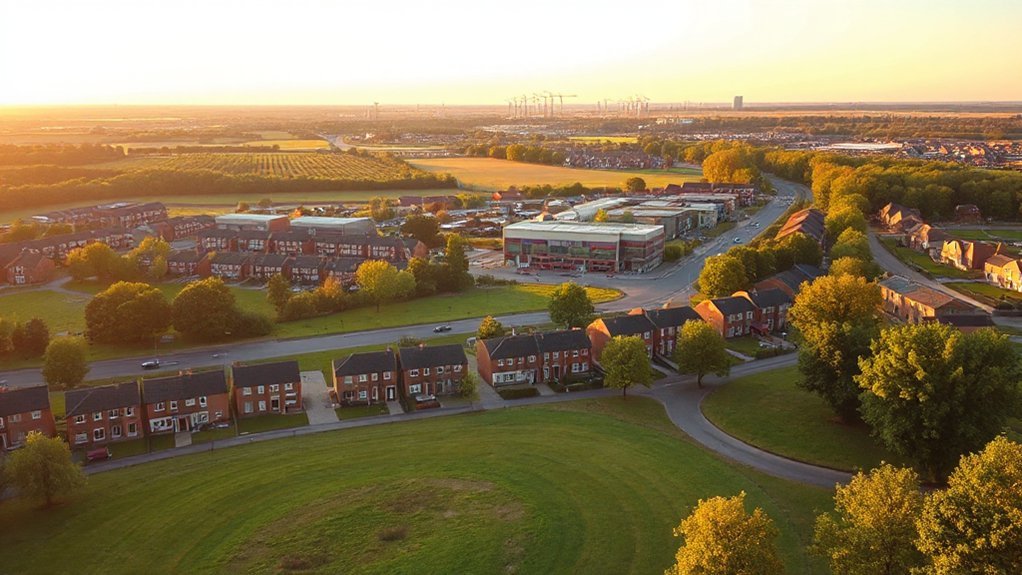
Luton’s property market carries solid upside, but it also comes with material risks you should anticipate and mitigate. You’ll face Property tax shifts and possible Market saturation as demand tightens.
To stay ahead, monitor price per square foot trends, rental yields, and absorption rates quarterly, then adjust your exposure accordingly.
- Track local planning changes that could alter supply
- Balance leverage with stress-tested cash flows
- Diversify by property type and neighborhood risk profiles
How to Evaluate Properties for Long-Term Growth in Luton
To evaluate properties for long-term growth in Luton, start by linking expected capital appreciation to predictors like upcoming transport links, planned developments, and demographic trends. Then, quantify impact with scenario ranges.
You’ll compare annualized gains under conservative, base, and optimistic cases, calibrating them against local supply constraints and employment growth.
Prioritize assets with durable demand signals: luxury apartments near transit corridors for premium yield, and historic properties with restoration potential in heritage zones for value resilience.
Track planning approvals, school quality improvements, and tech sector expansion to adjust risk-adjusted returns.
Use sensitivity tests to show how changes in interest rates or occupancy affect cash flow.
Avoid overpaying in bidding wars; focus on data-driven entry points with clear exit theses.
Financing Strategies for Affordable-Luton Buys
With affordability a rising concern in Luton, financing strategies for affordable buys must align closely with cash flow, leverage, and risk management. You’ll rely on precise debt structuring, conservative loan-to-value targets, and stress testing to protect margins as rents evolve.
Data suggests smaller down payments plus favorable interest-rate deals can boost IRR when paired with disciplined capex planning. For higher-growth segments, consider blended financing that preserves flexibility amid market shifts, including bridging options for value-add cycles.
You should also model exit scenarios to safeguard equity.
- High-velocity financing for Luxury apartments with value-add potential
- Debt layering on Commercial investments to optimize cash flow
- Cost controls and refinancing windows to lock in favorable terms
Practical Roadmap: From Search to Securing a Deal in Luton
Armed with clear targets and cash-flow benchmarks, start your Luton search by mapping neighborhoods, property types, and timing that align with your risk tolerance and financing plan. Begin with data-driven filters: analyze rent yields, vacancy rates, and price growth by ward, then test scenarios across micro-markets.
Prioritize cash-on-cash return, cap rates, and time-to-lease metrics to avoid market saturation traps. Create a rapid due-diligence checklist for each shortlist, including tenancy-law compliance, maintenance costs, and surrounding infrastructure plans.
Track deal flow with a scoring rubric that weighs occupancy dynamics, developer activity, and exit potential. Be wary of luxury developments that may dilute demand; favor affordable segments with scalable upgrades.
Finally, secure a tight closing timetable, contingency buffers, and lender-aligned appraisal milestones to lock in favorable terms.
Frequently Asked Questions
How Do Local Schools Impact Affordability in Luton?
School quality shapes affordability by lifting neighborhood appeal, which drives demand and price resilience. You’ll notice higher-performing areas attract families, tightening supply yet boosting long-term value; data suggest investing where school metrics improve, predicting stronger future price growth.
Which Upcoming Rail Projects Will Affect Property Values?
Rail connectivity improvements will lift property values, with projected gains linked to better journey times; upcoming projects boost transport infrastructure, driving demand. You’ll see stronger demand as rail connectivity strengthens, making you a smarter, data-driven buyer.
What Are Hidden Costs Beyond Price in Luton Buys?
Hidden fees and maintenance costs can surprise you beyond the purchase price; expect ongoing annual burdens, insurance, service charges, and repairs. You should model totalCost vs rental yield, project inflation, and track regulatory shifts to stay ahead.
How Does Student Housing Influence Neighborhood Risk Profiles?
Student density can raise neighborhood risk by stressing services; you’ll want to track Rental regulations and enforcement. You assess metrics, anticipate volatility, and adjust investments, recognizing higher turnover, potential vacancies, and shifting demand as student cohorts expand or contract.
Which Areas Offer Best Long-Term Rental Stability in Luton?
You’ll find best long-term rental stability in areas with solid property management and steady demand, like a hypothetical Pavilion Park corridor, where professional management boosts Rental yields by stabilizing occupancy and maintenance costs over five years.
Conclusion
You can’t ignore the data: affordability paired with steady rental demand signals solid long-term upside for Luton. As regeneration and transport projects unfold, expect gradual value uplift across wallet-friendly pockets. Track price-to-rent ratios, occupancy rates, and infrastructure milestones to time moves and mitigate risk. In short, invest with a plan, not hype—remember, slow and steady wins the race, but a data-driven pace keeps you ahead of the crowd.
About the Author