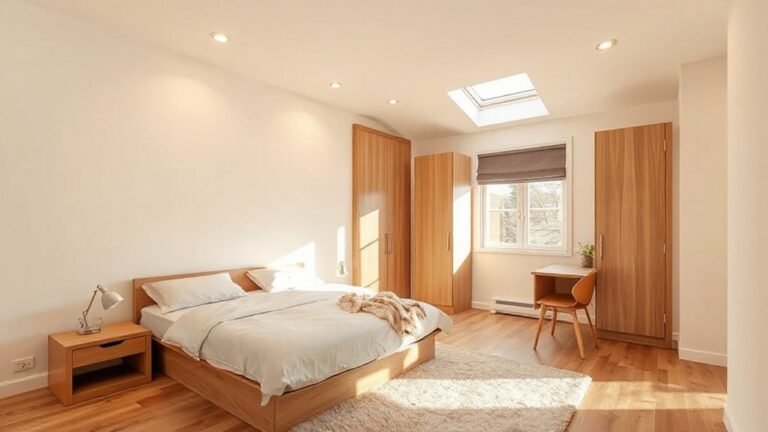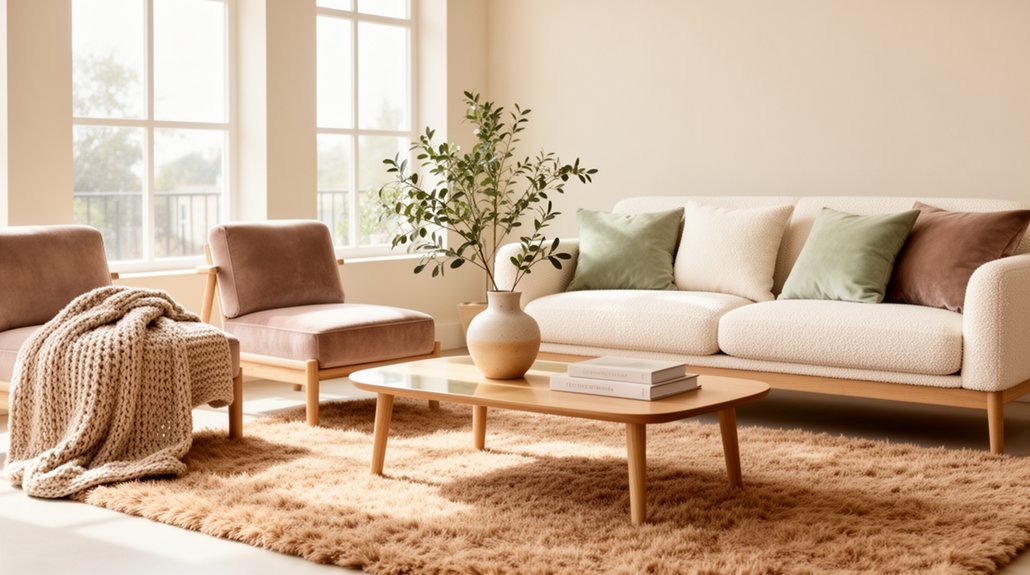
A Scandi-inspired living room blends simplicity with warmth through soft textures and natural tones. You’ll want clean lines, restrained neutrals, and light woods, paired with layered textiles like wool, linen, and cotton to add depth. Ground spaces with fossil-honed wood or matte concrete, and protect calm by avoiding clutter. Use controlled accents, large calm art, and gentle lighting to maintain airiness. If you keep these cues in mind, you’ll craft a serene, enduring space, with more details to follow.
What Defines a Scandinavian-Inspired Living Room
A Scandinavian-inspired living room blends simplicity, functionality, and natural light to create an uncluttered, inviting space. You define it by clean lines, thoughtful proportion, and a restrained palette that favors neutrals with strategic contrast.
Natural materials—wood, wool, linen—ground the scene, while uncluttered surfaces keep focus on form and function. You curate furniture for comfort and efficiency, prioritizing timeless silhouettes over trend-driven pieces.
Artificial lighting plays a vital role, delivering soft, layered brightness that complements daylight and enhances mood.
You introduce bold color accents sparingly, using them to emphasize architectural features or focal points without overpowering the serene backdrop.
The result is cohesive, balanced, and refined, delivering warmth through texture and light rather than ornament.
How to Choose Soft Textures for Warmth
Layered fabric combinations bring tactile warmth to a room, so mix textures like wool, boucle, and cotton blends for visual depth.
Start with a natural hue palette—soft beiges, warm greys, and creamy whites—to keep the look cohesive.
Use two or three accents to demonstrate how different textures work together without clutter.
Layered Fabric Combinations
Texture matters most when you layer fabrics for warmth: start with a sturdy, neutral base and add tactile variety through complementary weaves and finishes. Your approach combines Textile layering with deliberate contrasts in fabric textures to build depth without visual overload.
Choose a midweight wool or cotton-blend for upholstery and pair with a lighter, brushed linen throw to create dimensional contrast. Introduce a small-scale velvet or corduroy cushion for subtle sheen and pattern without overpowering the room.
Layered textiles should share a cohesive palette, emphasizing natural tones and cool neutrals to preserve Scandi clarity. Balance is essential: vary texture, not color saturation, to keep the space calm yet inviting.
Precision in mixing fibers yields warmth, restraint, and lasting comfort.
Natural Hue Palettes
Prioritize a cohesive base and layer in small, measured contrasts: a taupe sofa with charcoal cushions, or a pale ochre rug beneath cool-toned floors. Introduce depth with botanical prints in restrained scales and gentle color pops, ensuring they harmonize rather than compete.
When selecting textures, favor natural fibers—linen, cotton, wool, and brushed cotton—to enhance tactile warmth while preserving lightness. Use geometric patterns sparingly on throws or cushions to add structure without visual noise.
Maintain clarity by aligning accessories with your chosen palette for a calm, refined atmosphere.
Selecting Timeless Natural Tones for Scandi Spaces
Start with a neutral baseline palette to anchor your space and guarantee all accents read cohesive.
Bring in natural material textures to add tactility and warmth without shifting the tone, and choose light-filtering fabrics to maintain soft, serene light.
Together, these elements—neutral tones, natural materials, and light-control—create timeless Scandi spaces that feel effortless and refined.
Neutral Baseline Palette
Wondering how to anchor a Scandi space? A neutral baseline palette centers on airy, tactile neutrals that endure. You’ll combine soft whites, warm beiges, and cool greiges as the room’s quiet backbone, then layer with texture rather than color punch.
Keep surfaces matte and fabrics natural to preserve luminosity without glare. Precise undertones matter: test swatches in various lighting, ensuring harmony from morning sun to lamp glow.
Introduce botanical prints sparingly to inject life without overpowering the canvas. For focal drama, rely on statement lighting that complements the palette rather than competing with it.
Aim for cohesive rhythm: a restrained palette, deliberate contrasts, and a sense of calm that supports daily living. This baseline underpins all Scandi interiors, now and tomorrow.
Natural Material Accents
Timeless natural tones anchor Scandi spaces by highlighting the inherent warmth and texture of materials. You choose finishes that embody quiet maturity—oak, ash, linen, and wool—allowing the grain and weave to tell the story.
Favor light, breathable surfaces that reflect soft daylight and age gracefully. Introduce botanical motifs through subtle carvings, woven textiles, or pressed botanicals, ensuring they read as accents rather than slogans.
Geometric patterns should appear sparingly in rugs, cushions, or wall art to provide crisp contrast without overpowering простот. Maintain a restrained palette: warm beiges, stone, and faint moss.
Pair your selections with clean silhouettes and minimal hardware, so natural material accents remain the focal point, delivering timeless texture and understated sophistication.
Light-Filtering Textures
To achieve light-filtering textures that endure, choose fabrics and surfaces that soften daylight without dulling it. You’ll pair airy weaves with structured weaves to create deliberate textural contrasts, ensuring the room reads calm rather than homogenized.
Opt for natural fibers—linen, cotton, wool—that breathe and respond to seasonal textures as the year shifts. Use window treatments that diffuse glare while preserving color accuracy, such as light muslin or sheer flax blends.
Introduce subtle tonal shifts through rugs, cushions, and throws in muted, earthy palettes that echo wood tones. Maintain balance by mixing matte and slight sheen surfaces, avoiding heavy patterns that compete with light.
The result is a timeless, serene space that feels curated and alive.
Layering Textiles to Add Cozy Depth
Layering textiles instantly adds cozy depth to a Scandi-inspired living room by pairing textures, weights, and neutrals in purposeful contrast. You create a balanced field by mixing linen throws, chunky knits, and soft wool rugs, ensuring each element serves a tonal or tactile role.
Prioritize textiles with varied surface textures to catch light subtly and avoid flatness. Consider textile patterns that echo your room’s palette, using restrained motifs to maintain calm, cohesive energy.
Introduce color blocking through a restrained palette—pair deeper charcoal with pale ash and ivory accents to anchor the space without overpowering it. Fold, drape, and stack strategically; avoid crowding surfaces.
Maintain clean lines, select high-quality fabrics, and let the interplay of weight and texture define the room’s quiet sophistication.
Elevating Light With Timber Finishes
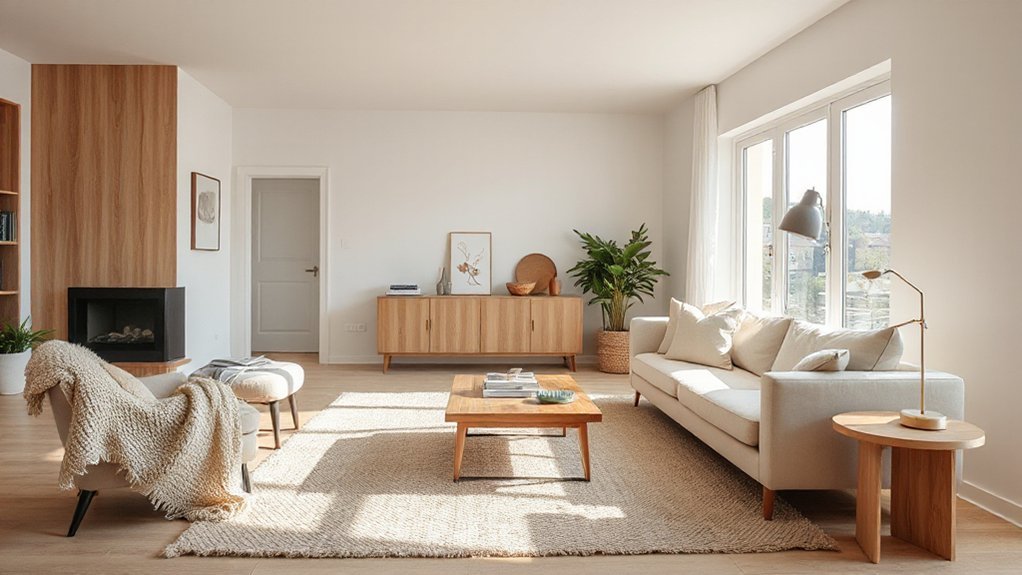
Timber finishes elevate light by reflecting, refracting, and warming surfaces to softly define a room’s mood. You amplify natural light by choosing light-toned woods and matte finishes that bounce brightness without glare.
Opt for wide-plank floors or paneling in ash, birch, or oak to create a cohesive canvas, then balance with cool whites and pale neutrals. Avoid heavy coatings that dull sheen; instead, favor breathable sealants that preserve the grain.
Introduce timber accents strategically: a tabletops, cabinetry, or a feature wall can frame views and deepen perceived space. Maintain consistent grain direction for flow, and pair timber finishes with metal or stone details to keep lines crisp.
Mood Boards: Pairing Wool, Linen, and Cotton
So you’ll start by layering wool, linen, and cotton to create texture harmonies that guide the room’s rhythm.
Notice how wool adds warmth, linen brings calmness and light, and cotton offers versatile layering essentials.
Use this mood board to define tonal balance and tactile contrasts that anchor a Scandi-inspired scheme.
Texture Harmonies In Wool
A well-balanced mood board for wool, linen, and cotton starts with a tactile hierarchy: wool provides depth and warmth, linen introduces light, and cotton offers softness and breathability.
In this subtopic, you fuse texture harmonies by layering wool in foundational roles while letting linen breeze through upholstery accents and cotton manage tactile relief. Think Wool insulation and strategic wool upholstery as core anchors; they establish thermal rhythm and sculptural mass without heaviness.
Pair a dense wool throw with a lighter linen drape to translate warmth into visual contrast, then temper with cotton cushions for airiness.
Maintain balance by varying pile heights and fiber finishes—felted wool, brushed wool, and coarse linen—so you preserve cohesion while allowing each fabric’s character to sing within the palette.
The result: refined tactility, durable comfort, timeless Scandinavian polish.
Linen Calmness And Light
Linen brings immediate calm and daylight to a space, especially when paired with wool and cotton to balance texture and warmth. You’ll notice Linen textures create a soft, breathable backdrop that remains crisp through daily use.
Opt for light tones across upholstery, curtains, and accessories to amplify natural light and maintain airiness. In mood boards, contrast the matte, sandy hues of linen with the tactile depth of wool and the subtle sheen of cotton, ensuring rhythm without redundancy.
Keep lines clean and scale calm, allowing textiles to lead the room’s mood rather than competing with it. Approach layering as a light choreography: one dominant linen piece, complemented by carefully chosen wool and cotton accents.
The result is a serene, effortlessly sophisticated Scandinavian-inspired ensemble.
Cotton Layering Essentials
Cotton layering in mood boards adds crisp, breathable texture that balances wool’s heft and linen’s softness. You’ll pair cotton with wool for structure and with linen for cool contrast, creating a versatile base for seasonal shifts.
Focus on undyed or softly washed tones to maintain Scandi clarity, and let natural fibers reveal their character through careful placement. Start with foundational cotton sheets or throws, then introduce layered textiles—a wool blanket draped over a cotton quilt, a linen curtain behind a cotton pillow cluster.
This approach emphasizes cotton comfort without overpowering other textures, keeping spaces airy and cohesive. When planning, consider layering linens beneath cotton accents to sustain lightness while enriching tactile depth.
The result is a calm, durable, and welcoming room.
Furniture That Fits Scandinavian Minimalism
When you’re pursuing Scandinavian minimalism, choose furniture that blends function with clean, understated lines. Prioritize pieces with simple profiles, natural materials, and a light finish that echoes the era’s restraint.
Opt for solid wood or engineered equivalents, avoiding ornate details or heavy ornamentation. Emphasize craftsmanship and durability, selecting items that maximize storage without bulk.
A streamlined sofa, a low-profile coffee table, and a compact media console establish a cohesive palette of pale neutrals, ash, and white surfaces.
Integrate Vintage lighting to add character without clutter, and place Indoor plants to soften angles and bring life.
Maintain negative space around each piece, ensuring intervals breathe and the room feels calm, airy, and purposefully organized.
Hygge-Friendly Accents That Stay Uncluttered
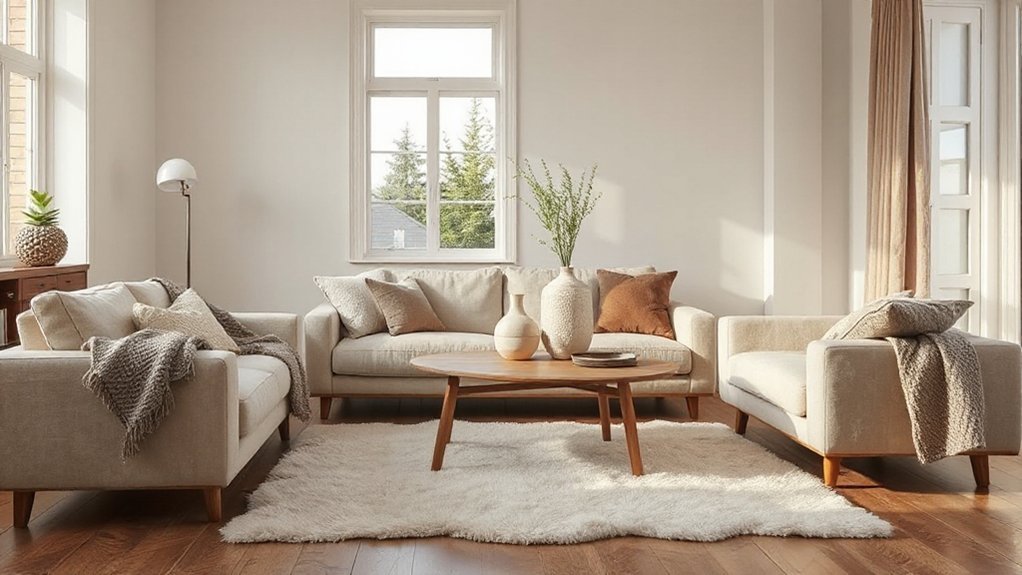
As you move from minimalist furniture to hygge-friendly accents, you’ll want details that feel warm without crowding the space. Select compact, high-quality pieces that signal coziness without overwhelming sightlines.
Prioritize soft textures—plush throws, leather cushions, and tactile wovens—that invite lingering, not clutter. For warmth, incorporate a controlled focal point like a fire pit or a small, handsomely framed log storage that doubles as decor, keeping surfaces clear.
Choose statement art thoughtfully: one or two large works or a cohesive trio that reinforces calm tones rather than competing patterns.
Use subtle lighting—wall sconces or a single pendant—to create atmosphere without excess fixtures.
Keep surfaces pristine with concealed storage and discrete organizers, ensuring every item earns its place and contributes to serene, clutter-free hygge.
Flooring and Rugs to Anchor a Calm Space
How do you ground a calm space with flooring and rugs that endure the gaze? You choose materials and textures that age gracefully, then layer subtly.
Start with a neutral, fossil-honed wood or soft, matte concrete for foundational calm.
Let rugs anchor zones: a large, low-pile field in a muted, undyed tone; a smaller, textured shag or weave for tactile contrast.
Maintain color harmony by aligning hues with the room’s natural palette, avoiding busy patterns that compete with light.
Introduce color blocking through carefully placed textiles and accessories, not loud surfaces.
Embrace statement lighting as a focal counterpoint to subdued floors and rugs, balancing luminance with shadow.
Keep progressions seamless, ensuring each element reinforces serenity rather than drawing attention away.
Window Treatments That Diffuse Daylight
To diffuse daylight effectively, you’ll favor light-filtering window treatments that soften glare while preserving brightness.
These techniques balance privacy with a calm, airy feel, using fabrics and shades that gently diffuse natural light.
Pair them with clean profiles and natural textures to maintain the Scandi-inspired clarity you’re aiming for.
Diffused Daylight Techniques
Diffused daylight softens a room’s ambience without sacrificing brightness, and window treatments are your primary tool. You’ll harness diffused daylight by selecting textures and materials that gently break sunlight, creating even illumination without harsh glare.
Favor sheer or semi-sheer fabrics, light-filtering shades, and frosted or textured glass options that promote sunlight diffusion rather than block it. Orient curtains to frame windows without crowding the glass, allowing soft radiance to spill across walls and furniture.
Choose pale, natural tones and matte surfaces to reduce hotspots while maintaining depth. Implement layered treatments: a lightweight drapery paired with a translucent shade for adaptable brightness.
Regularly balance daylight with strategic positionings, ensuring every corner receives a calm, cohesive glow that complements the Nordic-influenced palette.
Light-Filtering Window Treatments
In Scandinavian interiors, keep lines clean and tones neutral; opt for cotton, linen, or lightweight blends that mirror natural materials. Consider their rhythm across rooms to sustain a cohesive look.
For privacy without darkness, these treatments offer flexible solutions: semi-opaque options create window privacy while still inviting ambient light. When needed, deploy blackout options in bedrooms or media spaces to ensure full darkness for late nights or early mornings.
Pair with minimal hardware to preserve the serene, airy aesthetic.
Soft Neutrals With Earthy Undertones: Color Palettes
Soft neutrals with earthy undertones create a grounded color foundation for Scandi-inspired living rooms. You’ll balance warm beige, taupe, and greige with muted greens and clay accents to keep spaces calm yet inviting.
Prioritize color psychology to select tones that promote focus and relaxation, pairing quieter hues with intentional contrast for depth. Use a restrained palette: 60–70% base neutral, 20–30% supporting earthy tones, and 5–10% purposeful accent pops.
Paint finishes matter: matte or eggshell surfaces minimize glare, while a satin option on trim adds subtle lift without distraction. Implement layering through textiles and wood, reinforcing the palette without saturation.
Limit large swaths of color in favor of cohesive tonal progressions that read as one refined, functional environment. This approach guarantees timeless, scalable serenity in daily living.
Timeless Artwork and Decor Ideas
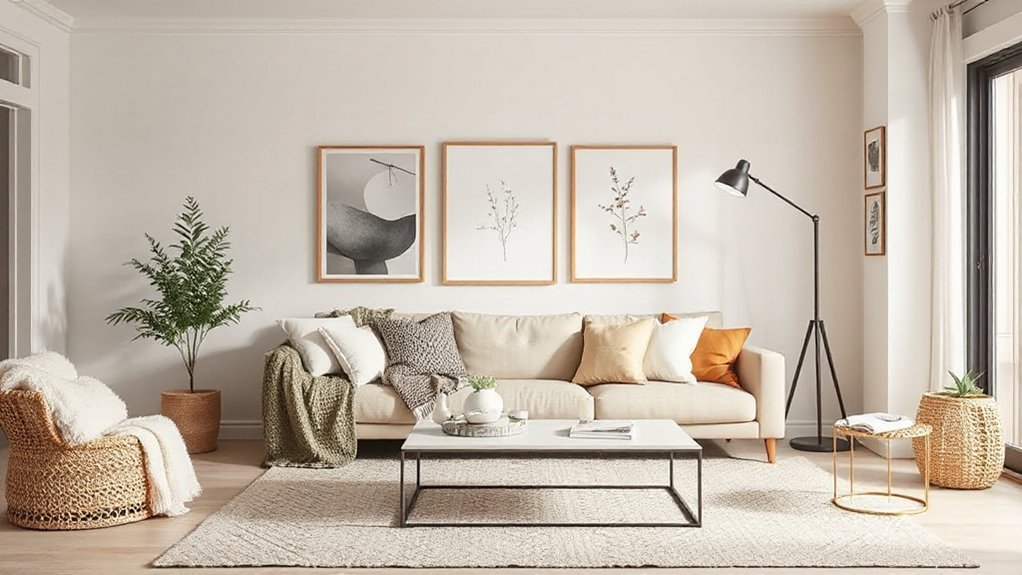
Favor restraint: select one bold work as a focal point, then support it with smaller, textural accents. Incorporate vintage decor sparingly—a sculpted vase, a retro lamp, or a midcentury chair can enrich the palette without clutter.
Maintain consistency through neutral tones, tactile surfaces, and subtle contrast. Opt for matte finishes, soft wood, and woven textiles to keep warmth intact.
Rotation matters: swap art seasonally to refresh the scene without overhauling the layout. Finally, align frames and margins for a unified, polished presentation.
Small-Space Tricks for Airy Scandi Rooms
To keep Scandi spaces feeling airy, prioritize vertical space and clear sightlines. In small rooms, opt for tall, slim storage that merges with walls, freeing floor area without visual clutter.
Use multipurpose furniture—a bench with hidden storage or a coffee table that folds—so every inch serves a function.
Choose a restrained color palette, then introduce texture through textiles and natural materials to preserve softness without bulk.
Favor wall-mounted lighting and ceiling fixtures over freestanding lamps to keep surfaces unobstructed and ceilings feeling higher.
Introduce vintage patterns in controlled doses—pillow repeats, a throw, or a small rug—to add character without overwhelming scale.
Select statement lighting as a focal point to draw the eye upward, enhancing perceived space while anchoring the room.
Maintenance Tips to Keep Textures Fresh
Texture looks fresh longer when you treat fabrics and surfaces as a system: regularly clean, protect, and rotate textiles, then address wear before it shows. In maintenance, establish clear routines that honor textural contrast without overcomplicating care.
Start with a weekly dusting and spot-clean policy, then schedule monthly deeper refreshes for cushions, throws, and rugs.
Use language that guides you to isolate materials by cleaning needs: cotton, wool, linen, and suede each demand specific methods, but align on a common cadence.
Rotate pillows to even out wear, and flip rugs to balance stress points.
Apply protective barriers to upholstery and avoid moisture exposure to sensitive textures.
Maintain documentation of treatments and timelines as part of your maintenance routines, ensuring textures stay vibrant and cohesive.
Quick-Room Revamps to Refresh a Scandi Look
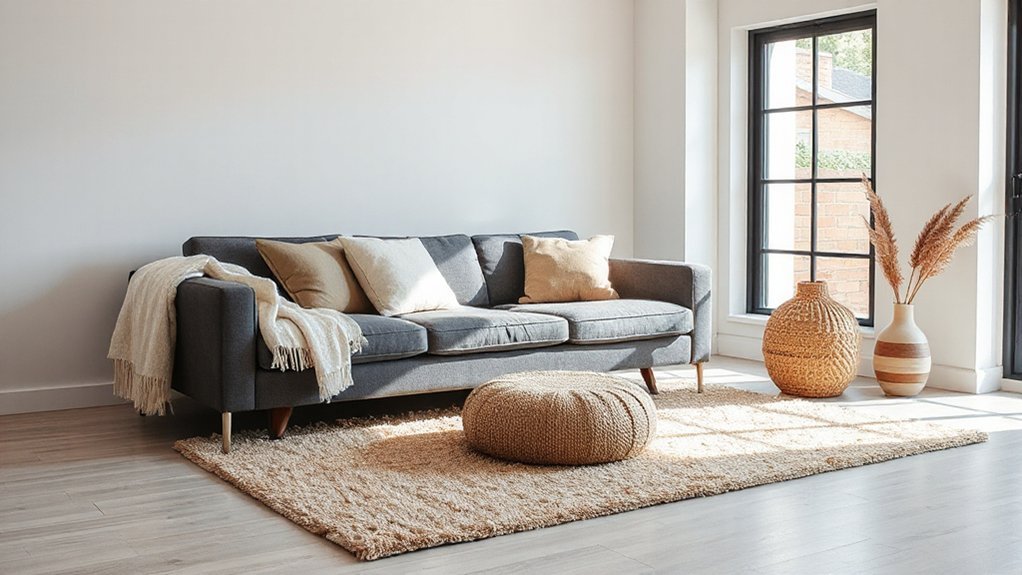
Even a few deliberate tweaks can instantly refresh a Scandi-inspired space without overhauling the room. Start with a focused palette lift: swap toward lighter neutrals and warm wood tones, then introduce a single contrasting accent.
Replace heavy textures with pared-back surfaces, letting natural light play across clean lines and uncluttered surfaces. Add vintage accents in carefully chosen spots—think a retro clock, a woven basket, or a weathered side table that nods to history without shouting.
Upgrade illumination strategically; opt for statement lighting that doubles as art—sleek pendant or sculptural floor lamp—to anchor the room. Keep textiles understated but tactile: lightweight throws, cotton or linen cushions, and a single, soft rug.
Finally, prune decor to essentials, preserving calm, functional spaces.
Frequently Asked Questions
How Can I Mix Textures Without Overheating a Room?
Yes—keep it cool and balanced. Use layered textiles with light, breathable fabrics, and mix texture contrast strategically: pair soft wool with linen, avoid heavy fabrics in one area, and rotate pieces to maintain airflow and visual clarity.
Which Fabrics Resist Pilling in Daily Use?
You should select low-pilling fabrics like wool blends, microfiber, and cotton serrated by tight weaves. Fabrics durability matters; opt durable fibers, and practice Textile maintenance to keep surfaces fresh and resisting wear in daily use.
Do Scandinavian Styles Suit Small, Busy Households?
Yes, Scandinavian styles suit small, busy households well. You’ll enjoy family friendly durability, because careful construction lasts. They favor space saving accessories, reducing clutter while maintaining calm; you’ll create functional, cozy zones, with clean lines and efficient storage.
What Budget-Friendly Textures Still Feel Premium?
Yes, you can. Choose Layered rugs and Velvet cushions; they feel premium without price hikes. Pair plush textures with simple neutrals, maintain clean lines, and focus on quality over quantity to achieve a refined, budget-friendly look.
How Often Should I Refresh Textiles for Longevity?
You should refresh textiles every 6–12 months for longevity, adjusting by use and wear. Practice textile care diligently, vacuum seasonal fabrics and spot-clean. Plan seasonal updates to preserve freshness without overhauling, maintaining a polished, premium look.
Conclusion
In this room, you hold a quiet lantern: the soft textures and gentle tones glow like a steady flame. Each textile, timber, and frame is a reminder that simplicity isn’t starkness—it’s invitation. Let the calm be your compass, guiding you toward warmth without clutter. When you pause, you’re listening to a quiet:
the hand of nature shaping space, the memory of light shaping mood. Your Scandi sanctuary, precisely as you imagined, unfolds.
About the Author