The Ultimate Guide to Sourcing Materials for Your Stone Cottage Renovation
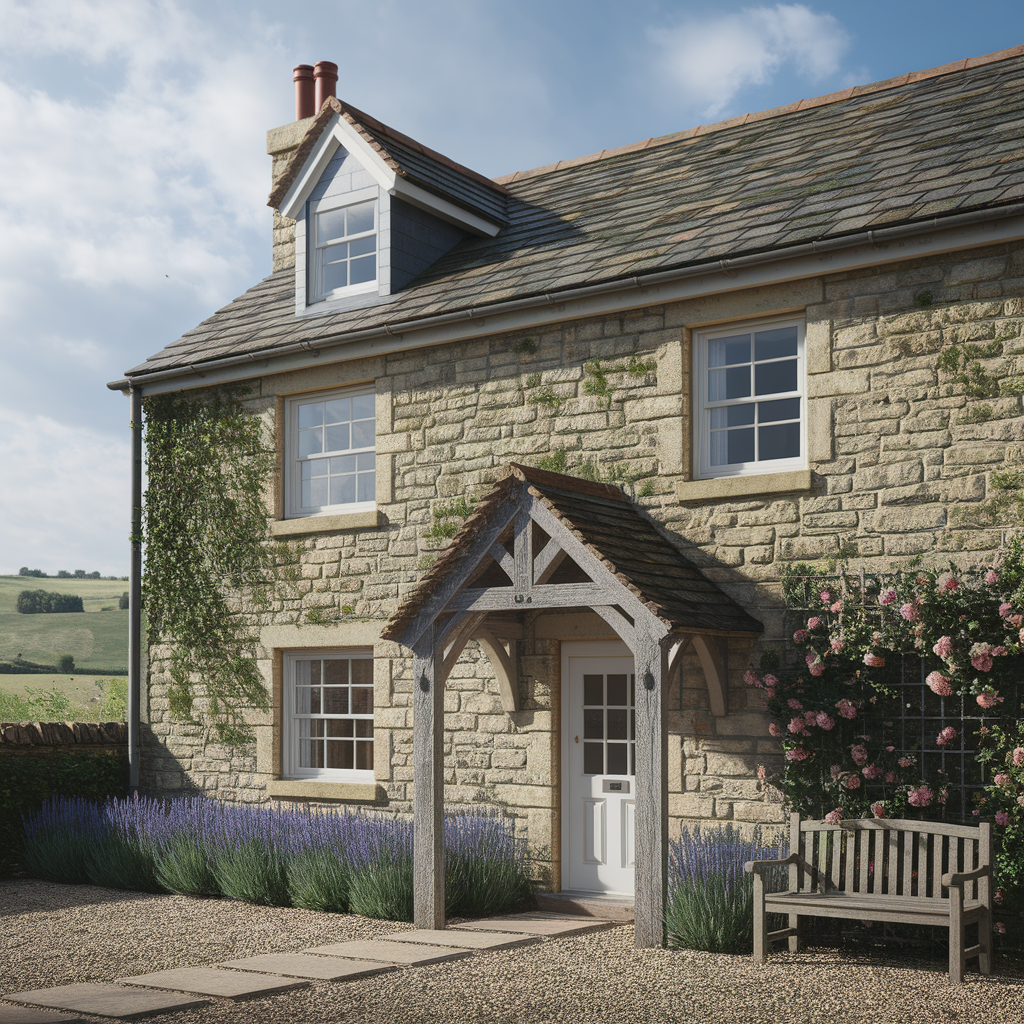
The single most common mistake in stone cottage renovation is treating the sourcing of materials as a procurement exercise rather than a design exercise. You establish the specification, you find the cheapest supplier who can deliver it, and you move on to the next decision. For standard new-build construction, this approach is largely adequate. For a stone cottage, it is how you end up with a building that looks wrong in ways that are difficult to articulate but immediately felt — the new pointing that doesn’t quite match the stone, the replacement windows that are fractionally too white, the new slate roof that reads as clearly modern from 50 metres away.
Getting materials right for a stone cottage renovation requires understanding not just what you need but where it comes from and why provenance matters. It requires building relationships with specialists rather than simply placing orders. And it requires accepting, in some cases, that the right material for the building will take time to source and will cost more than the convenient alternative — and that this is the correct decision rather than a compromise.
This guide covers the main material categories for stone cottage renovation: where to source them, what to look for, and what to avoid.
Reclaimed and Matching Stone
Why Reclaimed Stone Is Worth the Effort
The stone in a traditional cottage is typically local — quarried within a few miles of the site, selected for its local availability rather than its appearance, and now centuries into the weathering process that has given it the colour, texture, and character that makes the building what it is. New stone from the same quarry — where the quarry still exists — will match in type but not in character. It will take decades to weather to the colour of the existing work, and in the meantime any repair or new addition in matching stone will read as clearly new.
Reclaimed stone of the same type, from demolitions, salvage yards, or other sources, will already have the weathering patina that allows it to sit naturally alongside the original fabric. For repair of missing or damaged sections of external walling, reclaimed stone is almost always preferable to new stone where it can be sourced.
Where to Find Reclaimed Stone
Architectural salvage yards are the primary market for reclaimed building stone. The quality and range of stock varies enormously — the best salvage yards will have stone sorted by type and origin, with staff who understand the difference between sandstone and limestone, who know the regional variations in local stone types, and who can advise on suitability for specific applications. The salvage yards associated with regional or national heritage organisations are typically among the more reliable sources.
In the UK, SALVO (the Salvo Code) is a trade organisation for the salvage and reclaimed materials sector that provides a degree of quality assurance and legal compliance. Membership of the Salvo Code indicates that a salvage dealer has committed to certain standards around provenance, legal sourcing, and description of materials.
Demolition contractors. When buildings in your area are being demolished, the stone from those buildings can sometimes be purchased directly from the demolition contractor before or during the demolition. This requires more initiative — monitoring local planning portals for demolition consents, making direct contact with contractors, arranging timely collection — but it is one of the best routes to matching local stone because demolished buildings are themselves local buildings using local materials.
Local farmers and landowners. In rural areas, old farm buildings, field boundaries, and derelict structures that are being cleared may yield stone of exactly the type and character you need. Building relationships with neighbouring landowners and making known what you are looking for can produce results that no salvage yard could match.
Heritage conservation organisations. Historic England, Cadw, Historic Environment Scotland, and their equivalents hold knowledge about traditional building materials in their areas and can often recommend specialist sources for regional stone types. Some heritage organisations maintain material libraries or run salvage programmes from their own conservation work.
What to Look For and Avoid
Look for stone that matches not just in type but in colour, grain size, and weathering character. Stone from the same geological formation but different quarries may be significantly different in appearance even if geologically similar. Take samples of the original stone from the building to a salvage yard and make visual comparisons before committing to a purchase.
Avoid stone that shows signs of active deterioration — spalling, delamination, or salt efflorescence on the surface — as this suggests the stone has already begun to break down and will not provide the longevity you need in a repair application.
Lime Mortar and Lime Plaster
The Specification Challenge
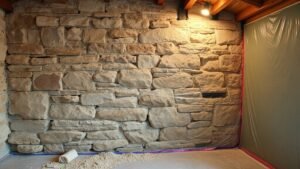
Lime is not a single material. It encompasses a range of products with significantly different performance characteristics, and specifying the wrong type for a particular application can be as damaging as using cement. The two primary categories are hydraulic lime (NHL) and non-hydraulic lime (air lime, or pure lime putty), and their appropriate applications differ.
Hydraulic lime (Natural Hydraulic Lime — NHL) sets through a chemical reaction with water (hydraulic set) as well as by carbonation with CO2, giving it greater early strength and better performance in damp conditions and thicker sections. It is graded as NHL2, NHL3.5, and NHL5 — the number indicating increasing strength. For external pointing and rendering in exposed positions, NHL3.5 is the most widely used specification; NHL5 is used in very exposed conditions; NHL2 is appropriate for very soft, friable stone where a very soft mortar is needed to avoid stress concentration.
Non-hydraulic lime (lime putty) sets exclusively by carbonation — a slow process that requires exposure to CO2 in the air. This makes it the softest and most flexible of the lime products, ideal for internal plaster applications, for very soft or porous stone, and for conservation work where reversibility is important. Lime putty improves with age when stored correctly and should ideally be used matured (minimum three months, ideally twelve months or more from slaking).
Where to Source Lime Products
Specialist lime suppliers have expanded significantly as demand for lime in the renovation market has grown. In the UK, suppliers including Lime Green Products, St Astier (imported French NHL), Cornish Lime, and The Traditional Building Products Company hold consistent stocks and offer technical support for specification and application. In the US, US Heritage Group and Traditional Building Supply are among the specialist sources.
The distinction between specialist lime suppliers and general builder’s merchants matters. Builder’s merchants who carry lime products typically stock only a limited range of pre-bagged hydraulic lime, and their staff may not have the technical knowledge to advise on specification. Specialist suppliers carry a fuller range, can advise on aggregate selection (critical for matching the colour and texture of existing mortar), and often offer on-site training and support.
Sourcing the aggregate separately. Lime mortar is not simply lime — it is lime mixed with an aggregate (sand or grit) that determines the colour, texture, and performance of the finished mortar. In traditional construction, the aggregate was local sand or grit, which gave mortar in each area its characteristic colour. To match existing mortar in a repair, you typically need to source both the lime and the aggregate separately, matching the aggregate to the original mortar by trial mixing and comparison.
Stone analysis — sending a mortar sample to a specialist laboratory for petrographic analysis — will tell you the exact lime to aggregate ratio, the type of aggregate, and any other inclusions in the original mortar. This service costs a few hundred pounds and is worth commissioning for any significant repointing or repair project where matching the existing mortar is important.
Roofing: Slate and Stone Tiles
Natural Slate
Slate roofing is regional — Welsh slate, Cornish slate, Lake District slate, Ballachulish slate, Bangor slate — and the appropriate slate for a stone cottage in each region is determined by the original material used, not by current market availability. Using Welsh Penrhyn slate on a cottage that was originally roofed with Cornish Delabole slate will be wrong in ways that a knowledgeable observer will notice immediately: different colour, different cleavage texture, different thickness, different weathering character.
Matching the original slate type is the starting point. The options for sourcing matching slate are:
Reclaimed slates. As with stone, reclaimed slates from demolitions and salvage yards have the advantage of existing weathering character and can often be found in regional types that match original roofing materials. The limitation is that reclaimed slates have varying remaining life — they have already been used once, their holing may have enlarged, and some will be approaching the end of their useful life. A reclaimed slate roof will require more frequent inspection and selective replacement than a new slate roof, but for a listed building or a sensitive renovation, reclaimed may be the only appropriate option.
New natural slate from the original quarry. Some traditional slate quarries are still operating and producing slate of the same geological type as the original building material. Penrhyn quarry in Wales, the Delabole quarry in Cornwall, and others can supply new natural slate that will weather to match the original in time, where it does not already match closely.
New imported natural slate. Spanish, Brazilian, and Chinese slate is widely available and typically less expensive than UK-sourced slate, but it varies significantly in quality and in its geological properties. Some imported slates perform well; others have a tendency to delaminate, fade in colour, or deteriorate in the freeze-thaw conditions of a northern European climate. The colour and texture of imported slate will typically not match UK regional slates. For a sensitive stone cottage renovation, imported slate should be specified only where the matching material genuinely cannot be sourced.
Stone Tiles and Stone Slates
Some cottage roofing — particularly in Cotswold limestone country, parts of Yorkshire, and the Lake District — uses stone slates rather than roofing slate: limestone or sandstone split into thin pieces and laid in the descending graduation from large stones at the eaves to small stones at the ridge that characterises this traditional roof form. Stone slates are significantly harder to source than roofing slate, as the quarrying of stone for splitting into roofing pieces requires specific quarrying techniques and specific rock beds.
In the UK, the Stone Roofing Association is the specialist trade body for stone slate roofing and maintains a register of approved contractors and material suppliers. For a stone slate cottage roof in any of the traditional stone roofing areas, this is the essential first contact point.
Lime Plaster and Internal Wall Finishes
Why Internal Plasters Matter
The internal plaster on a stone cottage wall is doing important work beyond decoration. In a breathable wall construction, the internal plaster is part of the moisture management system — it allows water vapour to move through the wall from the stone to the interior, preventing moisture accumulation in the fabric. Replacing traditional lime plaster with gypsum plaster — even moisture-resistant gypsum — disrupts this moisture management and can lead to damp problems in the wall that were not present before the replastering.
When replastering stone cottage interiors, the appropriate specification is lime plaster throughout — lime scratch coat, lime float coat, and a finish of lime putty and fine sand or a mineral-based finish. The lime finish can be painted with appropriate breathable paints (limewash, mineral silicate paints) or left as a decorated lime finish.
Specialist Plasterers
Lime plastering is a specialist skill. Many plasterers who claim competence in lime work have limited experience with traditional lime plaster, having mostly used pre-bagged hydraulic lime products in a way that mimics their experience with gypsum. True traditional lime plastering — building up coats of lime putty plaster over a hairy scratch coat, working with the material in the conditions it requires (shaded from direct sun, damp-cured, not allowed to dry too quickly) — takes years to learn properly.
In the UK, the Traditional Building Skills Register, maintained by Historic England, lists contractors with verified experience in traditional building skills including lime plastering. The Guild of Master Craftsmen and the Heritage Skills Academy are additional routes to finding appropriately skilled plasterers.
Joinery: Windows, Doors, and Structural Timber
Original Windows and Doors: Retain Where Possible
The window and door joinery of a stone cottage is part of its character. Original timber-framed windows — casement windows, Yorkshire sliding sashes, vertical sashes — have proportions, detailing, and profiles that are specific to their era and region. Replacing them, even with high-quality new joinery in the same style, produces windows that look almost but not quite right: the profiles are slightly different, the glass is too flat and uniform, the ironmongery is reproduced rather than original.
The conservation priority for original windows should be repair rather than replacement. A skilled joiner can repair significant rot in a traditional window — splice repairs to the sill, replacement of individual glazing bars, new glass in individual panes — at a cost that is typically lower than replacement and that produces a window that retains its original character. Secondary glazing — a separate inner panel of glazing installed within the window reveal — can provide significant thermal improvement to a retained original window without requiring its replacement.
New Timber Joinery Where Replacement Is Unavoidable
Where original windows cannot be retained, new timber joinery should be specified. The profile and detailing of any new windows should be drawn from the original, and the contractor should be someone who has experience in making traditional window profiles rather than simply installing modern timber or uPVC windows.
Painted softwood (typically redwood or western red cedar for durability) is the traditional specification. Hardwood (oak, accoya — thermally modified pine with dramatically improved durability) is the higher-specification alternative. uPVC should be avoided in visible external applications — regardless of the quality of the product, the material simply does not have the profile depth, the surface quality, or the ability to be detailed in the traditional manner.
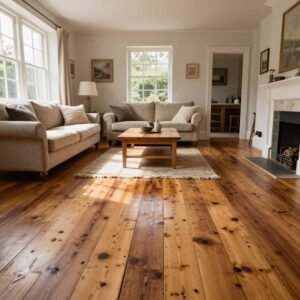
Structural Timber: Oak Frame and Reclaimed
For structural timber work within a stone cottage renovation — new roof timbers where the original are beyond repair, structural beams, oak frame additions — new green oak and reclaimed structural timbers are both appropriate options.
Green oak (newly felled, not kiln-dried) is the traditional specification for structural timber in historic buildings and continues to be appropriate for new work within or attached to stone cottages. It will move and crack as it dries in place — normal behaviour that is expected and accommodated in traditional construction — but provides a genuine material presence that kiln-dried softwood cannot match.
Reclaimed structural timbers from demolished agricultural buildings, mills, and other structures can provide immediate character and patina in structural applications. Sources include specialist timber merchants, salvage yards, and some architectural salvage dealers who focus on large-scale structural material.
Flagstone and Floor Coverings
Reclaimed Flagstone: The Gold Standard
The original floor of most stone cottages was flagstone — limestone, sandstone, or slate laid directly on the earth or on a minimal bed, without the damp-proof membrane that modern construction requires. The flagstones were set in lime mortar or simply on a sand bed, and the floor breathed — allowing moisture from the ground to pass upward through the flags and evaporate rather than accumulating at the base of the walls.
Reclaimed flagstone flooring — York stone, Derbyshire limestone, Welsh slate, Scottish sandstone — is widely available through specialist flooring suppliers and large architectural salvage yards. The key is matching the type of stone to the regional character of the building and sourcing material of consistent thickness and appropriate surface character for a floor (reasonably flat, not so rough as to be impractical, but not machine-polished to a uniform mirror finish that would look wrong in any period context).
Important: A breathable floor with a lime-bedded flagstone laying over a properly specified ground floor build-up (without an impermeable DPM) requires damp-proof course and ground moisture management to be addressed at the external wall junction rather than at the floor. This is specialist territory and should be designed by someone with specific knowledge of traditional ground floor construction before any flagstone floor is specified.
Sources
Major architectural salvage yards — Drummonds, Cox’s Architectural Salvage, Retrouvius, and regional equivalents — hold stocks of reclaimed flagstone from a range of regional sources. Specialist flagstone flooring companies can source specific types in consistent quantities and grades.
Building the Supplier Network
The most effective approach to sourcing materials for a stone cottage renovation is to build a network of suppliers rather than to source each material category independently. The specialist lime supplier who advises on lime mortar specification will often know the most appropriate local stone supplier. The salvage yard dealer who specialises in regional stone will often know who is currently demolishing suitable buildings in the area. The conservation-focused architect who has worked on similar projects in the region will know every specialist contractor and material supplier worth knowing.
This network-building takes time — it begins in the project planning phase, ideally before any work on site starts — but the investment in relationships pays dividends not just in sourcing but in specification quality, in problem-solving when unexpected conditions are discovered, and in the overall coherence of the finished renovation.
The materials in a well-renovated stone cottage tell a story. They are local, appropriate, and properly specified — and they will continue to perform and improve with age rather than deteriorating to the point where the next generation of owners faces the same remediation challenges that this renovation was supposed to resolve. The effort of sourcing them correctly is not a constraint on good renovation practice. It is good renovation practice.
About the Author