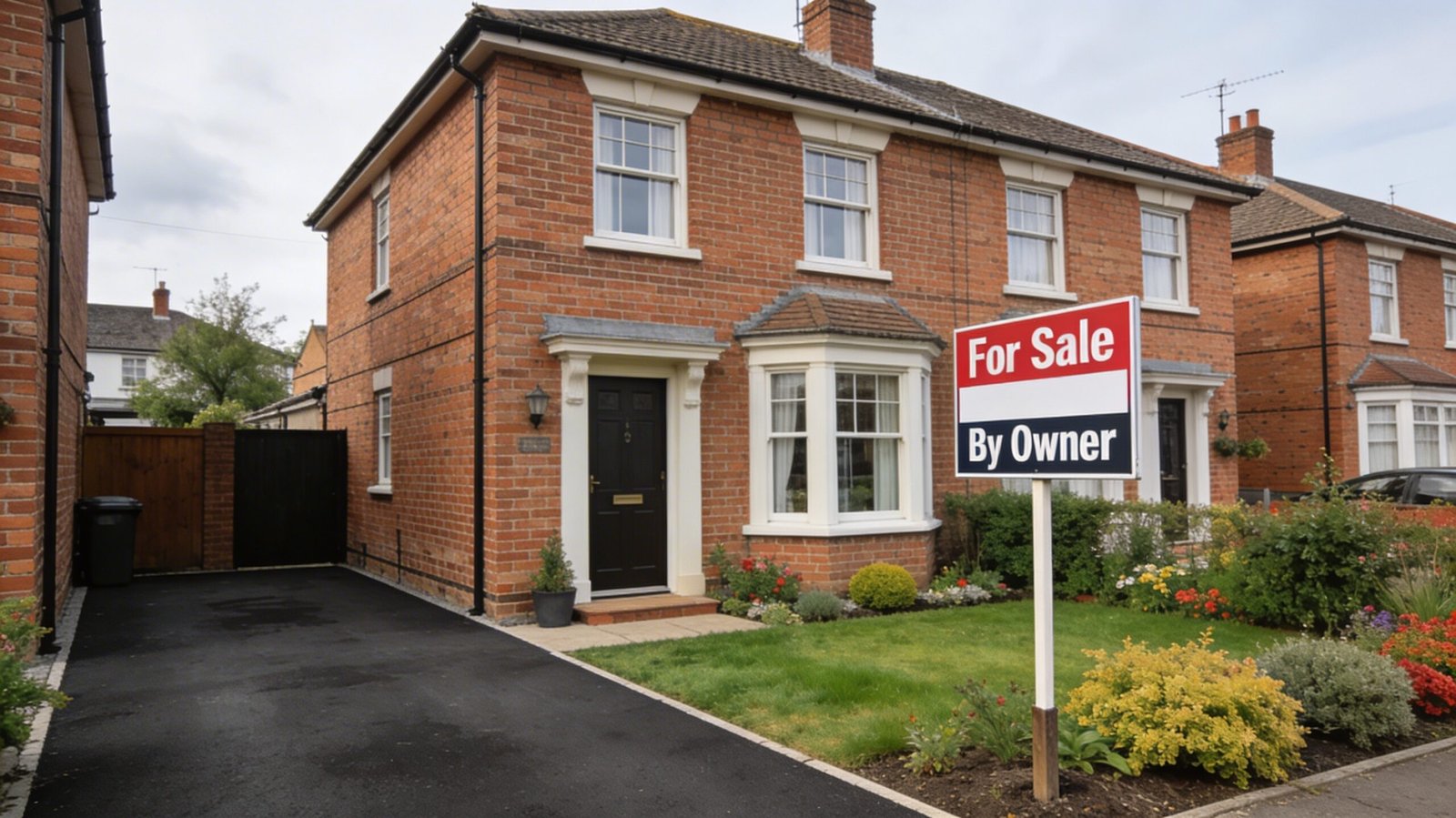
Selling Your Property By Owner In The UK: A Complete Guide for 2026
Selling a property without an estate agent — known as FSBO (For Sale By Owner) or a private sale — is entirely legal in the UK, increasingly common, and for the right seller in the right circumstances, a financially significant decision. Estate agents in the UK typically charge between 1% and 3% of the sale price plus VAT. On a £300,000 property, the commission alone costs £3,600 to £10,800. On a £500,000 property, between £6,000 and £18,000. Avoiding this cost is a powerful motivation — but doing so requires taking on the work that an agent would normally do, understanding what the legal requirements are regardless of who manages the sale, and being clear-eyed about where the risks lie.
This guide covers the complete process of selling privately in 2026 — the preparation, the marketing, the legal requirements, the negotiation, and the sale progression through to completion. It also covers the honest assessment of when private selling is likely to work and when it is likely to cost you more than you save.
The Methods Available For Selling Your Property By Owner In The UK
Before deciding to sell privately, it helps to understand the full spectrum of routes to market and what each involves.
Traditional high-street estate agent: An agent markets the property on Rightmove, Zoopla, and their local database; arranges and sometimes conducts viewings; receives and presents offers; and progresses the sale. They charge a commission (typically 1–1.5% plus VAT sole agency; 2–3% plus VAT multi-agency) payable on completion. The agent’s incentive is a completed sale, not merely an offer.
Online fixed-fee estate agent: Companies such as Purplebricks, Strike, and others charge a fixed fee (typically £500–£2,500) to list the property on Rightmove and Zoopla. They provide less personalised support than a traditional agent and typically handle fewer of the progression duties. Some offer no-sale-no-fee variants; others charge upfront regardless of outcome.
Private listing services: Platforms such as TheHouseShop allow private sellers to list on their own portal, visible to buyers searching specifically for private sales. Rightmove and Zoopla do not accept direct listings from private sellers — only from registered estate agents and accredited listing services. To appear on Rightmove as a private seller, you must use an intermediary service or fixed-fee agent.
Full private sale (FSBO): You handle pricing, photography, marketing, viewings, offer management, and sale progression yourself — typically combining a private listing service with direct marketing via social media, For Sale boards, and your own network.
Property auction: Suitable for specific property types — those with title issues, short leases, heavy renovation requirements, or unusual features. Auction houses charge approximately 2–3.5% commission payable by the seller; buyers also pay a buyer’s premium. The advantage is certainty of sale on auction day if the reserve is met; the disadvantage is that the reserve may be set at or below what open market sale would achieve.
Cash buying companies: Companies that offer to buy any property quickly at a discount — typically 70–80% of market value, not the 85–95% their advertising sometimes implies. These are legitimate businesses with a legitimate use case for sellers who need to sell quickly with complete certainty, but they are not an alternative to open market sale for sellers who want full market value.
Part 1: Preparation — Before Marketing Begins
Whether selling through an agent or privately, the preparation stage determines much of the outcome. Getting this right saves time and avoids the cost of a sale falling through.
Valuing the Property Accurately
Overvaluing is the most common mistake made by sellers in any route — and it is particularly costly in a private sale because the seller has a stronger emotional attachment to the price than a professional agent would. Overpriced properties sit on the market, accumulate days on market, and frequently sell below what they would have achieved with correct initial pricing.
The tools available for self-valuation:
- Rightmove and Zoopla sold prices: The Land Registry data integrated into both portals shows what similar properties in your area actually sold for, not what they were asking. This is the most important data.
- Rightmove and Zoopla current listings: Properties currently listed at what prices — and how long they have been listed. A property that has been listed for 12 weeks at £350,000 is telling you something about where the market sits.
- RICS-accredited independent valuation: A Chartered Surveyor can provide a formal valuation report for approximately £200–£500. This is the most authoritative basis for a sale price and provides documentation useful in negotiations.
- Multiple estate agent valuations (without committing): Inviting two or three estate agents to value the property, with no obligation to instruct, provides market intelligence at no cost. Be aware that some agents deliberately overvalue to win the instruction — discounting the highest estimate is often the right instinct.
Legal Requirements Before Marketing
Certain requirements apply before a property can be legally marketed for sale, regardless of whether an estate agent is used.
Energy Performance Certificate (EPC): A valid EPC (rated A–G on energy efficiency) must be commissioned and available before marketing begins. EPCs cost £60–£120 and last 10 years. Check whether your property has a current EPC on the EPC Register (epcregister.com) before commissioning a new one. It is illegal to market a property without a valid EPC — penalties of up to £200 apply.
Instruct a conveyancing solicitor early: One of the most common mistakes in private sales is waiting until an offer is received to instruct a solicitor. The better approach is to instruct a solicitor before marketing begins so that they can prepare the contract pack, identify any title issues, and be ready to respond to buyer enquiries without delay. Title issues discovered late in the process — missing completion certificates, unregistered land, boundary disputes — are one of the most common causes of sale collapse. Finding them early allows time to resolve them.
Property Information Forms: Your solicitor will ask you to complete the TA6 (Property Information Form), TA10 (Fittings and Contents Form), and in the case of leasehold, TA7. These forms capture essential information about the property — disputes with neighbours, planning history, works carried out and associated permissions and guarantees, boundaries, rights of way, and what is included in the sale. Completing these accurately and thoroughly reduces the number of enquiries raised by the buyer’s solicitor and therefore the time taken to reach exchange.
Disclosure obligations: Sellers in England and Wales have a legal obligation not to misrepresent the property. You are not required to volunteer every defect — the buyer’s surveyor’s job is to identify defects — but you must not actively conceal known defects or make false statements. Material misrepresentation can result in the buyer rescinding the contract or claiming damages after completion.

Presentation and Photography
Professional property photography is not optional in 2026 — it is the primary factor determining whether buyers click on a listing or scroll past it. Smartphone photography, however well executed, does not produce results comparable to professional property photography with appropriate lenses and lighting. Professional photography costs £100–£300 depending on property size and location, and it is one of the most cost-effective investments a seller can make.
A floor plan should accompany the listing. Most buyers filter properties by size before viewing, and a property listed without a floor plan loses buyers before they consider the photographs.
Consider the condition of the property before photography and viewings. This does not necessarily mean an expensive renovation — decluttering, cleaning, refreshing paintwork in tired areas, and ensuring the garden is tidy ahead of photography typically returns more in perceived value than it costs. Research consistently shows that well-presented properties sell faster and at higher prices than comparable poorly presented properties.
Part 2: Marketing the Property
The Rightmove Problem for Private Sellers
The single most significant limitation of a private sale is Rightmove. Rightmove is where the vast majority of UK property buyers search — approximately 80% of buyer searches begin on Rightmove. Private sellers cannot list directly on Rightmove; listings are only accepted from registered estate agents and accredited agents.
The solutions:
- Fixed-fee online agents: Pay a flat fee (£500–£2,500) to an online estate agent who lists on Rightmove on your behalf. This gives Rightmove exposure without the commission structure. The agent’s involvement is minimal beyond the listing.
- Private listing intermediary services: Some platforms (TheHouseShop, PrivateSales.com, and others) allow private listings visible to buyers specifically searching private sales, though without Rightmove’s broader reach.
- Zoopla: Similar position to Rightmove — private sellers cannot list directly without using an accredited agent or intermediary.
The practical recommendation for most private sellers: use a fixed-fee online agent to secure Rightmove and Zoopla listing (paying £500–£1,500 for the listing service alone rather than a percentage commission), while managing all viewings, offers, and progression yourself. This captures the benefit of Rightmove exposure at a fraction of the cost of traditional agent commission.
Marketing Beyond the Portals
In addition to portal listing, private sellers can use:
Social media: Facebook Marketplace has become a significant property search platform and is free for private sellers. A detailed listing with professional photographs, floor plan, price, and contact information can generate meaningful local interest. Facebook groups for the local area, neighbourhood groups, and relevant buy/sell groups are worth posting to.
For Sale board: A For Sale board outside the property generates local awareness at minimal cost. Some private sellers have strong results from passing traffic, particularly in areas with active local property interest.
Direct marketing to known buyers: If you know of buyers who have been looking in your area — through local contacts, neighbourhood networks, or buyers who have previously viewed similar properties — direct contact can produce a motivated buyer without any marketing cost.
Property investors and developer networks: For properties that are renovation candidates, vacant, or otherwise investor-attractive, direct marketing to local property investors — through property investor meetings, online forums, or direct contact with known local developers — can produce offers without requiring any open market listing.
Part 3: Managing Viewings
Viewings in a private sale require the seller to be available, prepared, and professional. This is where the time commitment of private selling is most apparent.
Availability: Evening and weekend viewings are when most buyers are available. Arranging work schedules around viewing requests requires flexibility. Potential buyers who cannot get a viewing at a convenient time will move on to other properties.
Preparation for each viewing: Before each viewing, ensure the property is clean, well-lit (switch lights on even during daylight to make rooms feel welcoming), heated or cooled to a comfortable temperature, and free of strong odours. Pets should ideally be out of the property during viewings — not all buyers are comfortable with animals, and pet odours affect buyers’ perception of the property even when invisible to the owner.
What to say and not say: Answer questions honestly but carefully. You are not required to volunteer every defect proactively (your solicitor’s TA6 form covers disclosure obligations), but misrepresentation is both legally problematic and morally indefensible. Questions about the neighbours, the area, and why you are selling deserve honest but considered answers. Avoid volunteering information that creates anxiety — for example, mentioning an ongoing dispute that has already been resolved does not serve anyone.
Second viewings: Serious buyers typically ask for a second viewing before making an offer. A second viewing request is a positive sign and should be accommodated promptly.
Feedback: After each viewing, contact the viewer directly to ask for honest feedback. Consistent feedback about the same aspect of the property — the garden, the room layout, the condition of the kitchen — is market intelligence worth acting on.
Part 4: Receiving and Negotiating Offers
How Offers Are Made
In a private sale, offers are typically made directly to the seller by telephone, email, or through the listing platform’s messaging system. Document every offer received in writing — even if made verbally, confirm it by email.
An accepted offer in England and Wales is not legally binding. Either party can withdraw before exchange of contracts without financial penalty. This cuts both ways — you can accept an offer and continue receiving others (subject to the ethical question of whether you are being fair to the buyer you have accepted from), and a buyer can withdraw at any time before exchange.
Negotiating Effectively
Private sellers lose their negotiating advantage when they are too eager. Buyers typically expect some negotiation — an offer at 5–10% below asking price is standard opening behaviour, not an insult. Counter-offering at a figure between your asking price and their offer is the normal dynamic.
The factors that strengthen your negotiating position:
- Chain-free position or short chain: Buyers pay premiums for transaction certainty.
- Multiple competing offers: If you receive more than one offer, you are under no obligation to accept the first or highest — you can invite best and final offers, compare buyer positions (cash vs mortgage, chain length, flexibility on completion date), and choose accordingly.
- Flexibility on completion date: Being flexible about when you complete is valuable to buyers with specific timeline needs.
The factors that weaken your position:
- Days on market: The longer a property has been listed, the more negotiating power accrues to buyers. Pricing correctly from the start avoids this.
- Chain pressure: If you are simultaneously trying to complete a purchase and are under time pressure, buyers know this and use it.
Memorandum of Sale
When an offer is accepted, in a traditional agent sale the agent issues a Memorandum of Sale to both parties’ solicitors confirming the agreed price, the buyer’s solicitor, the seller’s solicitor, and the property address. In a private sale, the seller must do this themselves — or confirm to both sets of solicitors in writing. Your solicitor will advise on the format required.
Part 5: Sale Progression — The Critical Phase
Sale progression — the period between offer accepted and exchange of contracts — is where private sales most commonly encounter difficulty. In a traditional agent sale, a good agent actively drives this process: chasing solicitors, coordinating surveys, managing the chain, and keeping all parties informed and moving. Without an agent, this becomes entirely the seller’s responsibility.
What sale progression involves:
- Chasing your buyer’s solicitor for evidence that they have received the draft contract and raised their enquiries
- Responding promptly through your own solicitor to all enquiries raised by the buyer’s legal team
- Coordinating access for the buyer’s mortgage valuation survey and any independent structural survey they commission
- Monitoring the chain above and below your transaction (if one exists) and flagging to your solicitor any delays or problems in the wider chain
- Maintaining regular contact with the buyer directly — to reassure them the sale is progressing and to detect any wavering commitment early
The average UK property transaction from offer accepted to completion currently takes approximately 20–25 weeks. Active progress chasing by the seller reduces this; passivity extends it.
Chase, but professionally. Solicitors are not always proactive about communication — they are dealing with large caseloads. A polite email or call weekly asking for an update on what has been done and what is outstanding is appropriate. Aggressive or unreasonable pressure is counterproductive.
Part 6: The Financial Calculation
What You Save
On a £350,000 property with a traditional agent at 1.25% plus VAT: saving of approximately £5,250 including VAT. This is the best case saving.
On a £350,000 property using a fixed-fee online agent for Rightmove listing at £1,000 plus VAT and managing everything else yourself: saving of approximately £4,250 relative to traditional commission.
What You Still Pay
- Conveyancing solicitor fees: £1,000–£2,500
- EPC (if not already valid): £60–£120
- Professional photography: £150–£300
- Fixed-fee listing service (if used for Rightmove): £500–£1,500
- Floor plan (if not included in photography package): £50–£100
- Removal costs: £500–£2,000+
When the Saving May Not Materialise
The saving from private selling does not materialise if:
- A skilled agent would have achieved a significantly higher sale price through better marketing reach, negotiation expertise, or access to off-market buyers not visible through portal listings
- The sale falls through and must be re-listed — the time cost of a failed sale is real even without agent fees
- You accept an offer below what a competing agent would have secured — the common estimate is that agents typically achieve 5–10% more than sellers negotiating directly, though this varies enormously by property, market, and negotiation skill
The honest assessment: private selling works best for sellers who are well-organised, have time to invest in the process, are comfortable with negotiation, and are selling a property in a strong market with good buyer interest. It works least well for sellers who are time-constrained, uncomfortable with direct negotiation, selling in a slow market, or dealing with an unusual or complex property.
The Legal Framework: What Cannot Be Avoided
Regardless of selling method, the following apply to every sale:
- A solicitor or licensed conveyancer must handle the legal transfer
- A valid EPC must be in place before marketing
- Consumer Protection from Unfair Trading Regulations 2008 prohibit misrepresentation and require disclosure of material facts affecting the buyer’s decision
- Money Laundering Regulations require buyer identity verification by the solicitor
- The Land Registry must receive notification of the change of ownership at completion
No private sale legally avoids any of these requirements. The solicitor’s role is not optional — it is the legal mechanism by which property is transferred in England and Wales.
Private Sale: The Honest Summary
For the right seller, private selling in 2026 is a viable and financially significant option. The estate agent commission saved is real money. The control over the process is genuinely valuable. The direct relationship with buyers allows faster decisions and more flexible negotiation.
The trade-off is time, expertise, and the Rightmove access limitation. Use a fixed-fee listing service to solve the Rightmove problem. Instruct a solicitor early to solve the legal preparedness problem. Be honest about the time commitment to solve the progression problem.
The private sale that succeeds is not the one driven by a determination to avoid estate agents at all costs — it is the one managed by a seller who has understood what the agent was going to do and has a credible plan for doing it themselves.
About the Author